
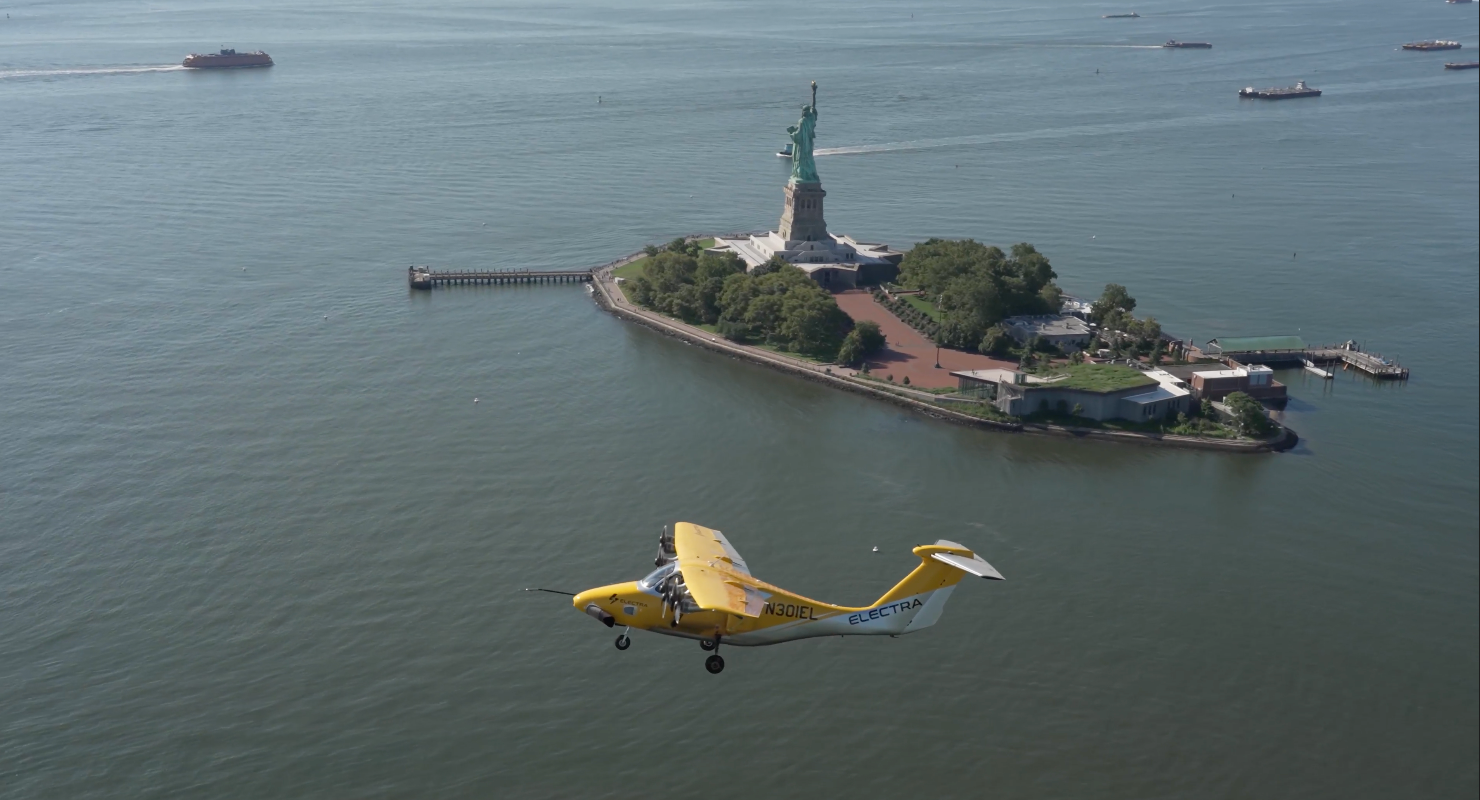
Electra Demonstrates Ultra-Short Take-off and Landing at Manhattan Heliport
Electra has demonstrated its hybrid-electric EL2 technology demonstrator taking off and landing at Downtown Skyport in Lower Manhattan, in what the company describes as the first operation of a fixed-wing aircraft without vertical take-off capability at the heliport.
The demonstration, conducted on 26 October, forms part of Electra’s “Life Beyond Runways” programme, which is intended to show how its ultra-short take-off and landing technology could enable regional air services from sites not designed for conventional aeroplanes.
The two-seat EL2 uses hybrid-electric propulsion and blown-lift technology to generate additional lift at low speeds. Electra says the approach could allow its aircraft to operate from areas as short as 150ft (46m), including existing heliports and other compact sites.
The demonstration is intended to support development of the larger EL9, a planned nine-passenger aircraft aimed at regional passenger transport. Electra is pursuing a model it calls “Direct Aviation”, in which smaller access points connect urban centres and regional destinations without requiring passengers to travel through major airports.
Downtown Skyport is operated by Skyports Infrastructure, which said the flight demonstrated how existing heliport infrastructure could potentially support a broader range of aircraft and regional services. Any regular fixed-wing operations would still need to meet the relevant operational and regulatory requirements.
Electra has previously demonstrated the EL2 at locations including Charleston, South Carolina, Atlantic City, New Jersey, Watertown International Airport in New York state and Snowshoe Mountain Resort in West Virginia. The company has also participated in the Federal Aviation Administration’s Advanced Air Mobility Integration Pilot Program, including demonstrations involving helicopter-style instrument procedures and operations from non-standard landing areas.
Electra estimates that its proposed regional services could reduce total journey times between New York and Boston by around three hours and 45 minutes, and between New York and Washington, DC, by three hours and 30 minutes.