
Bengaluru-based Bumble Bee Flights raises $37 million to build autonomous air taxis
Bengaluru-based autonomous air mobility solutions provider Bumble Bee Flights has raised INR 300 Cr ($37 Mn) from the UK-based technology conglomerate SRAM & MRAM Technologies and Resources Limited.
Bumble Bee Flights plans to use the fresh funds to set up an assembly plant in Odisha for manufacturing air taxis whose first prototype is expected to be launched by April 2023. The startup said that it would manufacture air taxis under the brand Bee Flights that would be certified and available for production by 2024.
Bumble Bee Flights plans to design and manufacture the air taxis by partnering with operators. The first step is obtaining a certification aimed for markets like the US, the UK, the UAE, India, and Singapore.
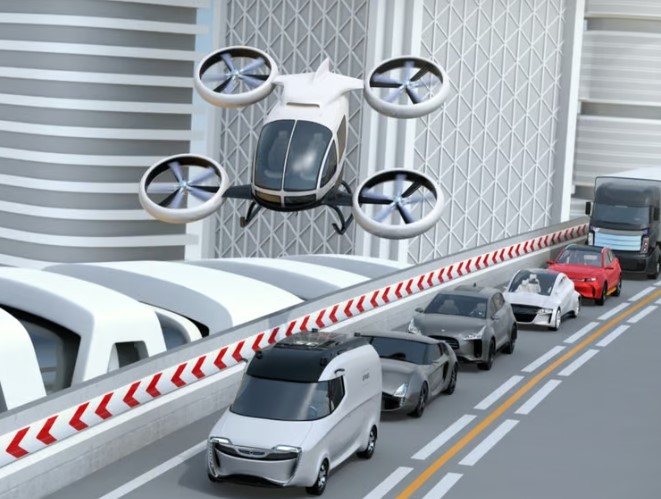
Bumble Bee Flights founder Arjun Das commented: “These autonomous air taxis would not only ease the already burdened urban road infrastructure but also will work towards reducing carbon footprints.
“Bee1 is the first air taxi from India that will be certified in multiple countries and is intended for various uses including human transportation, air ambulance, air taxi, and in the logistics and supply chain sectors.”
Founded by Das in early 2022, Bumble Bee Flights claims to have designed and developed India’s first autonomous air mobility solution capable of human transportation with multiple use case scenarios such as air ambulance, logistics, recreational use, and also defence applications.
The company claims its air taxis would run on solar-charged swappable batteries and would weigh around 300 kgs, compared to over one-third of helicopters that weigh about 1,000 kgs and more.
Das said that the air taxis will have the capacity to carry one person along with a suitcase and land on the rooftop of apartments with adequate space, unlike helicopters that need specific helipads. The air taxis can fly for 20 minutes for a distance of 20 Km.
Das believes that self-driven air taxis would become a regular feature in the world by 2035 when about 10% of the transportation would be managed and controlled by these flying vehicles, which would streamline daily commuting, reduce pollution, and more.

