
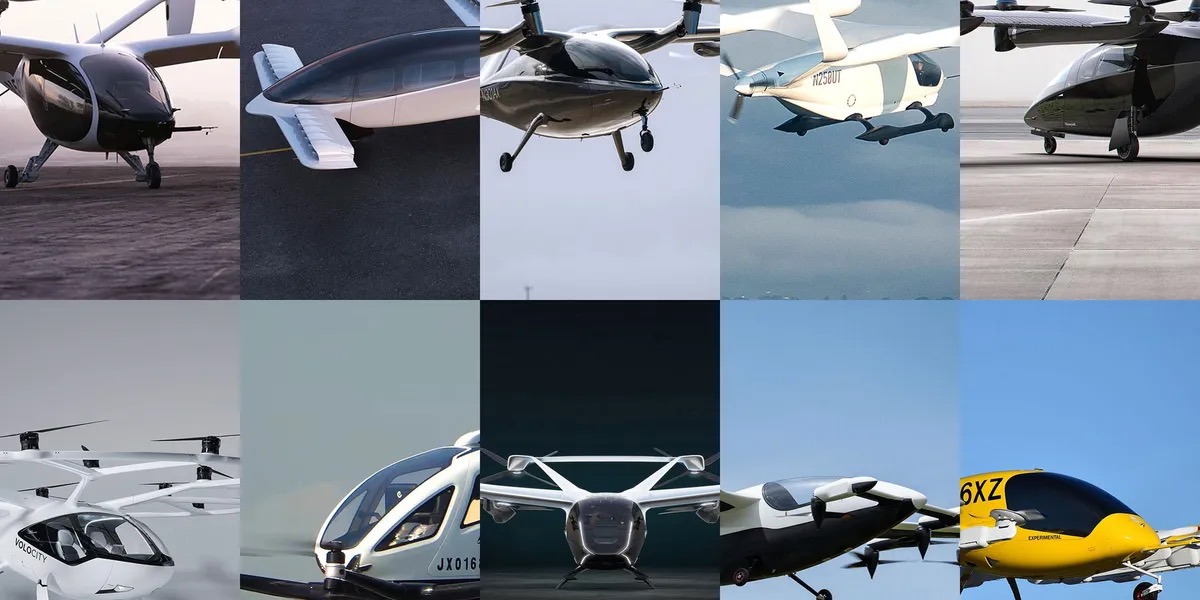
CNBC News: Major Feature “How electric air taxis could shake up the airline industry in the next decade”
CNBC News is not only one of the more influential global business media networks, but attracts over six million of the most affluent adults across Europe — the very people who can afford to regularly ride on flying taxis when they begin commercial flights in 2025.
Owned by NBC Universal, the network is followed by more than 355 million people per month across all platforms. In a nutshell, the eVTOL Industry is lucky to have such an ally, given CNBC first highlighted the industry more than 5 years ago and since regularly features eVTOLs in a positive and enthusiastic way.
The latest article, written by Mikaela Cohen, focuses on the growing interest from major airline companies as they invest and form partnerships with the flying taxi industry. Joby and Delta; Vertical Aerospace and American Airlines; Archer and United Airlines are some examples mentioned.

Savanthi Syth
Cohen talks to Savanthi Syth, MD of equity research at market research company, Raymond James. “Initially, eVTOLs are supposed to replace your personal car, but it’s going to be different for people, based on where they are going to be,” she says. “We think that you’ll see small amounts of operations starting in the 2025 timeframe, with certifications hopefully happening in 2024.” Adding, “But for you to see a lot of aircraft flying overhead, it’s probably going to be more likely into the 2030s.”
Once these aircraft get certified and start ramping up production, Syth explains that “potential market size largely depends on how close companies can get eVTOLs to where consumers are.” After discussing the importance of creating the essential vertiport infrastructure and constructing them “close to potential customers in residential areas”, the market size “could be large.”
Cohen then speaks to Beau Roy, senior MD at FTI Consulting, who specialises in the aviation industry. He says that while airlines need to become more sustainable, investments in eVTOLs is one way of off-setting carbon emissions.
Airlines don’t have many choices,” Roy explains. “The biggest option is sustainable aviation fuel, but, last year, maybe one out of every 1,000 gallons of jet fuel could be found as SAF.” Adding, “And why Airlines are getting aggressive with where else they can invest.”
Therefore, while eVTOLs offer airlines an addition to their ESG portfolio, they also provide them the ability to capitalise on replacing long car drives with a flight option for consumers. Roy continues, “An interesting use-case (of eVTOLs) is thinking about getting people out of cars for the 100, 200, or 300-mile trips that we take. Close to 200 million trips per year are in cars for 100 to 500-mile distances.”
He believes airlines can not only take cars off the road for the benefit of the environment, but will offer consumers a faster and more efficient alternative to cars.
Roy explains, “Airlines are looking at, ‘How do we get the cost and ease of use more widely available to people?’ If it’s cheap enough and the time savings significant, people will change their behaviour and get out of cars.”
He says, most traffic occurs at the major airports, so airlines can take advantage of emerging tech like eVTOLs and existing regional airports for industry growth.
Delta and Joby are planning for eVTOLs to hit major cities, like New York City and Los Angeles, for its initial launch. Ranjan Goswami, senior Vice President of customer experience design at Delta, says the company has set its sights on NYC and LA because of the prolific congestion and traffic in these dense metropolitan areas and because of how prominent Delta is in such markets.
“The big cities are where you have the best-use cases and the most people to utilise (an eVTOL) service. It’s also where you have the economies of scale to help bring the cost reachable to more people.”

Ranjan Goswami
Goswami believes getting to and from airports represent some of the most stressful parts of traveling and eVTOLs can alleviate that experience. “We’re not going to talk to the market right now about price points, but we believe it needs to be accessible. Unlike helicopters, which are so expensive, the goal is to make (eVTOLs) reachable and affordable to the traveling public.”
Meanwhile, Roy says he’s optimistic about seeing flying taxis in the next decade, launching them commercially may not happen as quickly as hoped.
For in addition to getting these aircraft produced and then certified, utilising existing infrastructure to accommodate eVTOLs is also a hurdle. With flying taxis operating on electric batteries, these buildings must also generate substantial power and electricity for charging stations.
Roy concludes, “These aircraft are going to work, and the FAA will do their job to make sure they work. It’s just going to take a while to get from where we are today to where we’ll need to be.”
(News Source: https://www.cnbc.com/world/?region=world)
(top image: IEEE Spectrum)
