
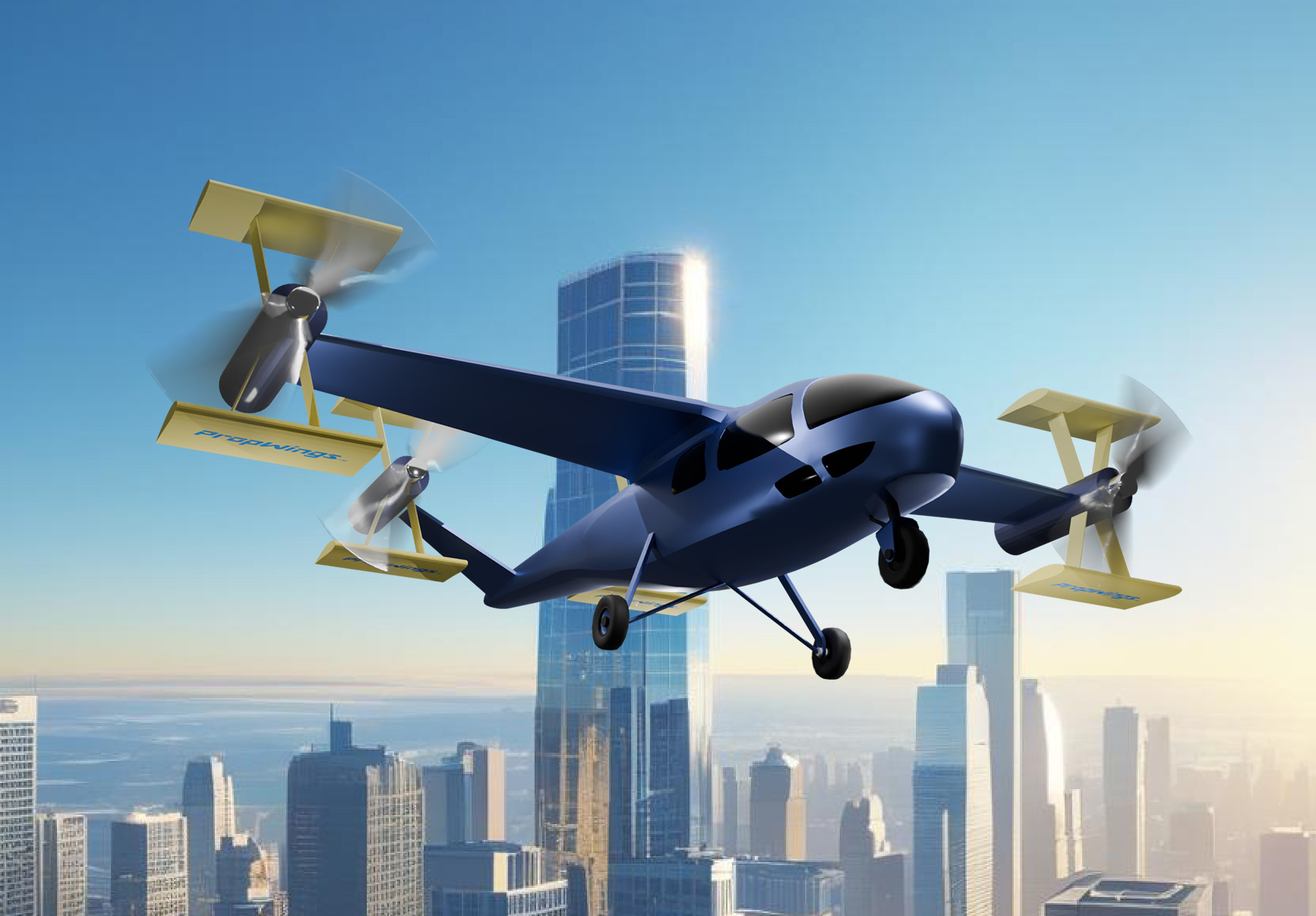
Flight Kinetics Introduces PropWings, a High-Lift Aerodynamic Technology to Significantly Boost eVTOL Energy Efficiency
Flight Kinetics has released more details about its PropWings high-lift technology, which the company says can significantly reduce battery energy consumption for electric and hybrid-electric eVTOL tiltrotor and tilt-wing aircraft, whether they are piloted or autonomous.
With patents pending, Flight Kinetics says this new technology promises to substantially increase flight range, payload capacity and safety, all while reducing operational costs by using previously wasted energy to amplify lift.
Lester Erlston, founder of Flight Kinetics, Inc. and inventor of the PropWings technology, said: “The very large power demand required for vertical take-off and transition to forward flight is a major challenge for eVTOL viability. Our propulsive lift technology doesn’t eliminate the power demand, but it provides a significant energy offset by speeding-up the transition to more efficient main wing lift.
“As a result, PropWings conserves substantial battery energy in both the transition and cruise phases, which is essential for extended range and operational capability.”
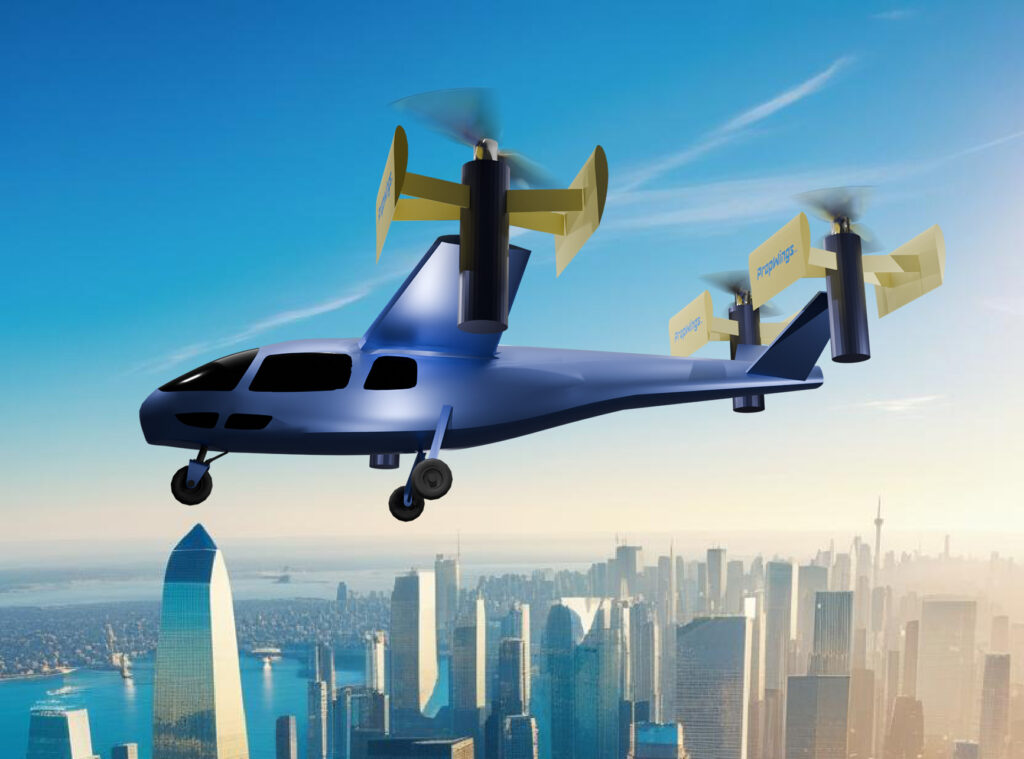
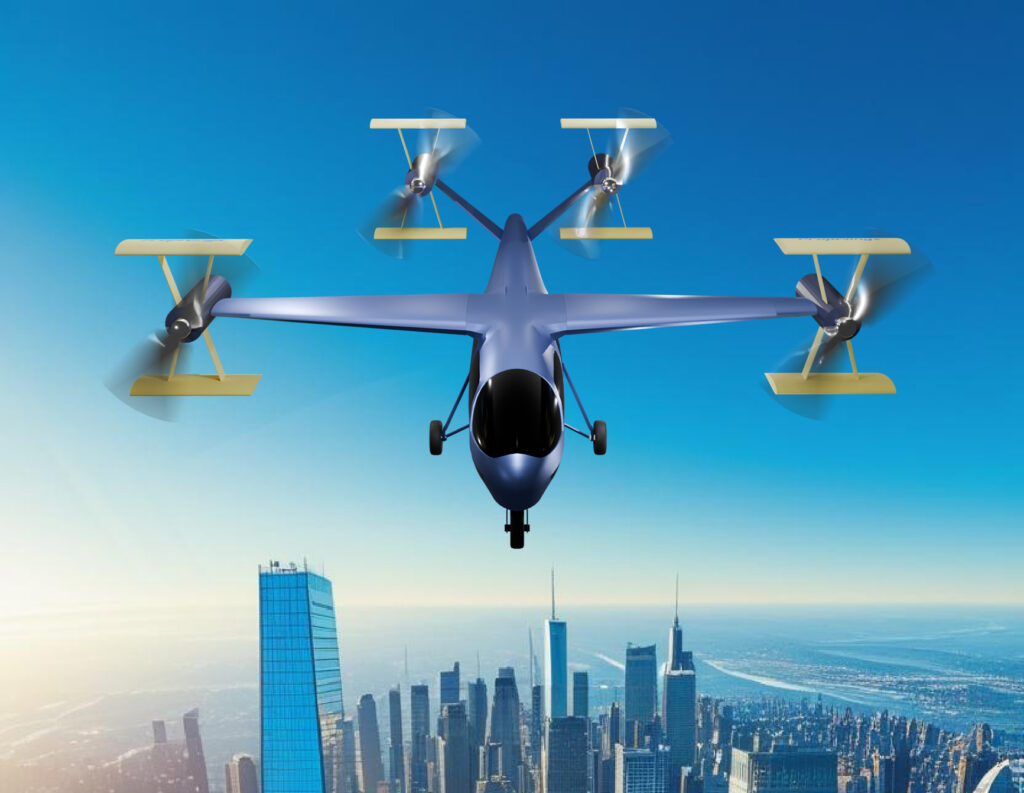
PropWings harnesses propeller slipstream to generate increased lift. By using this available energy source, the technology enables eVTOL aircraft to more rapidly transition to horizontal flight and generate lift from their main wings, fixed or tiltable, once the rotors have initiated vertical take-off.
Since main wing forward flight is more energy-efficient than helicopter rotor forward flight, accelerating the transition phase results in significant energy savings. And PropWings keeps generating lift during cruise flight, providing continuous battery energy conservation.
The technology can deliver further advantages in cruise efficiency. Since PropWings effectively increases the main wing’s wingspan, it can reduce induced drag to save energy during cruise. Simultaneously, it can potentially reduce rotational energy in the propeller-wash swirl, increasing propulsive efficiency.
Primarily intended for eVTOL aircraft, it can be integrated into and is compatible with new aircraft designs or adapted to existing designs.
Flight Kinetics is a pioneering startup aerospace technology company led by a team of diverse experts. They include an innovator with nine issued patents, a highly respected Professor of Aeronautics at a leading US university, a pioneer in impact investing and cleantech and a skilled patent attorney with a background as a senior nuclear reactor operator (SRO).

