
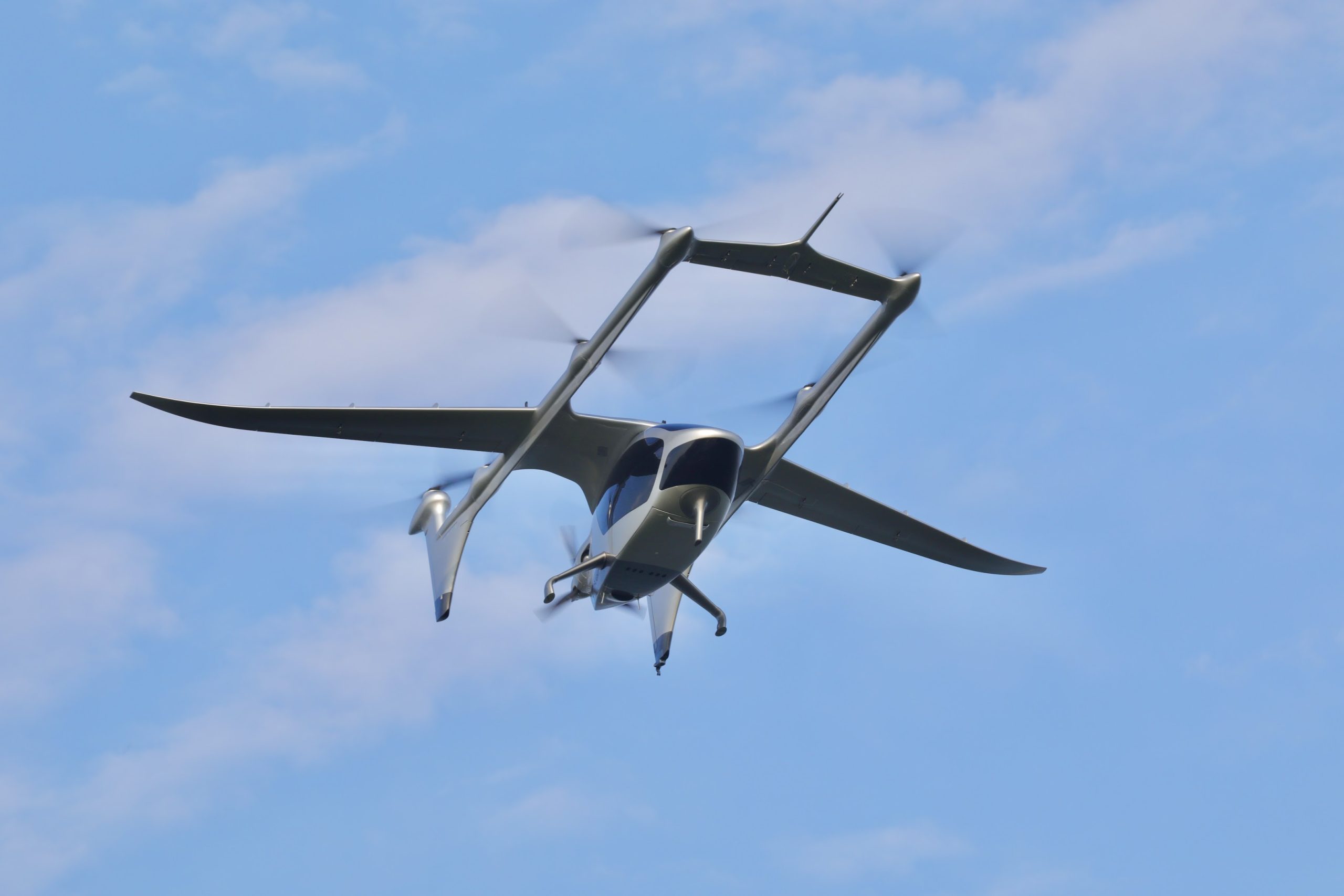
Interview with AutoFlight’s New CCO Chad Cashin
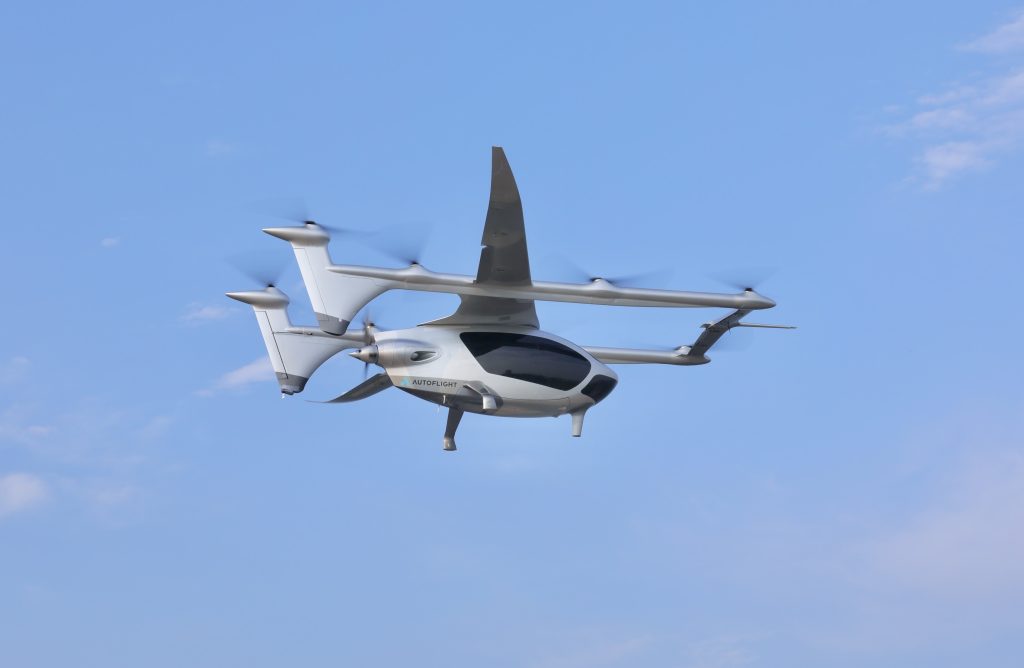
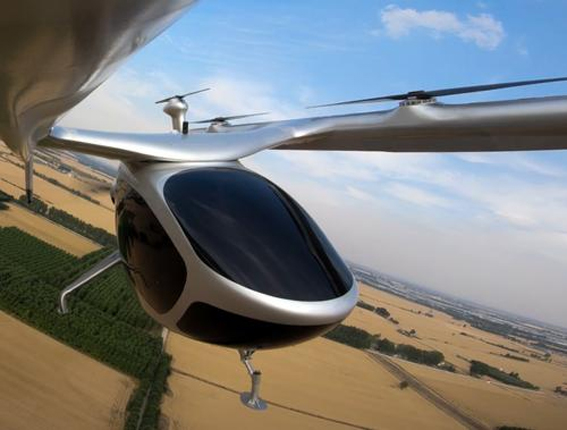
Chad Cashin formerly of Uber Elevate and Joby Aviation was recently appointed Chief Commercial Officer (CCO) of China-based AutoFlight. He explains why he moved from Joby and enthuses about the potential of AutoFlight and its eVTOL passenger and cargo carrying Prosperity 1, before offering his views on the exciting future of Urban Air Mobility.
________________________________________________________________________________________________________________________________
Chris Stonor Asks The Questions.
When did you first become interested in Urban Air Mobility?
I started flying when I was 13 years-old. I have been a private pilot ever since. I am a self-confessed aviation geek, so it wasn’t hard to be attracted. It was during the time at Uber that my interest really began. I think the industry is terrific.
I worked with the Elevate team carrying out a lot of business development work. Through them I got to know Joby and JoeBen (Bevirt) as the company was a silent partner. Also, getting to know the various OEMs Elevate was partnered with, at the time. I learned who was real; who was willing to take the risks; who had the funding and progress. Joby impressed me. No mock-up models on display at events and that sort of thing.
I joined the company as one of its first commercial hires and led corporate strategy and business development. I was there for around two and a half years. I became involved because I knew they had a three year lead on its competitors. I worked on Joby’s acquisition of Uber Elevate and bringing my old friends into the company, as well as on the SPAC process. Joby remains an incredible company. It always has been.
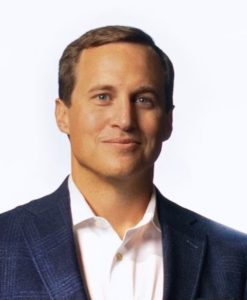
Chad Cashin
Why then did you join AutoFlight?
The more I learned about AutoFlight the more shocked and surprised I became. I had known the primary company investor, Lukasz Gadowski, CEO of Team Global, for several years, but it was after I discovered the company’s flight progress and transitions; that they had flown thousands of miles already. Their velocity of development has been impressive. You can’t fake flying.
Meeting Omer Bar-Yohay, (recent Company President, former Founder and CEO of Eviation) was also a huge part of my decision. He is an incredible operator. Omer’s done amazing things in aviation. I am very excited to work with him. Job choices are very personal decisions. External pieces go in to it too. I still love Joby. Just looking at its craft, it is difficult not to swoon.
AutoFlight seems to have come out of nowhere.
I completely agree. This is Lukasz largest investment compared to his other eVTOL companies like Volocopter and Archer. This too really peaked my curiosity.
In your view, what makes AutoFlight special?
My big headline statement is the company is a quiet No.2. It is flying two generations of aircraft with a third coming online shortly. This will lead later to gaining full certification in 2025. That’s impressive in itself. The fact the craft has transitioned, no-one else has apart from Joby and to a lesser extent Lilium.
I really believe in AutoFlight I really do. We did a lot of work on configurations at Elevate. In my view, the perfect world design is 100 percent tilt. Your drag then turns into thrust. There are no drag motors sitting there, but we don’t live in a perfect world. The simplicity of AutoFlight’s Prosperity design gets you to a feasible economic price point, with an easier certification path and manufacturing. Not only has the company around 500 employees, but the Founder’s (Tian Yu) previous companies have constructed millions of scaled electric aircraft. This experience alone allows it to avoid throwing any curve balls at the regulators EASA and FAA.
Another major point is the company has already built a major factory ready to construct its eVTOLs. There is no half a billion dollars investment required. This premise has the ability to build the big expensive physical components such as the carbon fibre fuselage and brushless electric motors. And being made in China offers highly attractive savings compared to Europe or America.
So, AutoFlight already has the three major factors required. Its flight progress is second only to Joby; a simplicity of design; plus manufacturing, puts in all the pieces to make this project work.
I have viewed tons of eVTOL companies with 20 in detail. If you want to be around for the long term, you need these three parts. AutoFlight has them. This is particularly cool, especially when the world had not heard of the company until recently. I was super surprised when I learned about all of this. It is a fantastic platform for myself and Omer to push forward.

Tian Yu and Lukasz Gadowski
Why is the company so focussed on Europe and U.S, why not China?
Tian knows the U.S well. He has already brought a number of different experimental aircraft to the country. Europe and America are the places to be, if you wish to bring a craft to a mass global market. While the safety bars are high and it is a tougher road, you need to be there.
Are you the CCO for the world or just the U.S?
Any planes sold around the world happens under my watch. I gained the job through the grapevine as so often happens in tight industries like this one. I am based in America, where we have a hangar and office space at Napa County Airport in California.
What are your views on the eVTOL noise factor. How important is this?
To produce a successful eVTOL you require three major things. Safety comes first, followed by the noise profile and then running costs. If you don’t have all three you don’t have an innovation. Therefore, there is a huge focus at AutoFlight to keep the noise profile to an acceptable level.
The goal for the industry is the 70Db mark. This level hits a lot of sensitive public noise thresholds. You can fly where you want to then. And if you can get the decibel level even less, all the better. It is the take off and landing sites. That’s the crucial part. To keep these areas as quiet as possible.
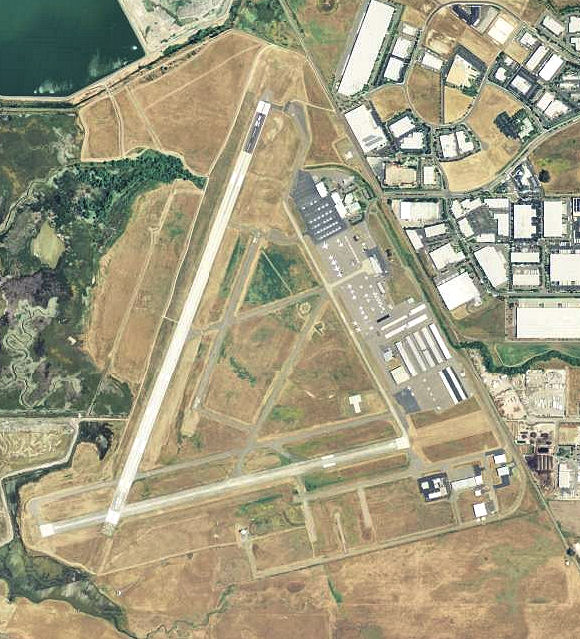
Napa County Airport
What exactly is your role as the CCO?
My role is to sell a lot of aircraft and as many and as early as possible. To achieve this, you need to be present in the area your are targeting, whether it is America or South Korea. You must learn about the country’s set-up. The regional aircraft companies, the operators, creating partnerships and growing with them as you lead towards commercial certification.
A big advantage for us is the price point. Omer has been very sceptical about the eVTOL industry previously. He didn’t see where the profits could be made. AutoFlight is the first eVTOL company, where he sees the economic light.
Have you sold any aircraft yet?
We are selling all along the way. Prosperity is both a passenger and cargo aircraft. We have made sales of both. This has not been mentioned publicly yet, but will be so in 3 to 6 months. Moving forward, the market is huge. There’s plenty of potential sales out there.
Are you concerned that by 2025, some of your competitors will already have had a year or more start on you?
Being a first mover isn’t critical here. No company will be able to build hundreds of its craft in the early stages due to both supply chain issues and the infrastructure. So no, we are not worried about this.
How will the infrastructure problem be resolved?
First, it is important to be involved with the process, although not to be directly responsible for the financing. Initially, Urban Air Mobility must become geographic specific. Partnering with the right groups, educating regional lawmakers. You need to focus on key zones and work to make it happen. An important factor is the public must see eVTOLs in action to overcome any initial concerns.
The real first movers that matter in this industry will be the municipalities, who are willing to break the mould and go out on a limb. Other cities will then follow. For this to happen the industry needs to target specific areas and show the lawmakers, for example, how UAM will cost far less to set up than the construction of new roads or rail. From there, the second movers will emerge and so on.
What is AutoFlight’s timeline leading up to 2025?
First, we’ll begin flight trials over America, starting in Q1 of next year and build from there with others to follow in Europe. We are looking at EASA, first, for commercial certification. The regulator is more prescriptive right now compared to the FAA. We are presently flying a Gen 2, where 3 comes along a little later. We are going piloted, at first, and are looking at the U.S and Europe to be our initial primary markets.
Presently, collaboration between eVTOL companies is the most important thing. There are some terrific aircraft out there. Infrastructure is a huge problem, which we all have to tackle together. A rising tide lifts all boats.
The SPAC market has brought competitive dynamics to bear, but in the right way. While, it is a measuring stick on company valuations, certification is the great equaliser. Once achieved then it becomes full on competition.
Given the huge costs of bringing an eVTOL aircraft to market are you looking to go public in the near future?
Apart from Team Global we have other investors like TDK from Japan. It is best for us to remain private and continue to raise money when necessary. Private is perfect for us right now.
How do you see the industry evolving?
The present aircraft represent the Model T Ford of the car industry. They will continue to evolve with better powertrains and technologies. Initially, the passenger cost will be similar to Uber Black. Once autonomy hits, this will be the major game changer. Overheads come down along with passenger prices and everything changes.
Have you flown an eVTOL via a simulator?
Yes, very much so. Simulators are great fun. Compared to a helicopter, eVTOLs are very intuitive and simple to use.
Finally, what are your interests outside of work?
Flying fixed wing craft is my passion, but I have a 15 month old baby, so my time is somewhat limited, at present. I love surfing and mountain biking. I presently live in Santa Cruz, California, near to Monterey Bay, so the location helps. I grew up close to Silicon Valley, so getting involved with the eVTOL industry kinda makes complete sense.
For more information
https://www.autoflight.com/en/
(Pics: AutoFlight)
