
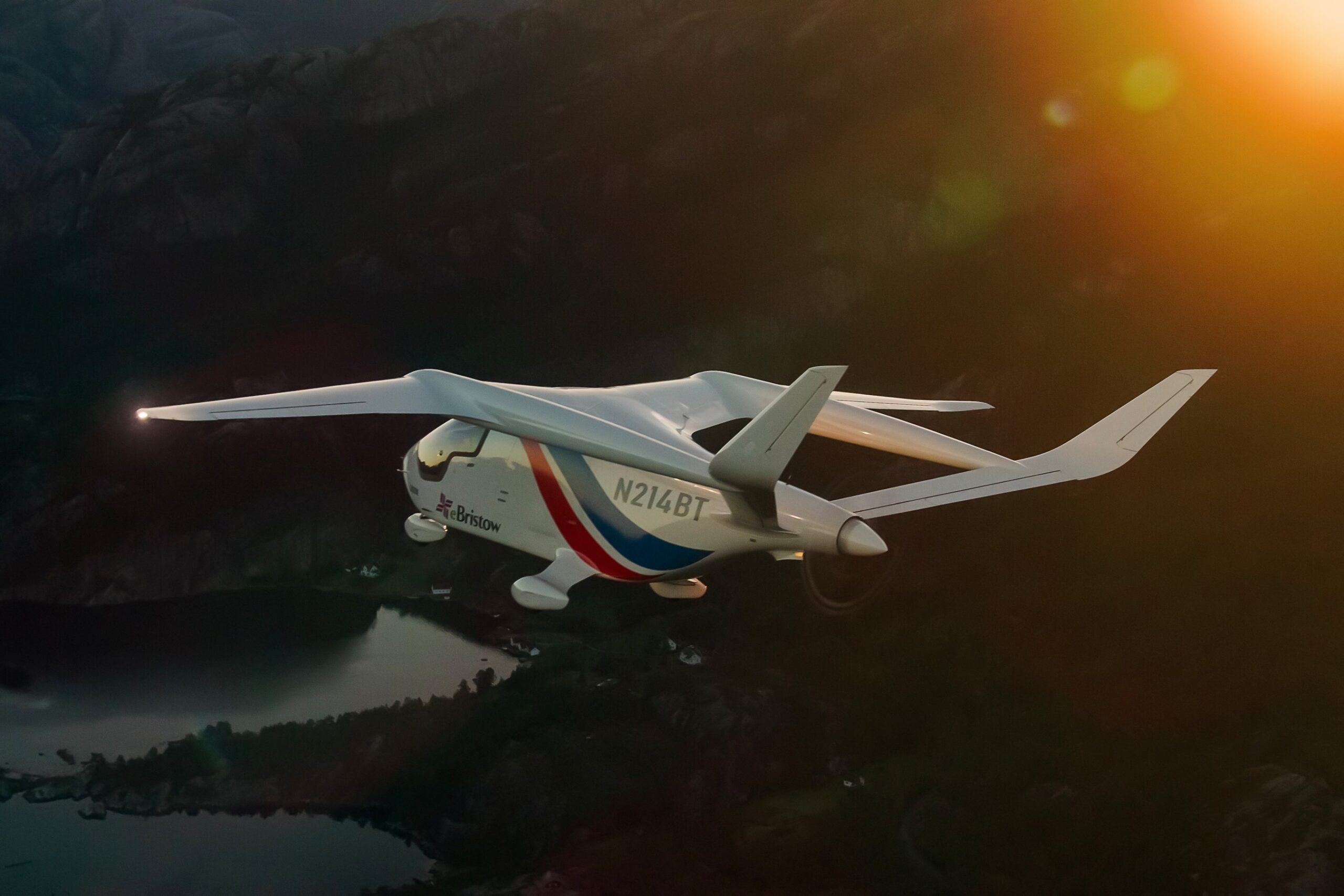
Norway Completes its First Electric Aviation Test Project Using BETA’s ALIA Aircraft
Norway reached an important milestone last week in its transition to low- and zero-emission aviation, with Bristow pilot Jeremy Degagne landing BETA Technologies’ ALIA aircraft in Stavanger after six months of testing.
The electric aviation test project was carried out in cooperation between Bristow, BETA, Avinor and CAA Norway. It is the first project conducted under Norway’s international test arena, which was established by Avinor and CAA Norway in April 2024 to accelerate the introduction of new technologies in Norwegian aviation.
During the six-month period, the aircraft performed regular test flights on a cargo route between Stavanger and Bergen. Airports, air traffic control, and regulators gained hands-on experience with charging infrastructure, winter operations, new procedures, and future training needs.
And in a press release issued yesterday (Monday), it says the project delivered valuable real-world experience in electric aircraft operations, infrastructure, and regulatory frameworks. Additionally, it demonstrated how new aviation technologies can be introduced safely and gradually into a highly regulated environment, and how close cooperation among authorities, airports, operators, and technology providers is essential to a successful transition.
Karianne Helland Strand, Executive Vice President for Sustainability and Infrastructure, Avinor, said: “As the national airport operator, Avinor has a clear responsibility to prepare our infrastructure for the next generation of aviation.
“Through this project, we have gained concrete experience that will guide how we develop airports and charging infrastructure and provide operators with a stronger basis for assessing the future commercial viability of routes based on new technologies. We will now build on these lessons in the next phase of our test and development projects.”
For the Norwegian Civil Aviation Authority, being part of this first of a kind demonstration programme has been a rewarding experience on several levels.
Close and continuous dialogue with air traffic control was a key factor in the project’s success. Feedback from controllers indicates the aircraft could be integrated into existing airspace with limited additional workload, reinforcing that innovation and safety can go hand in hand.
Jan Petter Steinland, Director Strategic Analysis & Transformation, added: “We have established a first version of a Regulatory Sandbox and are able to evaluate how the different safety regulations work in the context of this new technological concept. We are also maturing our safety methodology to be more fit for purpose for an innovation setting and can broaden our competency on these technologies in the process.”
The project has also highlighted key strategic needs for the next phase of electric aviation, including the development of robust charging solutions, winter-adapted infrastructure, and dedicated training for fire and rescue services related to batteries and alternative fuels.
The test project has been met with strong interest and optimism both in Norway and internationally. Together, the partners now bring valuable experience into the next phase of advanced air mobility development, where technology, regulation, infrastructure, and market potential must advance in parallel.
Dave Stepanek, Executive Vice President, Chief Transformation Officer, Bristow Group, said: “This project represents an important step toward the next generation of flight. We’re proud to contribute real-world operational and safety experience that supports the careful, responsible introduction of electric and sustainable aircraft.
It’s also a source of pride to work alongside our partners in Norway, where Bristow has a long-standing presence, as we help move these technologies from testing toward practical, real-world use. We’ve learned a great deal, and we look forward to sharing that insight.”
Simon Newitt, Head of Sales & Support, at BETA Technologies, added: “This project demonstrated exactly how electric aviation should be introduced with a planned, safe approach conducted in close partnership with regulators, operators, and airport authorities.
Norway’s geography and regional connectivity needs make it uniquely well suited for electric aviation. Over six months of real-world operations, BETA was able to validate aircraft performance, charging infrastructure, procedures, and winter operations in one of the most demanding environments in aviation.
“The experience gained here directly informs how electric aircraft can be integrated into existing airspace and airport systems and scaled responsibly to enable commercial operations that deliver both lower cost and lower emissions.”
Facts
Number of flights: 126
Total distance flown: 8748 nautical miles (16201 km)
Kilowatt-hours charged: 12 MWh

