
PODCAST RECAP: Turning Wasted Energy into Lift: How Flight Kinetics Aims to Extend eVTOL Range
In a recent episode of the eVTOL Insights podcast, Jason Pritchard spoke with Lester Erlston, founder of Flight Kinetics, about the company’s mission to tackle one of the most persistent challenges in Advanced Air Mobility: energy efficiency.
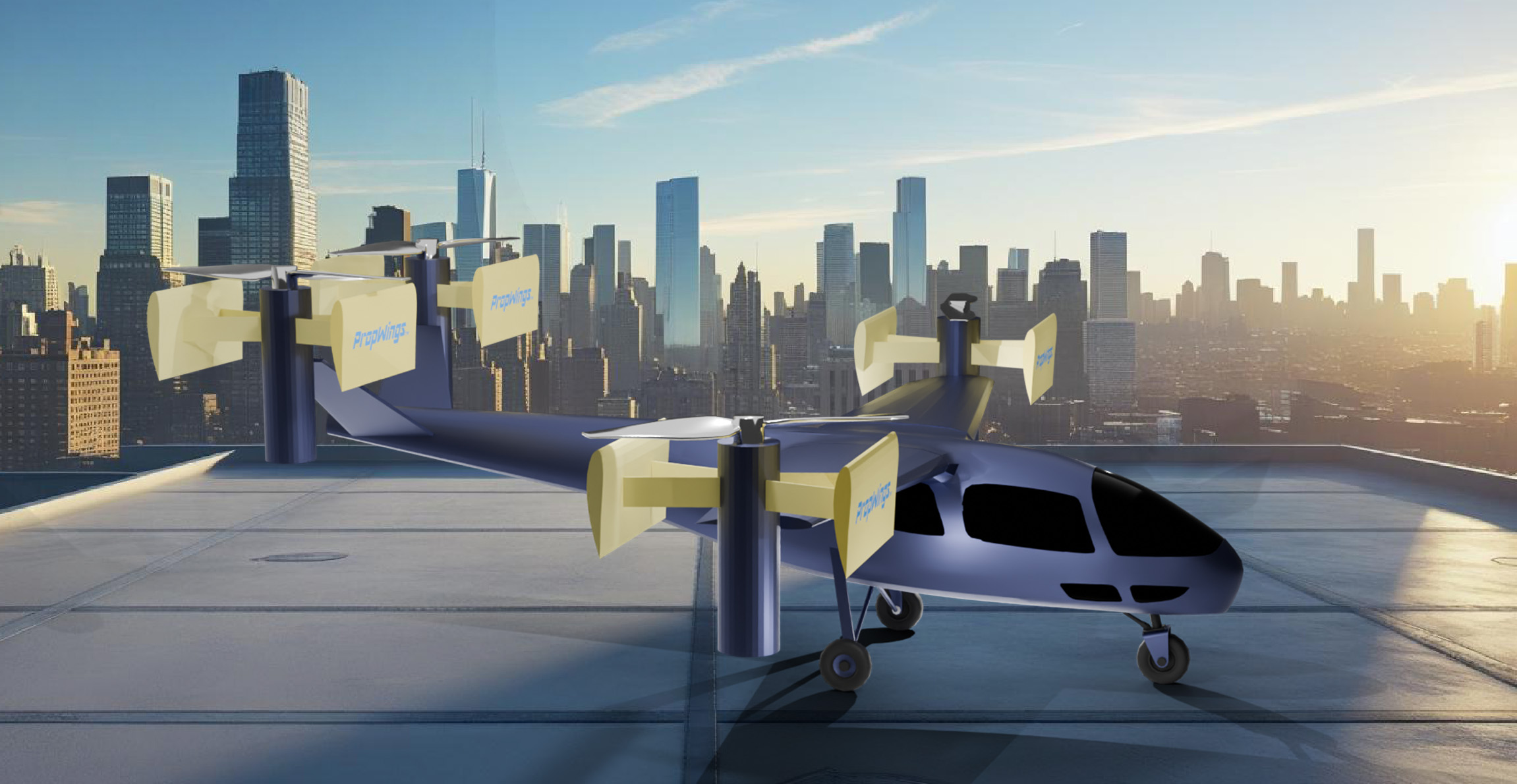
Flight Kinetics is developing an aerodynamic technology known as PropWings, designed to enable electric and hybrid-electric aircraft to fly further, carry heavier payloads, and operate with greater safety—without requiring advances in battery chemistry.
Erlston said: “Our mission is to provide a critical, airframe-neutral technology that makes advanced air mobility more economically viable, allowing aircraft to fly further, carry heavier loads, and optimise safety within existing energy constraints.”
Flight Kinetics positions itself as a high-lift, energy-saving aerodynamics company focused squarely on improving the economic viability of eVTOL operations.
Erlston explained that while much of the industry is constrained by current battery performance, a significant amount of energy is already being wasted aerodynamically, particularly in propeller slipstream during high-thrust phases such as the transition from vertical to forward flight.
He added: “The promise of eVTOLs is currently constrained by battery technology and aerodynamic efficiency. We noticed that propeller slipstream energy is wasted whenever the aircraft is in forward flight, particularly during high-thrust transitions from vertical to forward flight.
“PropWings uses the energy already expended by the motors and propellers to generate significantly increased lift, particularly at high motor thrust and slow forward airspeeds. “We effectively harvest wasted slipstream energy and convert it directly into extended operational range.”
Erlston noted that the system may also reduce rotational energy losses in the propeller wake, potentially increasing propulsive efficiency further. Importantly, these gains are additive to any future battery improvements OEMs may adopt
He added: “Most other solutions focus on incremental improvements in battery energy density. We address the challenge from a unique aerodynamic perspective.”
“Our system doesn’t require waiting for the next generation of battery chemistry, it maximises the energy we already have.”
Since its founding, Flight Kinetics has focused on protecting its intellectual property and refining its go-to-market strategy. The company is pursuing a technology licensing model, aiming to become a tier-one aerodynamic technology partner to eVTOL OEMs rather than a hardware manufacturer.
This airframe-neutral approach is intended to make the solution adaptable across a wide range of aircraft configurations, allowing multiple manufacturers to integrate the technology without significant redesigns.
Erlston said: “We see ourselves as a tier-one technology licensor, providing proprietary aerodynamic expertise directly integrated into eVTOL airframes.
“By licensing our technology rather than manufacturing components, we can partner flexibly with multiple OEMs.”
On the technical front, Erlston acknowledged the challenges of developing a robust and widely compatible system, highlighting the importance of computational validation and external expert review.
The company’s progress has been supported by preliminary assessments from two major US aerospace firms, as well as technical endorsement from Professor Robert Bridenthal of the University of Washington’s Boeing Department of Aeronautics. Most recently, Flight Kinetics has finalized the engineering framework for advanced CFD validation, marking a key milestone on its path toward physical testing and flight validation
Looking ahead, Flight Kinetics is currently raising capital to fund CFD, wind tunnel, and eventual flight testing—steps Erlston described as critical to de-risking the technology and unlocking commercial licensing agreements.
Successful validation would allow OEMs to precisely quantify gains in range and useful load, performance metrics essential for market acceptance. Ultimately, Erlston believes PropWings could help bridge the gap between today’s eVTOL capabilities and the requirements for profitable, scalable operations—extending advanced air mobility beyond short urban hops and into longer-range regional services
He concluded: “PropWings has the potential to become a standard technology on next-generation eVTOLs. The industry will be able to launch commercial services with a clear path to profitability.
“We’re at an exciting point where digital validation transitions into physical performance and measurable market impact.”
You can listen to the full episode, you can head to the Podcast section of our website or search for the eVTOL Insights Podcast on whichever podcast platform you use.

