
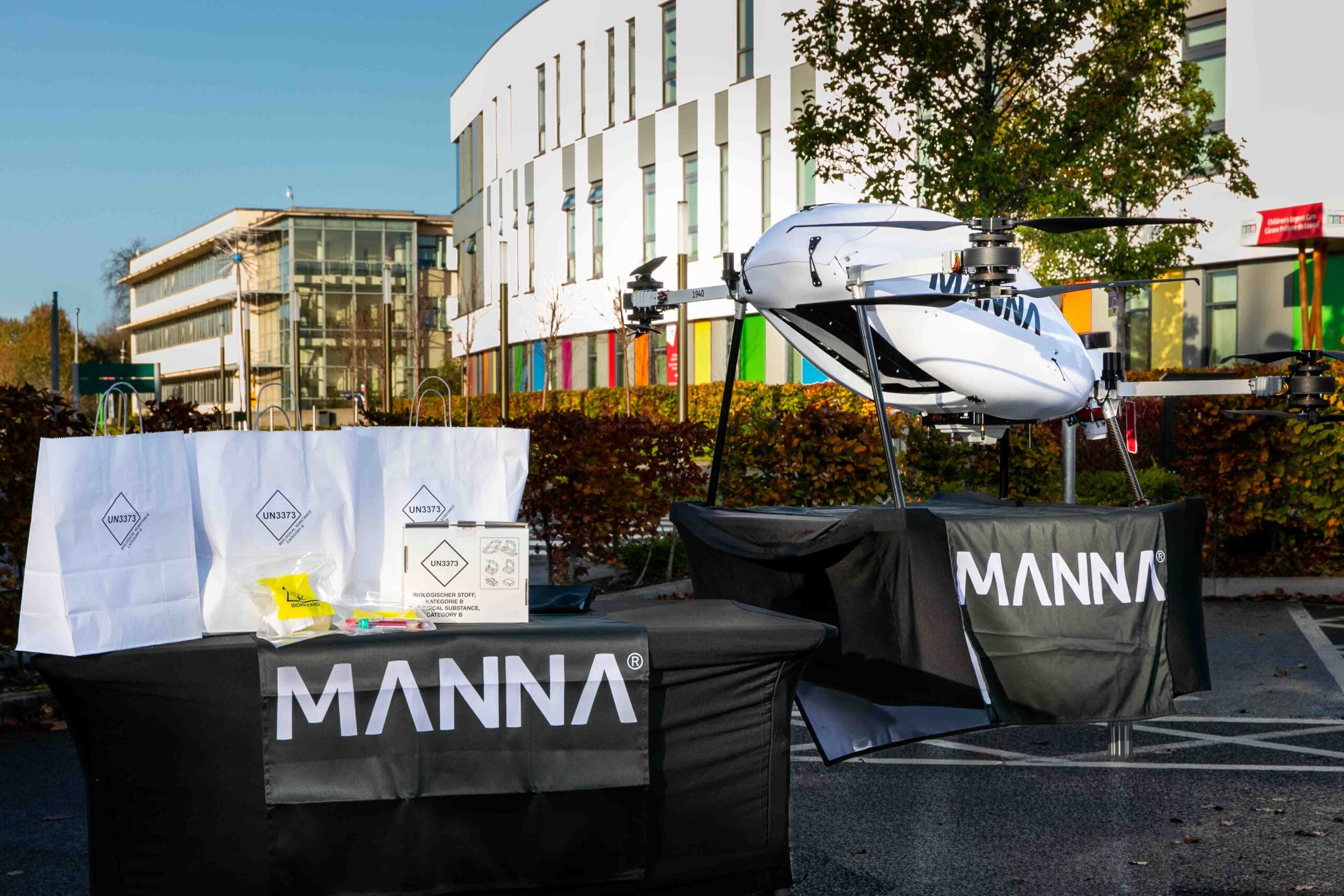
VIDEO: Rotunda Hospital and Manna Air Delivery simulate a new model for urgent medical delivery in Ireland
A flight simulation of medical drone delivery has taken place in Ireland, demonstrating the potential for rapid aerial transport of blood and other life-saving medical supplies between hospitals.
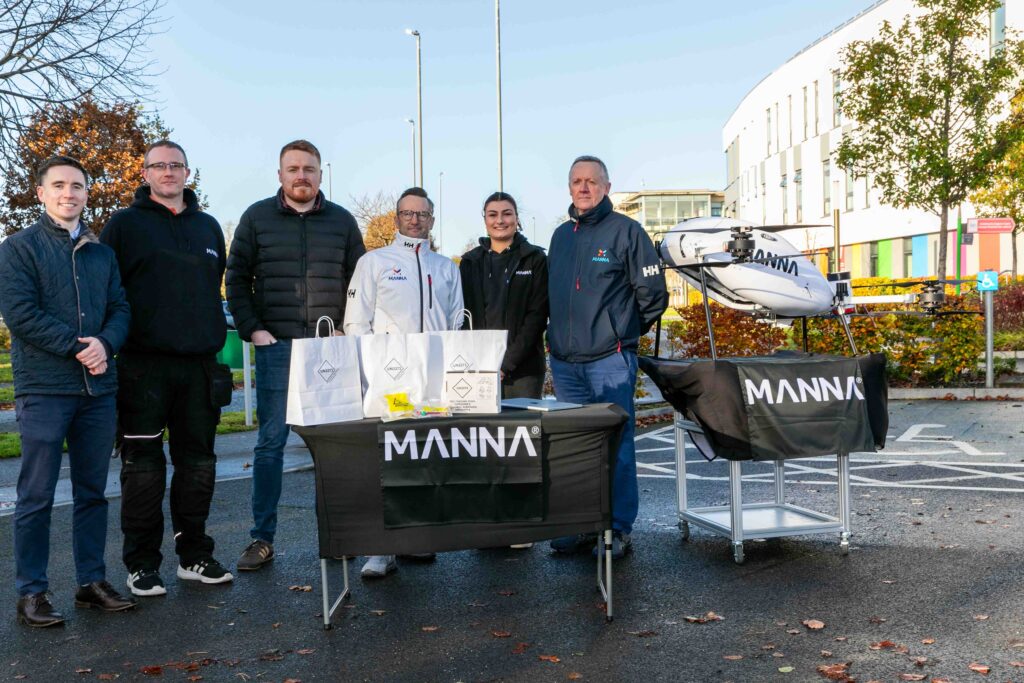
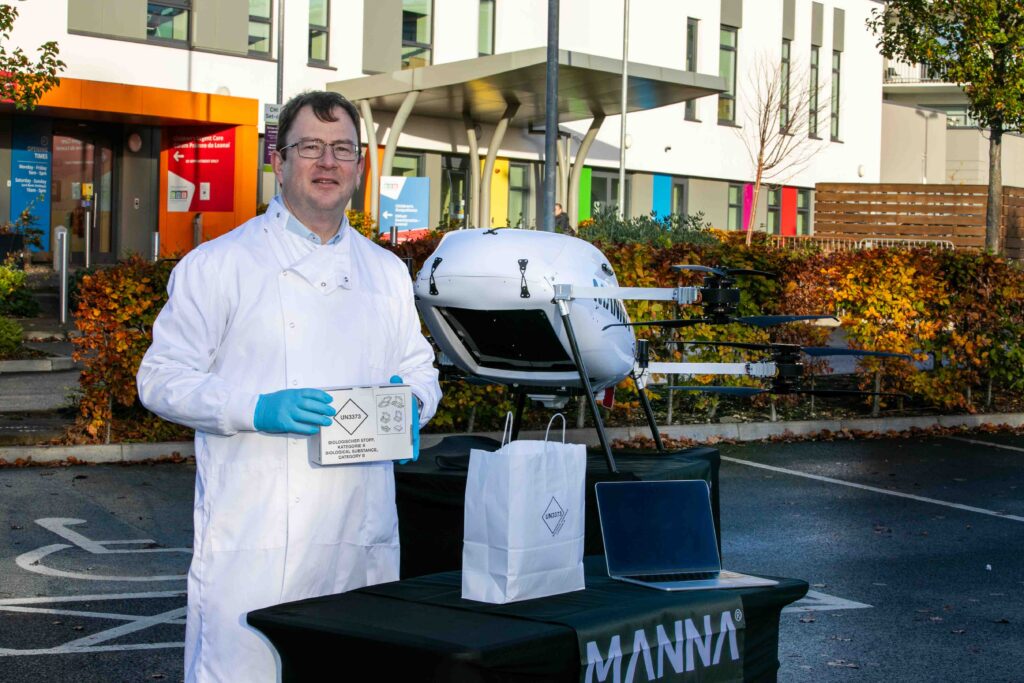
Led by the clinical expertise of Rotunda Hospital and enabled by Manna Air Delivery’s drone delivery platform — with software and drones built in Ireland — the demonstration simulated a delivery to Connolly Hospital in Blanchardstown, a suburb of Dublin.
The medical partners are driving the ambition to explore how drones can safely deliver between two hospital sites. This simulation is designed to show what is now technically possible and how it could support faster, cleaner and more connected healthcare in the near future.
On the simulation, John O’ Loughlin, Laboratory Manager at Rotunda Hospital said: “The ability to move blood, samples and other critical supplies between hospitals at speed could transform how we support emergency and planned care in Ireland. Today’s simulation is a glimpse of that future.”
The test reflects an ambition to upgrade how Irish hospitals operate as a system — moving vital supplies such as blood, pathology samples and emergency medicines in minutes, not hours. At a time when clinical pressure and population needs are growing.
Bobby Healy, Chief Executive Officer at Manna Air Delivery said: “We’ve proven this technology works at scale. What we’re showing now is how it can be applied in healthcare where minutes matter. Ireland is well-placed to lead the way, and this simulation is about building trust and momentum toward full integration.”
In the UK, NHS trials have shown how drone technology can transform hospital logistics and clinical outcomes. In London, blood sample transport times between Guy’s Hospital and St Thomas’ Hospital were reduced from more than 30 minutes by road to under two minutes by drone — enabling faster diagnostics for high-risk surgical patients and accelerating decision-making at the point of care.
In Dorset, a study found that drones serving 13 GP surgeries achieved an 83 per cent reduction in average delivery time compared to traditional van routes.
Last year, a simulation flight involving Manna’s drones and the rapid delivery of automated external defibrillators (AEDs) showed how drone delivery could dramatically improve survival rates for cardiac arrest patients in the community.
The project, led by Dr Glenn Curtin in collaboration with the HSE, National Ambulance Service and Community First Responders, demonstrated how a defibrillator could be delivered to a home within two minutes — significantly faster than the average ambulance response.
A previous study in Sweden found that drones beat ambulances to the patient 70 per cent of the time and reduced response time by an average of 3.4 minutes — a success rate that, if replicated in Ireland, could save more than 900 lives annually.
Professor Joseph Galvin, cardiologist and member of the Out-of-Hospital Cardiac Arrest Register Steering Group, said: “There’s nothing in all of healthcare that comes close in terms of the number of lives saved. This is radical and has great potential.”
While live operations between hospitals are subject to regulatory approval, the underlying platform is already in use in Ireland. Manna has operated safely across suburban communities under IAA and European oversight delivering groceries, over the counter pharmacy items and other time-sensitive goods daily. Medical deliveries are the next evolution.
In just 18 months, Manna Air Delivery has already replaced over half a million kilometres of road-based deliveries in Dublin 15 alone, reducing congestion. The sustainability case is equally strong: the drones are fully electric and emit zero CO₂ during flight. They have made 48,000 deliveries in the area.

