
Aeromagija Unveils Hybrid Light Aircraft Designed for Rapid Personal Air Travel
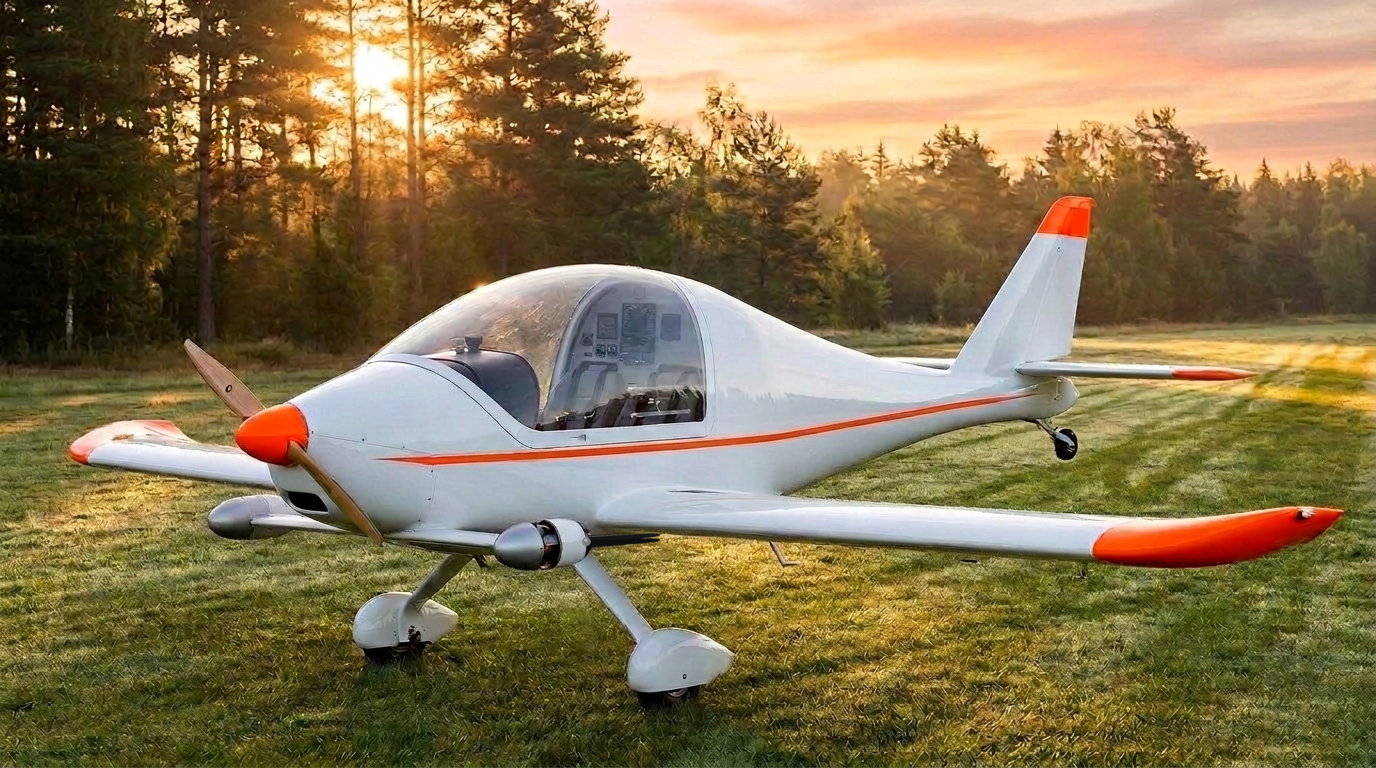
Lithuanian aviation developer Aeromagija has unveiled Binom1, a proposed single-seat hybrid light aircraft designed for short-distance personal transport. The company says the aircraft is intended to make routine travel between rural communities and nearby cities more practical, rather than serve the recreational flying market.
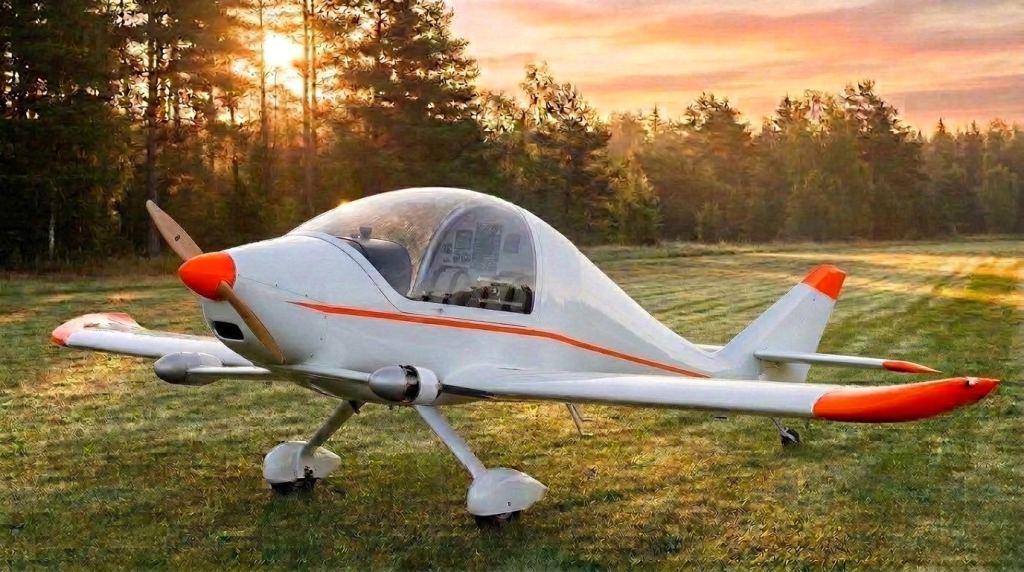
Binom1 is not an electric vertical take-off and landing (eVTOL) aircraft. Instead, it uses a conventional wing, supplemented by two electric motors mounted on a short forward wing. During take-off and landing, the motors direct airflow over the main wing to increase lift, allowing the aircraft to operate from short grass strips.
Aeromagija gives a take-off speed of 52km/h and says the aircraft will require a grass runway of up to 40m. In cruise, the electric propellers fold away and a petrol engine provides propulsion. The company estimates a cruising speed of 170km/h and an endurance of up to five hours, although these figures are based on calculations rather than a completed flight-test programme.
The electric motors are also intended to provide additional capability in the event of a main engine failure. Aeromagija says they could provide approximately 10km of level flight, compared with an estimated 2.4km of glide range without powered assistance.
The aircraft is being developed alongside NERINGA, Aeromagija’s three-level flight-control system. This combines conventional control algorithms with an AI-based assistant intended to advise the pilot, support demanding flight phases or eventually manage the entire flight. The company says the system’s low-level control layer is undergoing tests on its AD-27 ALPINK unmanned aircraft, which completed flight testing in 2025. A first flight with NERINGA installed on Binom1 is planned for December 2026 to January 2027.
Per Murahovsky: “Light aircraft today are mostly flown for fun, and it is not a cheap hobby: it is mostly for people with substantial means. We believe light and ultralight aircraft can become the basis of future 3D mobility.”
“Most homes today stand along the roadsides. Roads are what people cannot do without, yet they also get in the way of living. Land is cheaper far from the centre, but a commute of more than an hour is not acceptable. A vehicle that covers 100 to 120 km in 45 minutes lets people choose where to live for nature and ecology. Our mission is to make life in small airparks an everyday format rather than a privilege of the very rich, the way yachts are today.”
“We are not building a vertical take-off aircraft. It stays in the air on rotor thrust, which takes roughly ten times more energy than flying on a wing, and its endurance of 15 to 40 minutes leaves no room for an alternate airfield or manoeuvre. In aviation, a 15-minute fuel reserve means you should already be on the ground.”
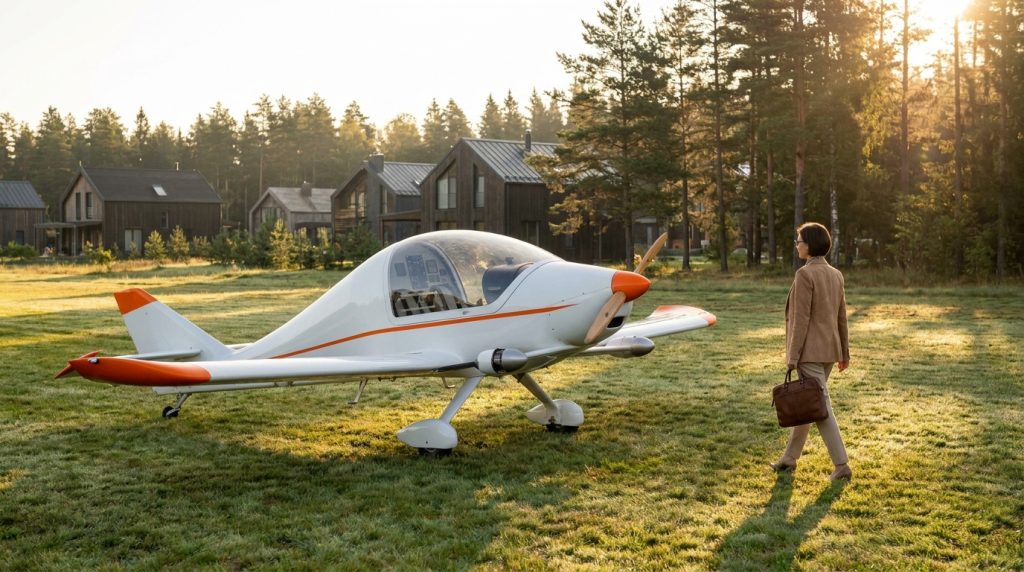
Aeromagija also proposes developing residential communities, described as airparks, around short grass runways of approximately 100–150m. Residents would use their own aircraft to travel to nearby cities. The company argues that this could make locations up to 100km from urban centres accessible within a 45-minute journey, although the proposed travel model will depend on aircraft performance, weather, operating costs and suitable local infrastructure.
A number of airpark communities already exist in the US, many of which currently focus on conventional single-seater aircraft that are often flown as hobby vehicles unless nearby infrastructure allows for practical travel from the airpark to a chosen destination. This infrastructure limitation is something that Binom1 is partially designed to address.
“Binom1 is designed as a hybrid: modern electric propulsion in small, measured doses without adding mass, blowing the wing very efficiently so that it can take off in about 36 metres. The ground infrastructure for such an airpark is comparable to what a helicopter needs, which we see as a reasonable compromise between infrastructure and flight efficiency.”
Tooling for Binom1 is now in production, but the aircraft remains at the development stage. Aeromagija is seeking investors and partners to fund construction and flight testing of a prototype.