
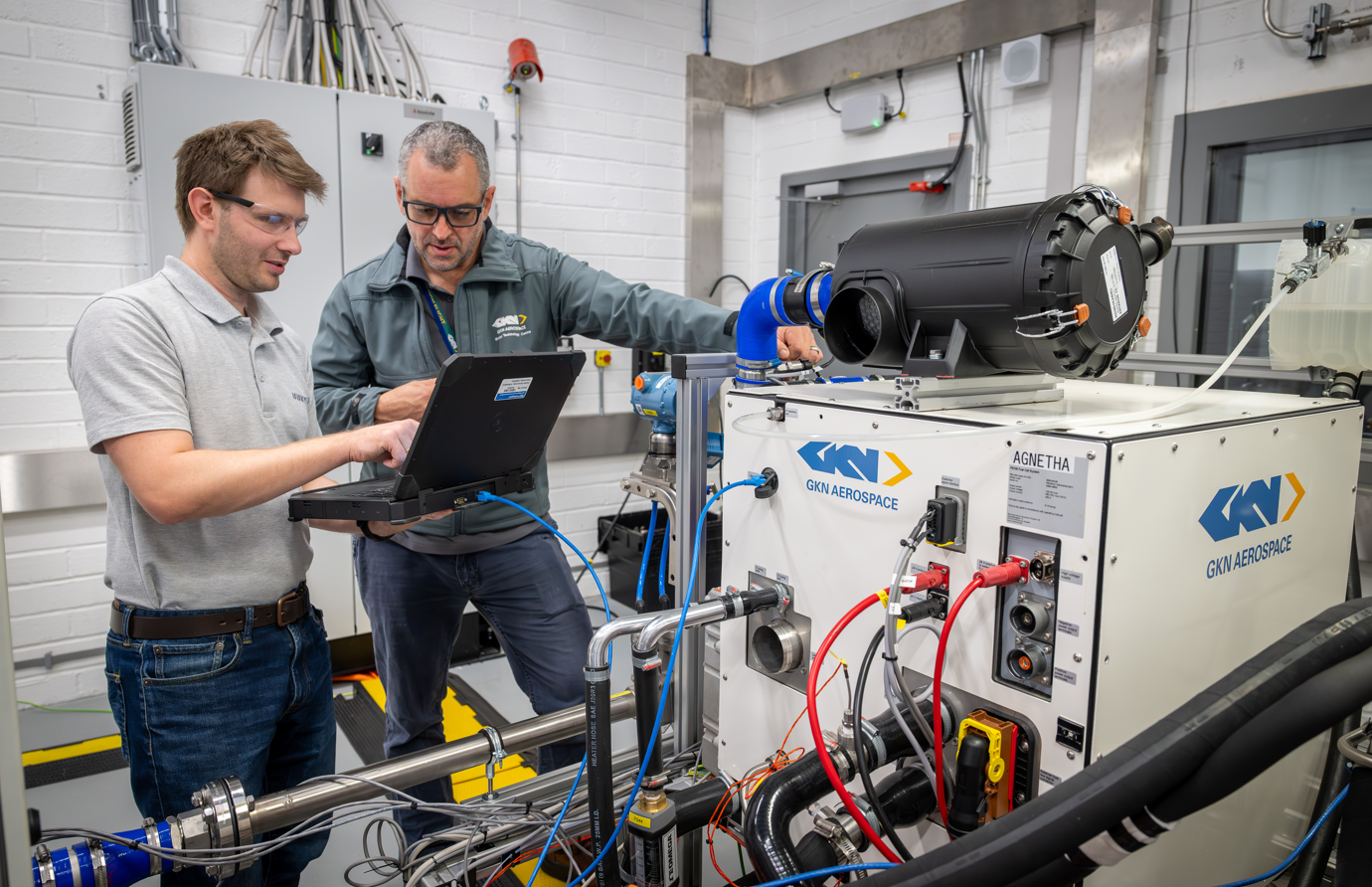
IAAPS and GKN Aerospace Complete Hydrogen-Electric Propulsion Tests
IAAPS and GKN Aerospace have completed testing of two hydrogen-electric propulsion system components under the H2GEAR programme, a UK initiative funded by the Aerospace Technology Institute (ATI) to develop technologies for lower-emission aviation.
The tests covered a Technology Readiness Level 4 (TRL 4) energy storage system and an integrated fuel-cell power generation system. The results will provide validation data to support further development of hydrogen-electric propulsion technologies, although the systems remain at an early stage of technological maturity.
GKN Aerospace selected IAAPS following an assessment of facilities capable of supporting the demanding test requirements, particularly those associated with liquid hydrogen and cryogenic systems. The collaboration involved engineers from both organisations, alongside senior engineers from IAAPS and experts from the University of Bath.
The work was carried out at IAAPS’ facility at Bristol and Bath Science Park, where the teams established test infrastructure to accommodate the combination of hydrogen handling, high-voltage electrical equipment and advanced dynamometer capabilities required by the programme. The teams collaborated in an open side-by-side model that allowed for rapid adaptation as the programme’s requirements evolved.
“It allowed us to share information quickly, adjust our approach when needed, and work through complex technical issues effectively. That kind of collaboration is vital for the success of largescale programmes like H2GEAR.” — Charlie Gaylard, IAAPS Engineer.
New capabilities established for the programme include gaseous hydrogen supply systems, high-power battery emulation and cryogenic helium cooling infrastructure. These systems enabled the teams to conduct the test campaign in a controlled environment while addressing the safety and engineering challenges associated with hydrogen and high-power electrical equipment.
The H2GEAR programme is focused on developing hydrogen-electric propulsion as a potential route towards zero-carbon aircraft operations. Fuel cells convert hydrogen into electricity to power electric propulsion systems, with water produced at the point of use. The overall environmental impact depends on how the hydrogen is produced and supplied, as well as the wider aircraft and propulsion system design.
“Hydrogen technology demands unique test capabilities and a strong safety culture. IAAPS brought both, enabling us to move at the pace required for disruptive programmes like H2GEAR.” — Andrew McKeever, Principal Test Engineer at GKN.
The programme’s next phase will focus on cryogenically cooled power-distribution conduits and high-power drive systems. These areas are important to the development of propulsion architectures that must manage substantial electrical power while meeting aviation requirements for weight, efficiency and safety.

