
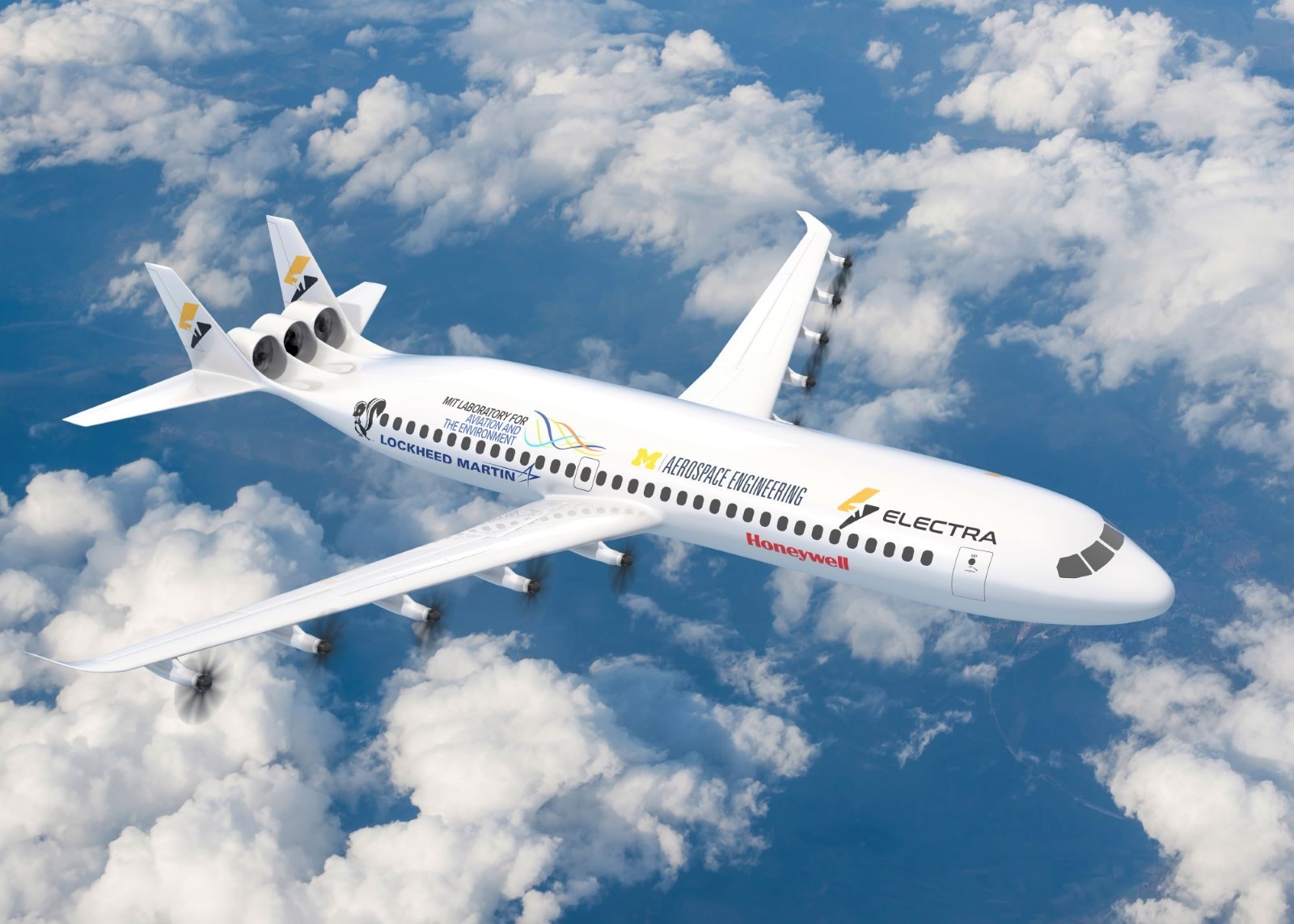
NASA Selects Electra as Awardee in AACES 2050 Program to help decarbonise aviation
NASA has awarded Electra.aero a contract to develop key technologies and aircraft concepts for next generation commercial airliners that could enter service by mid-century.
The award to Electra comes under NASA’s Advanced Aircraft Concepts for Environmental Sustainability (AACES) 2050 initiative, which is part of NASA’s ambitious research program to cement U.S. leadership in decarbonizing aviation.
The team will be led by Dr. Alejandra Uranga, Electra’s Chief Engineer for Research and Future Concepts. Uranga serves on the University of Southern California’s Aerospace and Mechanical Engineering Department faculty and previously co-led a NASA N+3 program while a research engineer at MIT.
Uranga said: “Being selected by NASA for AACES is an important achievement for Electra. It validates our unique concepts and their potential scalability. We are honored with this opportunity from NASA to step up to the major leagues and help build a sustainable future for air transportation.”
The larger focus of AACES is to develop technologies and aircraft concepts that significantly reduce carbon emissions from commercial aircraft.
Electra is supported by a powerhouse team that includes American Airlines, Honeywell Aerospace Technologies, Lockheed Martin Skunk Works, the Massachusetts Institute of Technology (MIT) Laboratory for Aviation and the Environment, and the University of Michigan Department of Aerospace Engineering.
Barbara Esker, deputy administrator for programs under the Aeronautics Research Mission Directorate at NASA Headquarters in Washington, added: “This work is part of the research NASA conducts under its Advanced Air Vehicles Program. This new collaboration will help NASA and the private sector deliver new technologies to fulfill our mutual goal of cleaner skies in the decades ahead.”
John Langford founded Electra in 2020 with a specific mission to lead in the development of sustainable aviation technologies. He previously founded Aurora Flight Sciences in 1989, which Boeing acquired in 2017.
In 2021 Electra developed a 150-kW hybrid-electric aircraft propulsion system, and in 2023 began testing it in flight aboard the company’s two-passenger Ultra Short prototype aircraft.
The prototype integrates proprietary aerodynamic designs and distributed hybrid-electric propulsion to achieve ultra short takeoff and landing in distances as short as 150 feet.
Electra is currently developing a nine-passenger version of the Ultra Short for introduction into passenger and cargo service later this decade. To date, Electra has over 2,000 aircraft orders from 52 airline customers.
Its recent announcements include successful flight demonstrations of its hybrid-electric Ultra Short prototype for military stakeholders and in August, it demonstrated the flight capabilities of its EL‑2 Goldfinch hybrid eSTOL technology demonstrator aircraft at NASA’s Langley Research Center.

