
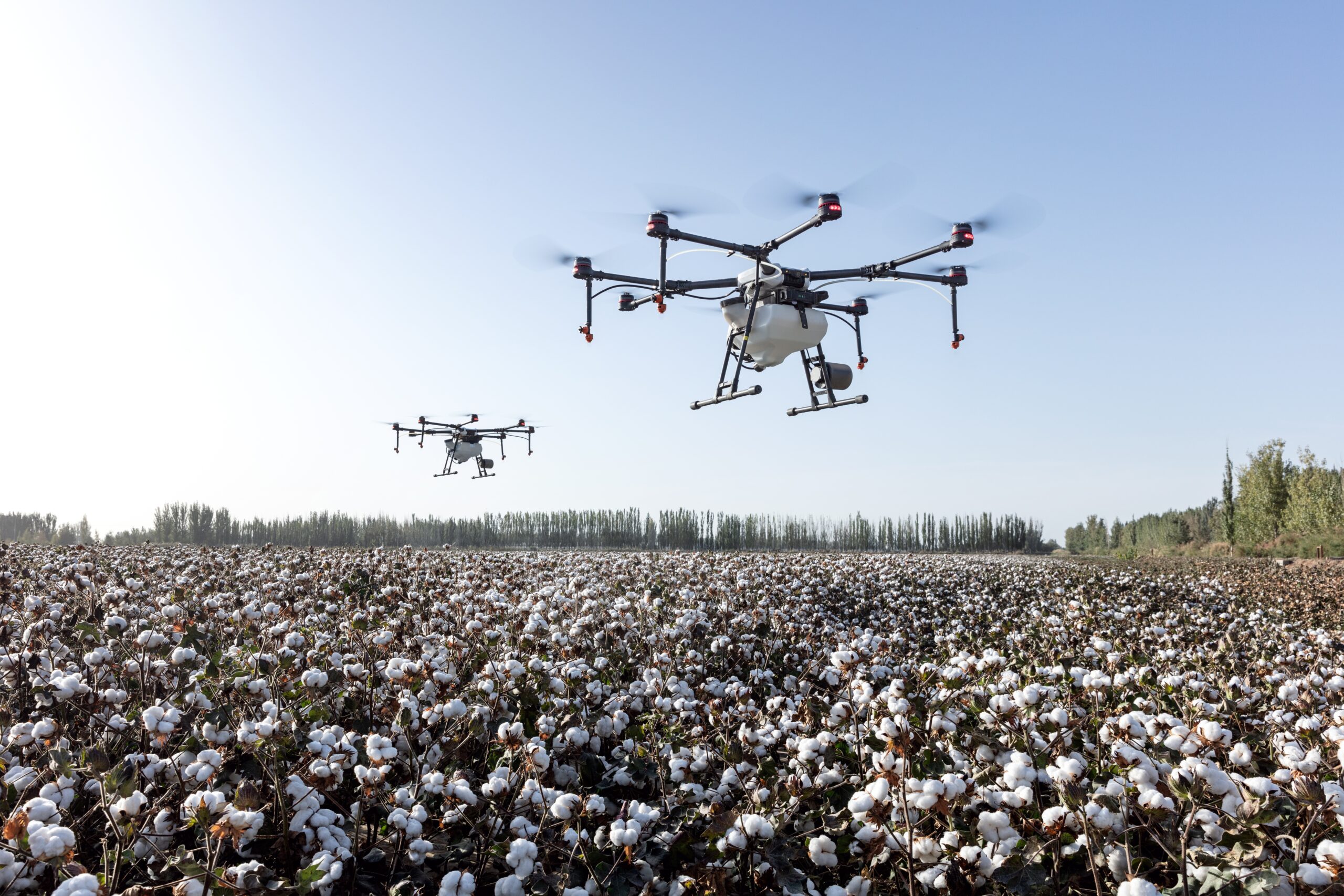
New Valour Consultancy report suggests global commercial drone and UAS fleet will reach more than 5.5 million by 2050
Valour Consultancy’s latest research forecasts that the global commercial fleet of unmanned aircraft systems (UAS), or drones, will exceed 5.6 million aircraft by 2050.
Its new report ‘The Future of Commercial Drones – 2026′, covers delivery, inspection and surveillance, and agricultural applications, and complements the firm’s recently published “The Future of Advanced Air Mobility” study.
The agricultural market is already mature, particularly in China where DJI alone reports a fleet of more than 300,000 spray drones.
Summer Staninski, author of the report, said: “It is here, as well as in inspection and surveillance, where the most compelling operational and economic benefits currently exist.”
“Safety is paramount, while reducing costs and saving time closely follow. Drones improve outcomes across all three metrics, enabling higher-quality agricultural and inspection practices to be carried out more quickly and with less manual labour.”
Additionally, agricultural and many inspection drones largely operate within visual line of sight (VLOS), meaning adoption has not been constrained by slow-moving regulation around beyond visual line of sight (BVLOS) flight. As such, there have been fewer barriers to deployment than delivery applications, where scalable economics often depend on routine BVLOS operations.
Valour’s forecast calls for the global delivery drone fleet to exceed 500,000 by 2050. Delivery drones present a viable alternative to ground delivery in that aircraft can travel through the air quickly, offer savings on labour costs, aid in meeting sustainability goals and reduce reliance on gig-economy workers.
These benefits are strongest in food delivery, where hot meals must be delivered quickly and consumers are willing to pay a premium for such a service. As a result, food dominates the delivery drone segment, driven by a strong case for replacing drivers in suburban markets where road-based delivery can be slow and costly.
For convenience and e‑commerce goods, drones will enable premium ultra-fast fulfilment services for time-sensitive orders, similar to the sub-20-minute delivery models already being demonstrated by retailers like Walmart.
While drones often work best at solving the ‘I need this now’ problem, for a majority of household and postal items, waiting a day or two is completely fine. Indeed, the economics of a delivery van remain hard to beat.
While growth is forecast to be strong throughout the 2025–2050 timeframe under analysis, Staninski recognises that much hinges on removal of regulatory barriers.
She said: “In order for the overall commercial drone market to scale, we need to see legislation enable routine BVLOS operations. Until then, it’s very difficult for firms to offer widespread services such as home delivery and inspection of linear assets like powerlines.”
However, as the industry moves towards standardised frameworks to approve autonomous BVLOS flight, drones are expected to become a critical layer of industrial and commercial infrastructure worldwide.
Report Summary
Valour Consultancy is a multi-award-winning provider of high-quality market intelligence and consultancy services. The inaugural study, “The Future of Commercial Drones – 2026”, provides a timely overview of a fast-growing market for lightweight battery-powered UAS across agriculture, inspection and surveillance and delivery applications.
The report has been developed with input from approximately 30 drone manufacturers and operators, connectivity providers, and airspace management companies.
It includes over 200 pages of detailed insights into market drivers, inhibitors and technology trends, alongside 29 tables containing market estimates and forecasts. These are segmented by region and use case, alongside optimistic and pessimistic scenario modelling to capture the range of potential outcomes.
Fundamentally, this report is aimed at any organisation or individual with a stake in the commercial UAS market, providing vendors with the intelligence to sharpen their positioning and investors the clarity to identify where capital is best deployed.
For sample pages, a report scope, or to request a full copy of the report, please click here.

