
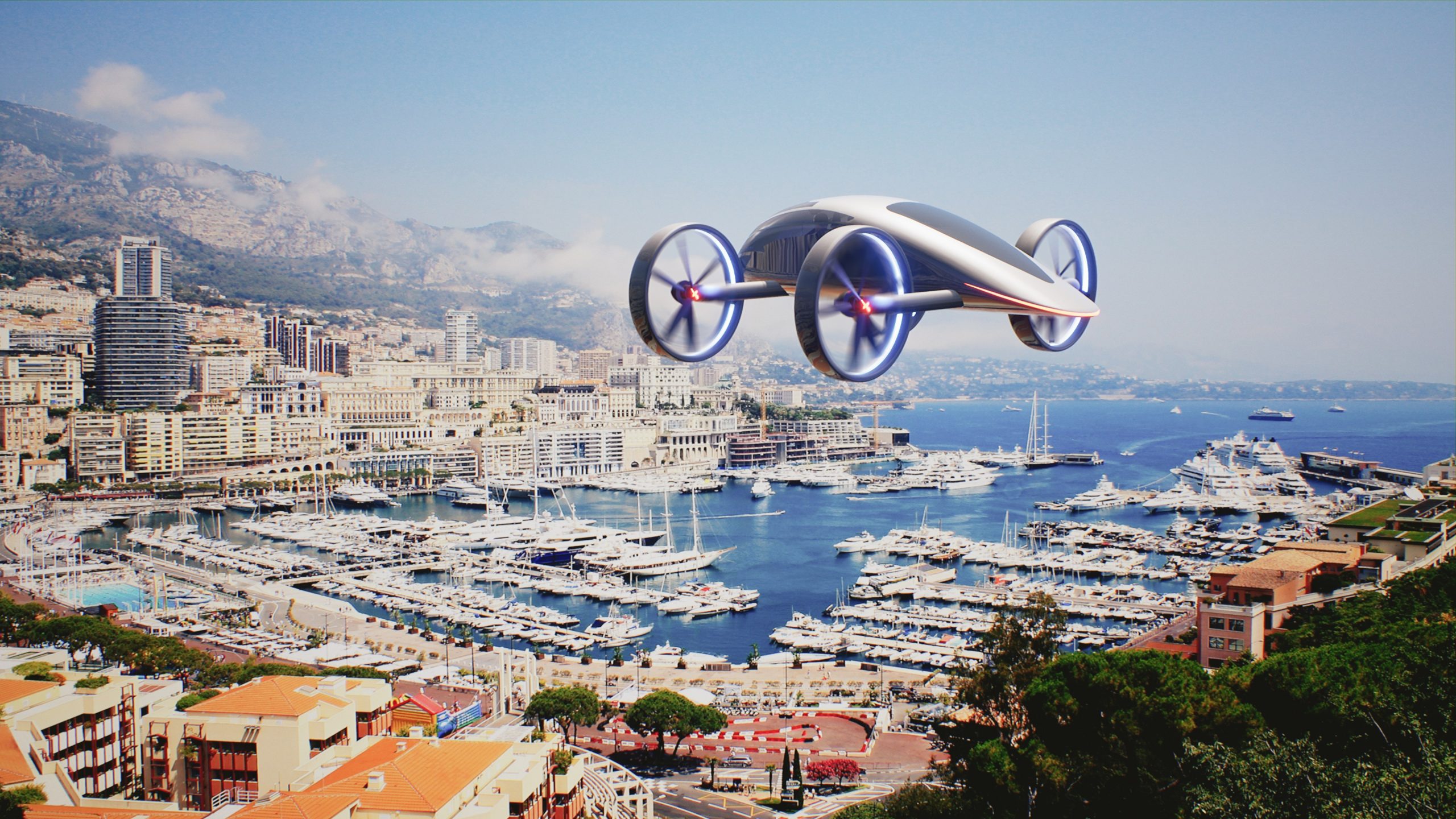
Q&A: AIRO Group announces intention to explore possible SPAC merger, discusses future plans for the market
The AIRO Group (AIRO), the urban air mobility and drone ecosystem company, has engaged with Stephens Inc. to assist in exploring a SPAC merger.
Its portfolio leverages technologies that include data systems, resupply package delivery, military aerospace training, military and commercial manned/unmanned aircraft systems and avionics. AIRO is led by aerospace industry veterans with senior leadership experience at market-leading firms like Honeywell and major global airlines.
To get more detail and hear more about its future plans, eVTOL Insights spoke to AIRO Group CEO Capt. Joe Burns, John Uczekaj, President and CEO of Aspen Avionics and Michael Smith, CEO of VRCO Ltd. These two companies form part of AIRO Group’s portfolio, with the latter currently developing its four-seater XP4 eVTOL aircraft for personal use.
Q: Are you able to tell us more about the reasoning behind going for a SPAC? Has it always been on the cards?
Capt. Joe Burns: “AIRO Group has been in the works for approximately two years and was formed with the base company of air drones. And in that time, the larger drones and drones becoming practical realities have really hit. What we’ve seen is now a full commercial acceptance of small drones for commercial operations. So we’re expanding rapidly into the larger space and into eVTOLs.
“We’ve been doing this roll up with this group of companies for just a little under a year. The SPACs have really kind of come into focus here recently and we’re very much in the middle of it. We’ve been working in that area for quite some time. All these companies have very unique pieces in the drone puzzle, so we’ve started with what we call the drone ecosphere; so putting everything together to operate the drones from start to finish, the manufacturing, the training and actual drones themselves.
“I hate to lump drones and eVTOLs together because there’s a dramatic difference, but it’s the same technology base for us. We’re just moving into the passenger area as well.
“We have a natural progression where we started with smaller drones and now getting into the larger cargo ones based on solid eVTOL designs such as the XP4. But we want to move into that by taking a step into the cargo realm, get the data sets and fly and operate those commercially as soon as possible. And then working into the passenger side. I think it’s a very tough step to go from nothing to a full passenger aircraft. We have a natural progression, but there is a huge, massive untapped market for cargo operations for these types of vehicles.”
John Uczekaj: “The AIRO Group has put together a nice synergistic group of technologies, manufacturing and system capabilities. Where many are going after a specific eVTOL or vehicle, we’ve really kind of looked at it from an ecosphere standpoint.
“So we have the elements to provide the manufacturing, avionics, electronics, aerodynamics, systems and networking to provide a single point delivery of packages and cargo. I think this provides us with a little bit more speed to market; having more vertical control of the market space as opposed to others that are specifically going at a vehicle type thing.
“And it also allows us to grow incrementally. Many of these big steps into eVTOL are very large and high risk plays. Not just from a technology standpoint, but from certificate validity, acceptability and training too. All these elements have to be added, so AIRO Group took much more of an integrated approach to allow for acceptance of different technologies and different delivery systems, as society and regulations and just economics allow for it. We like to go for the Big Apple in the sky and go for it. AIRO has taken an attack that’s much more incremental and we believe in the end it will be successful.”
Q: What are your plans going forward?
JB: “So as you know, there’s a lot of process involved in going down the SPAC route. There are things like the audits that have to take place and the valuation exercises, which we’ve done most of that heavy lifting. And then in our particular case, doing the defendant merger agreements between the entities, because SPACs can’t can’t bring in multiple entities. They have to bring one major and you can bring in smaller ones beyond that.
“So for us, it would be to do that heavy lifting of all the non-flying stuff, the financial bits that needed to take place. It was really critical to get to this point. Now we know we’re in it, we’re in a position that we were able to go in and talk to a SPAC with authority and say we have done X, Y and Z, we’re ready to go to the next steps. And that’s very useful for us at this point in time.”
JU: “The SPAC world is evolving and the number that have come into realisation in the last four months is remarkable. The key to being successful in our view of the SPACE is having everything in place. As Joe said, this turnkey mentality where we have the companies are all engaging in signed definitive agreements. We have audits ready to go, we’re working all those things that allow for a SPAC to move quickly with us.
“We’re in active conversations with Stephens to do that and expect to move at a fairly good place through the first half of the year, because of the attention on the eVTOL market after Joby Aviation and Archer. Everybody’s taking a certain path to achieve the necessary funding and take it to the next level. We’ve chosen this way and think we’re well positioned to move quickly into some sort of agreement, and then be operating as a single company in this calendar year.”
Q: Mike, you must be very excited about the potential of a SPAC merger, given all the work you’ve been doing with your company VRCO?
Michael Smith: “I founded the company in 2015 after coming from the drone industry from about 2007 to 2008 onwards. So I’ve kind of seen it evolve and the different flavours of batteries, the different flavours of motors and everything you can possibly think of. We launched our Xcraft XP2 design at the Goodwood Festival of Speed in 2017 and co-exhibited with Airbus & PAL‑V and a huge range of technologies.
“And I have to say, I think the attraction a lot of people had was to a machine that they’ve thought identified a kind of lifestyle within which was either luxury or high speed, or certainly for some it was about safety. There was the Airbus pop-up machine and it’s turned out to be crazy. We have a bonafide luxury brand that just happens to be 100 years old, working with us and the comfort of being in the environment that’s vastly different from something that would be a lower cost vehicle, for example.
“So that’s the market that we’re going after. And we have quite exclusive access to it. Because of these partnerships and because of the look, feel and flavour of the vehicle. Its ability to be very compatible with the marine environment, land on water etc. It actually does fold up in one of the versions and stays below deck, which not a lot of people know about or see.
“We’ve thought all these things through and about how we go and get a very high percentage of market share in specific markets. While at the same time, having a huge world of opportunities open up for us by participating in AERO. Suddenly, there’s a dual use for the airframe; it’s not just about carrying people but carrying cargo. That airframe is more or less ready now to go into prototype, which is what we’re doing for cargo. With the influence of AIRO, we have found there’s additional utility for the full size airframe plus some of the airframes at subscale.
“And we’ve had phenomenal interest, opening up the possibility of using cargo. And pretty much anybody who’s out there who wants to think about anything air cargo is going to want to look at an airframe with our kind of performance. The world’s going to change and I think being a part of AIRO already puts us into the frame. It puts us on centre stage in some of these delivery situations. And then on top of that is the hyper luxury side, and that’s where we’re really going to dominate.”
JB: “One point that I think is really critical is the safety aspect. These things have got to be unbelievably safe and you have to have that safety background and build around that and move upward versus just starting from scratch. Then bringing all these teams together is really important for that for us, because we have that background and 100,000s of hours of products and service and manned flight time. The key for us is to build this thing like any other manned system with unbelievable safety margins.”
Q: With all the companies involved in AIRO Group, it makes a SPAC merger a really exciting proposition for investors doesn’t it?
MS: “It is and in terms of the collaborations, we started to have some pretty productive conversations with John and his team about how we can utilise their avionics, which we’re going to be doing exclusively within our airframes for passenger transport. We’re looking at ways we can improve on things that exist and invent new things where they don’t exist.
“So there’s that kind of opportunity you just don’t get by having outside partners. When you’re working effectively as one single unit, the bandwidth of information and ideas that you exchange freely is exponential. And that’s where the acceleration comes in, those additional returns for investors and high growth and that’s how I think we’re going to beat a lot of these companies which possibly have a head start on us with huge chunks of money. They’re not able to have the cohesive development that we have. And we’ve been developing and will actually perfect a thing. So you’re right, it’s very exciting.”
Q: In going public, what advantages do you think this will give AIRO group and its portfolio companies?
JB: “We’ve looked extensively at the synergies involved. And it’s pretty amazing. We’re already seeing the ability to go in and get a product and an aircraft that we don’t have to go out and put out a bid for, we can actually manufacture it internally.
If there’s a safety issue, we can go to the safety issue thing right away. And from a training perspective, we have all the training capability in-house. So we’re seeing huge opportunities; for anybody else that is starting with a single product, they’re going to have to go outside for everything and it takes a long time. It adds a lot to that chain and we already got it in one of our other entities. So for us, it really does add just a tremendous amount of value.
JU: “And going public has all kinds of advantages. When you have those kinds of synergies you can create very attractive financials for investors, which then creates additional capital for investing growth and allows you to grow quicker. So for these companies that have maybe a singular focus, they have to get into contracts with third parties, that takes time and money.
“Where we are, we’re much more efficient in terms of both cost and speed, which makes it very attractive in the capital market. And that attracts investors, which then attracts more capital for further growth and expansion. And so the public market for a company like ours is very attractive for those reasons.
“We all know that once you get in the public market, the scrutiny of your financials and everything you do comes under a very tight microscope. And being able to show synergies that go to the bottom line while you’re developing these high growth new products, is a very attractive story for not only institutional investors, but regular investors that are out there investing in Tesla or Amazon. Having a good bottom line and a good growth path in these strategies is a critical piece for being successful in the public markets. A
“And I think the way we’ve structured AIRO provides for that continued growth and continued performance that will keep investors focused on us and continue the growth.”
Q: Does AIRO Group have a product that it intends to bring to market?
JB: “We do. It’s a variety of things from small UAS systems to drones as a service — which is a big part of what we do already today — to manufacturing of special drones, whether it would be for commercial use or other uses. We have a big roadmap to integrate AI into all of our products and have a group to do that, and then we have a group that is planning for a product which is the actual VPN that all these vehicles are going to need to communicate data and get it back and forth.
“So it’s not just a focus on a single product. It’s the whole system around the ecosphere that actually supports this and for other entities as well. Everybody’s going to need to have communications vessels and the plan is to do that and then the software to operate it. So there’s a big plan and we have a pretty extensive roadmap, but there are a lot of products involved.”
Q: We’re starting to see a lot of excitement with SPACs at the moment, especially after the recent deals for Joby Aviation and Archer. It seems like it’s good timing for this announcement.
JU: “When SPACs first came out, there seemed to be a lot of attention on EV vehicles; electric cars, drivetrains and LIDAR-type activities. And what we’re seeing is a bit of a pivot of the SPAC interest into the eVTOL and drone ecosphere. And the timing of that is quite nice for AIRO because of the effect of people’s attention towards this space as the next high growth space.
“The reality is that the timing is excellent for a company like AIRO and we’d like to exploit that timing to be able to provide the funding we need. So we’re hoping that will be a very successful approach for us. And as we grow quickly, we hope to provide some returns to our investors right off the bat.”
JB: “I think the timing on profitability is ultimately pretty important too. If I look at single stream companies, it’s a long time between now and when the expected first flights of the actual certified vehicle is going to be. We have an entire package of products that are already generating revenue and will continue to grow throughout that process. We’re not waiting for some triggering event three, four or five years from now. we’re actually generating revenues in general now, it will be able to grow dramatically because of that.”
Q: Anything else you’d like to add, Michael?
MS: “The launch pad moment for us will be when we get to market with a fully certified airframe that’s in production satisfying orders. That’s 2025, so a key to the success of VRCO in this form of acceleration is having the strength of the group and strength of AIRO to rely on and members within the group that are already generating a good amount of revenue.
“And then to complement that is the sub-scale airframes, which we’ll be putting in for various different types of customers, including ourselves, operating various types of contracts, delivering goods on behalf of logistic companies people like Amazon, for example.
“So all in all, I think you have these macro economic factors that don’t always align, and maybe once in a lifetime they do. And this is where we’re at; the alignment of manned and unmanned technology to support it, which is now ready and mostly mature. The ability for the battery technology to satisfy real world use cases and operating revenue and to sustain that.
“And all of that stuff gets better over time. More journeys get unlocked, more technologies and aircraft are required. What we’re going through now is like when we were getting into motor vehicles, we’re now getting out of motor vehicles and going up into the sky. And it’s going to be hugely exciting and there couldn’t be a better time for investors to be invested into the space.”


