
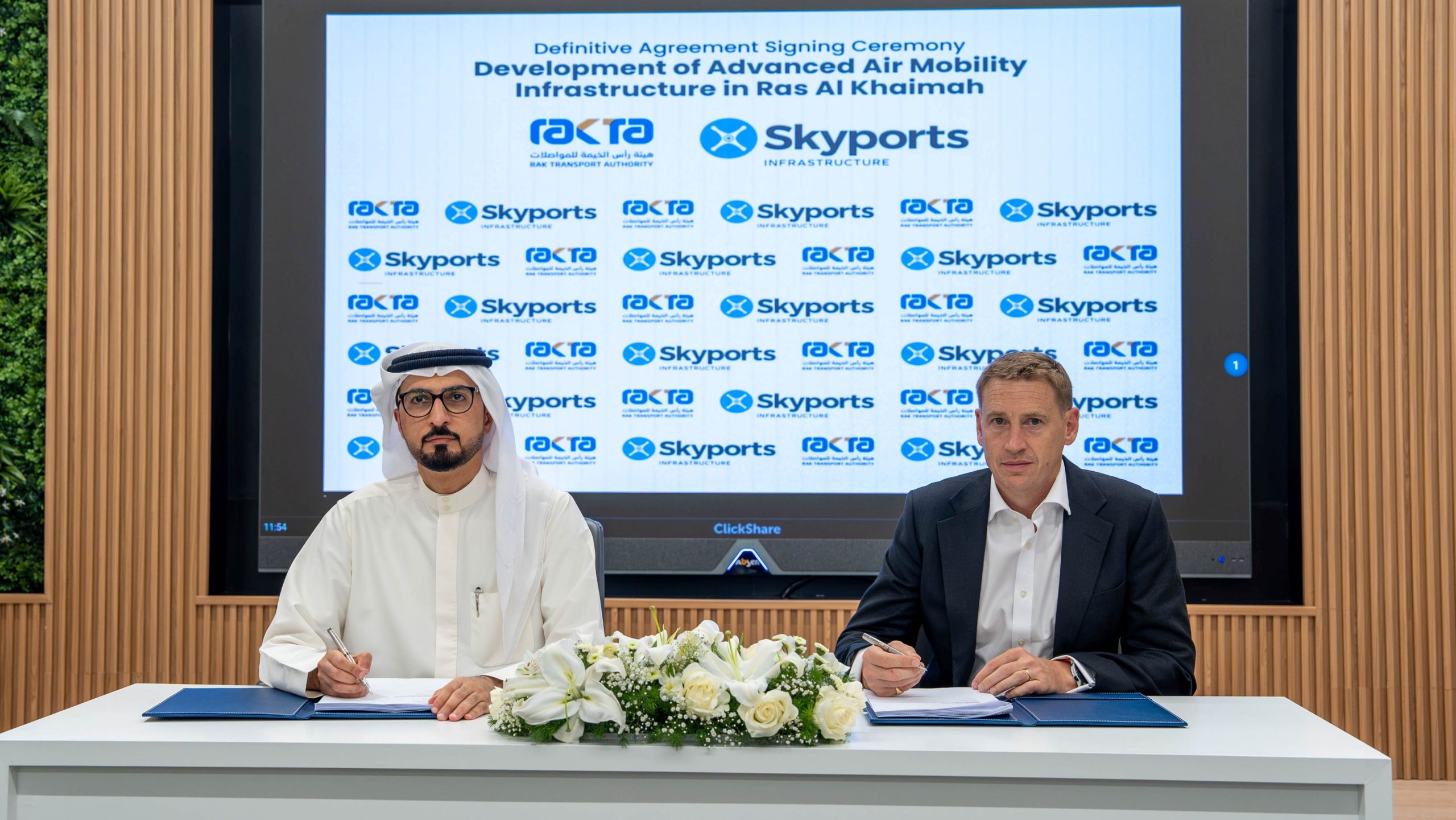
Ras Al Khaimah and Skyports Sign Agreement for Four-Vertiport AAM Network
Ras Al Khaimah Transport Authority (RAKTA) and Skyports Infrastructure have signed a binding agreement to develop and operate an Advanced Air Mobility (AAM) infrastructure network in Ras Al Khaimah, United Arab Emirates.
The agreement covers a planned network of four vertiports, with commercial AAM services targeted to begin in the third quarter of 2027. The project builds on a strategic partnership between RAKTA and Skyports that began in 2024.
The first phase will focus on two vertiports at Al Marjan Island and Jebel Jais. The locations are intended to provide connections between two major destinations in Ras Al Khaimah. Two additional vertiports are planned in later phases, subject to further planning, business case development and regulatory requirements.
The network is intended to support both travel within Ras Al Khaimah and connections with other emirates. Dubai is planned to be the first inter-emirate connection, linking the Ras Al Khaimah network with AAM infrastructure being developed in Dubai.
Skyports will work with RAKTA on the development and operation of the vertiport infrastructure. The facilities are being designed to accommodate different certified electric vertical take-off and landing (eVTOL) aircraft and approved operators as the AAM sector develops.
The agreement follows an initial memorandum of understanding and a framework agreement signed between the two organisations in 2025. The latest deal moves the programme from planning towards implementation, with development to continue alongside local and federal authorities.
RAKTA said the AAM network forms part of its wider transport planning as Ras Al Khaimah expands its tourism, hospitality, real estate and infrastructure sectors. The project is also aligned with the emirate’s Comprehensive Mobility Plan 2030, which identifies connectivity, sustainability, innovation and transport integration as priorities.
The planned network is expected to complement existing road and public transport services by providing point-to-point connections between selected destinations. Development will focus on safety, regulatory compliance, operational readiness and integration with the wider transport network.

