
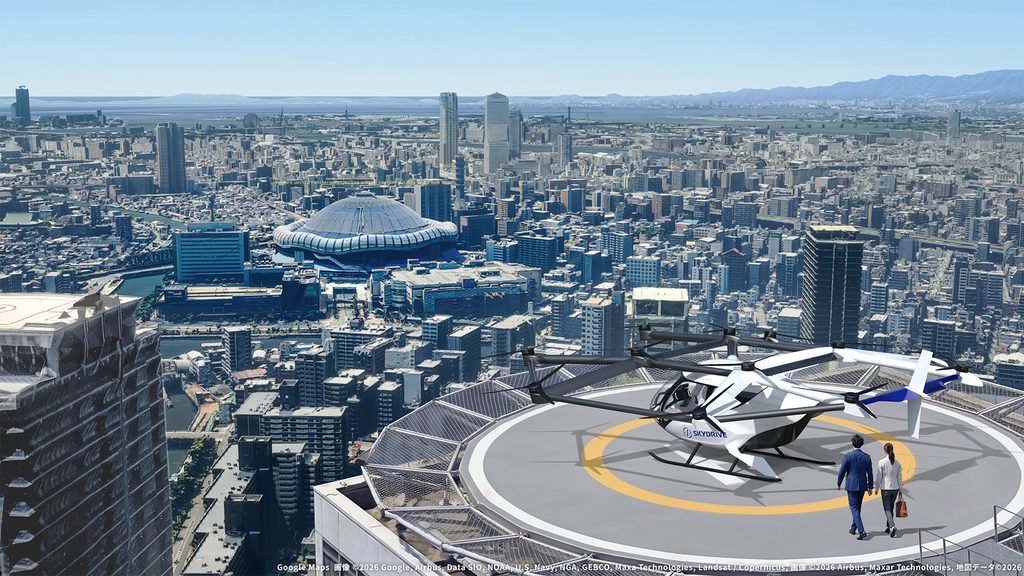
Skydrive and Other Osaka Partners Consider Rooftop eVTOL Landing Site Conversions
Osaka authorities, SkyDrive, Osaka Metro, Kansai Electric Power and other partners have launched a feasibility study into converting existing rooftop emergency landing sites in Osaka City into vertiports for electric vertical take-off and landing (eVTOL) aircraft.
The project is being conducted under Japan’s Cabinet Office Super City Initiative and follows collaboration between SkyDrive and Osaka Metro around eVTOL demonstrations during Expo 2025 Osaka. The partners are working towards a potential commercial eVTOL service in Osaka Prefecture and Osaka City from around 2028.
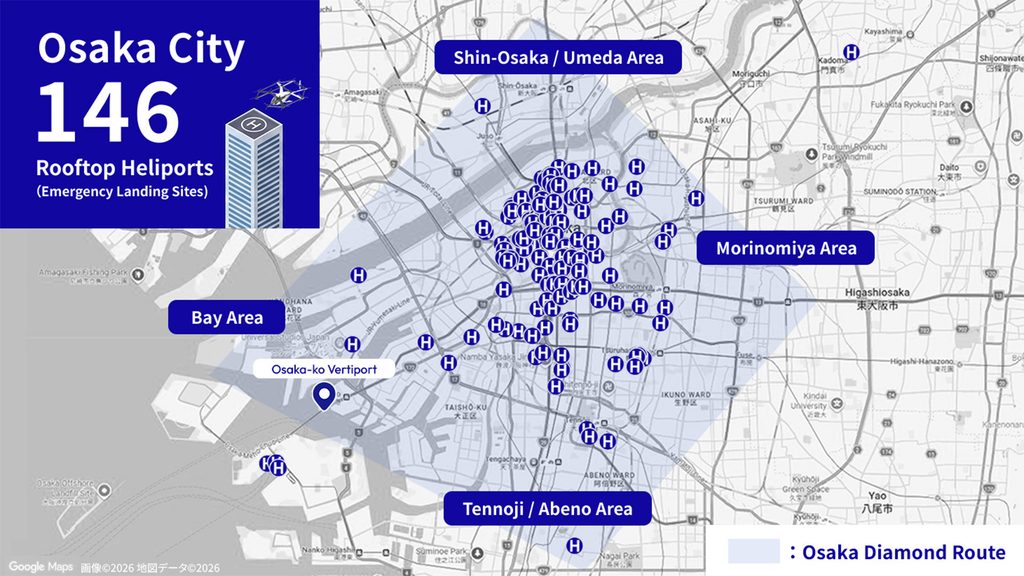
The study will assess whether some of Osaka’s existing rooftop emergency landing sites can be used as alternative landing facilities for eVTOL operations. Osaka City has 146 such sites, primarily located on buildings more than 100 metres tall. The sites were established for disaster response and are equipped with features including reinforced flooring, fire suppression systems and lighting.
Rather than building new vertiports in densely developed areas, the project will examine whether this existing infrastructure can provide additional landing options for future eVTOL services. The sites would primarily serve as alternate vertiports, including for situations where an aircraft cannot reach its planned destination.
The feasibility study will examine several technical and operational factors. These include surrounding airspace, obstacle clearance, building-induced wind conditions and noise during take-off, landing and flight. The project will also assess rooftop structural capacity and passenger movement requirements during diversions.
The partners will examine the installation of charging infrastructure and the upgrades that may be required for electrical receiving and transformation equipment. Costs associated with converting individual sites will also be assessed.
Another focus will be emergency procedures and the coexistence of commercial eVTOL operations with the original disaster-response role of the rooftop landing sites. SkyDrive and its partners plan to work with organisations including the Osaka Municipal Fire Department on operational scenarios and safety procedures.
Osaka Metro is leading the project and will coordinate the facilities being assessed and discussions with stakeholders. SkyDrive will develop the survey methodology and operational requirements, while Kansai Electric Power will assess existing electrical equipment and charging requirements. Chodai will support technical analysis of obstacle limitation surfaces, with the Airport Environment Improvement Foundation assessing noise-related factors.

