
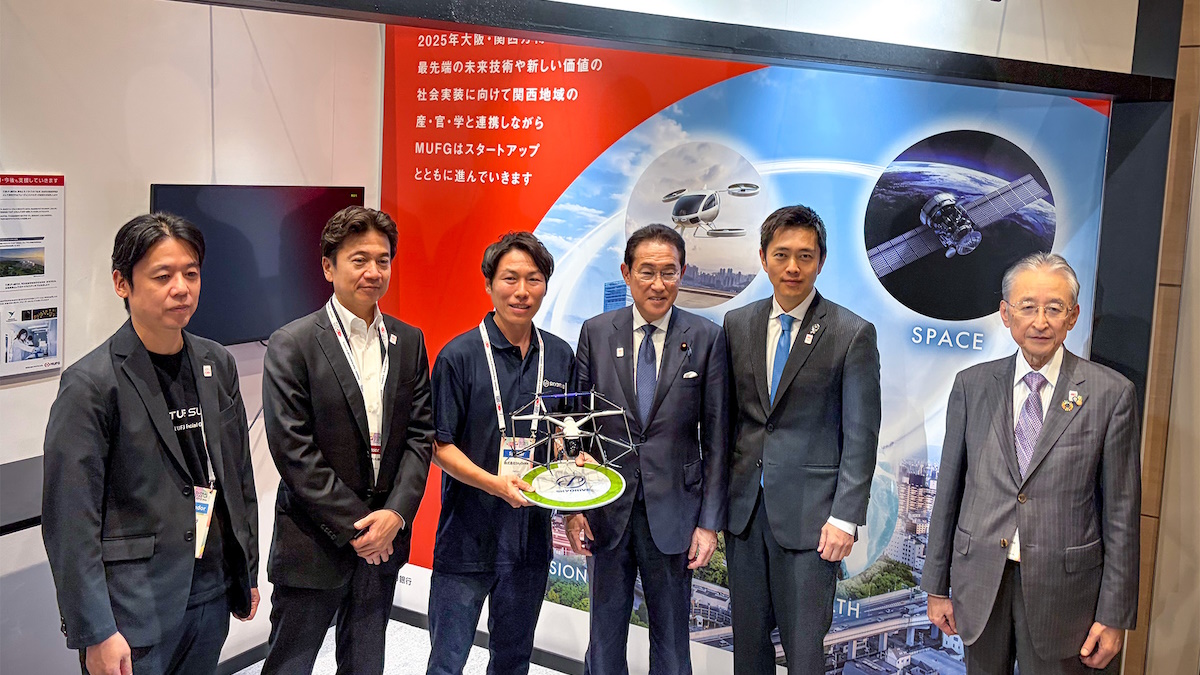
SkyDrive Partners with Enterprises in Kansai for Western Japan eVTOL Feasibility Study
SkyDrive has launched a joint feasibility study with companies in Japan’s Kansai region to examine the commercial deployment of eVTOL aircraft and the supporting infrastructure required for operations across Western Japan.
The initiative is being led with support from MUFG Bank and involves companies from the transportation, aviation, infrastructure, energy, tourism and financial services sectors. The partners will assess the requirements for establishing a regional air mobility network and developing a sustainable operating model for eVTOL services.
The study builds on activity in Osaka and the wider Kansai region following Expo 2025 Osaka, Kansai, where SkyDrive conducted demonstration flights of its SD-05 compact eVTOL aircraft.
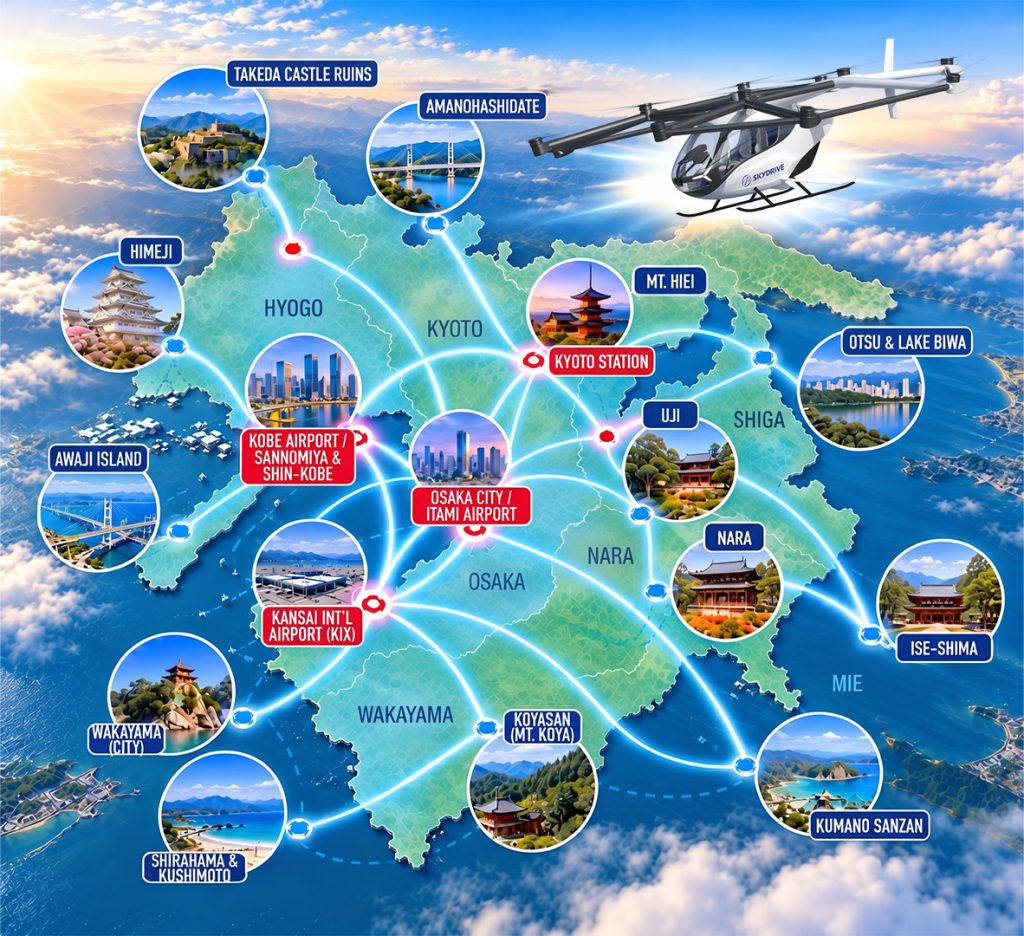
The partners will examine potential flight networks and routes over the medium and long term, alongside the infrastructure needed to support commercial operations. This includes vertiports, maintenance facilities and associated ground infrastructure.
Operational and safety requirements will also be assessed, including maintenance and safety management frameworks. The initiative will consider how eVTOL services could be integrated with existing regional transport and tourism networks, as well as how passenger demand could be developed.
Another focus will be the commercial viability of the proposed network. Participating companies will evaluate potential business models and the conditions required for sustainable operations, while also working with national government agencies, local authorities and communities.

The initiative forms part of the partners’ broader “Kansai Air Transportation Network Concept”, which is intended to establish a framework for developing regional air mobility infrastructure and related services.
SkyDrive is already involved in infrastructure planning in Osaka. Under a Cabinet Office Super City research project, the company is working with Osaka Metro and other partners to assess whether existing rooftop emergency landing sites on urban buildings could be adapted for use as eVTOL vertiports.
The new feasibility study is intended to complement those infrastructure efforts by considering how individual vertiports and routes could form part of a wider regional network.

