
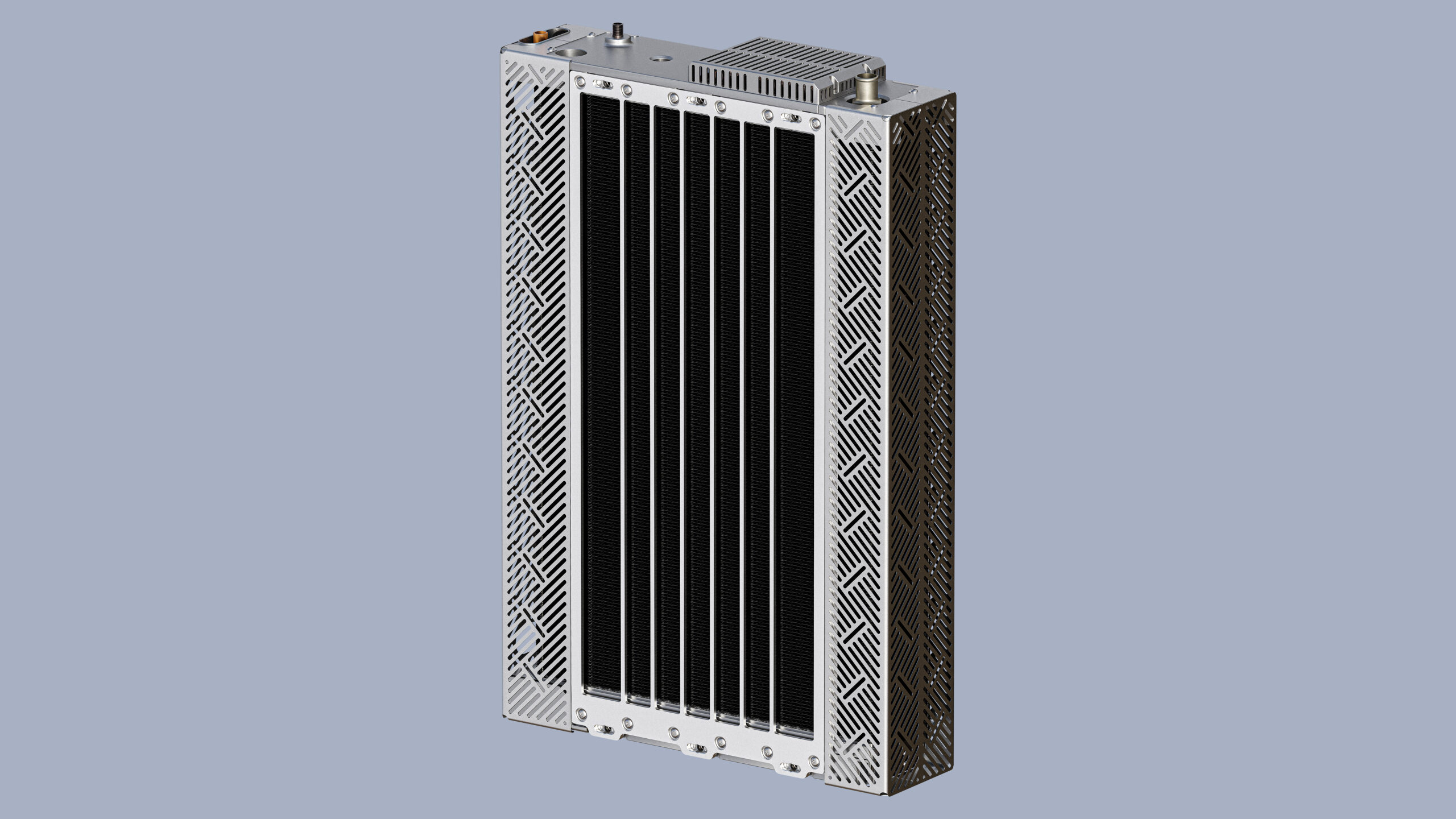
“ZeroAvia, PowerCell Partner on Next Gen Fuel Cell Development to Explore Higher Temperature Technologies”
ZeroAvia announced this week it has signed a Memorandum of Understanding (MOU) with PowerCell Group to partner on next generation fuel cell technologies, reports a press release. R&D will focus on intermediate and high temperature cells which will open up more energy intensive aviation applications including for large fixed-wing aircraft and rotorcraft.
The release states, “The two companies have been working together for the last few years, with PowerCell fuel cell stacks forming part of the prototype ZeroAvia powertrains. ZeroAvia is designing a bespoke multi-stack balance-of-plant architecture using PowerCell’s low temperature proton exchange membrane (LT-PEM) stacks applicable to aviation applications. As such, the Swedish fuel cell manufacturer is a key supplier for ZeroAvia’s first 600kW powertrain (ZA600) designed for up to 20 seat aircraft.”
This high temperature PEM fuel cell HT-PEM (part of the roadmap to delivery of ZA2000 powertrain for 40–80 seat aircraft and a key part of the company’s component offering to other clean flight innovators) “is already demonstrating industry record power density in excess of 2.5 kW/kg at the cell level, with a clear pathway to reaching 3+ kW/kg at the system level in the coming months,” continues the release.
Please Watch Video
Increasing the operating temperature of fuel cell systems can allow for a reduction in cooling and humidification required, simplifying the architecture and improving the amount of power for a given unit of weight.
The collaboration leverages PowerCell’s long experience of industrialising hydrogen-electric technologies to push advanced fuel cells solutions to high TRL levels. For ZeroAvia, this provides an opportunity to employ its technology in different sectors, while retaining a core focus on aerospace.
Val Miftakhov, Founder and CEO of ZeroAvia, commented, “Working together we can deliver change in this industry faster, as well as using these extreme use cases to advance the capabilities of solutions for myriad other transport and non-transport sectors.”

Val Miftakhov
Richard Berkling, CEO PowerCell Group, remarked, “For PowerCell, this is a key future market. We’re confident that the first hydrogen-electric aircraft will be flying commercially in the upcoming years.” Adding, “When that happens, it will have a snowball effect as the environmental and operating cost benefits become clear to airlines and their passengers.”
The release says, “ZeroAvia has already extensively tested a prototype of its first engine (ZA600) aboard a Dornier 228 aircraft at its UK base and submitted its certification application for the ZA600 at the end of last year.
“The company has also performed advanced ground tests in the US and UK for the key building block technologies for the ZA2000 system, including cryogenic tanks or LH2 and proprietary high-temperature PEM fuel cell and electric propulsion systems. ZA2000 will support up to 80 seat regional turboprop aircraft such as the ATR72 or the Dash 8 400.”
ZeroAvia has signed a number of key engineering partnerships and has nearly 2,000 pre-orders for engines and its component systems from a number of the major global airlines, operators and OEMs with future revenue potential over USD10 billion.
For more information
(Images: ZeroAvia/PowerCell)
For the latest news, insights and content regarding the global Advanced Air Mobility market, please join the following eVTOL Insights channels: WhatsApp, Facebook, Instagram, Spotify, Apple Podcasts, YouTube, X and LinkedIn.

