
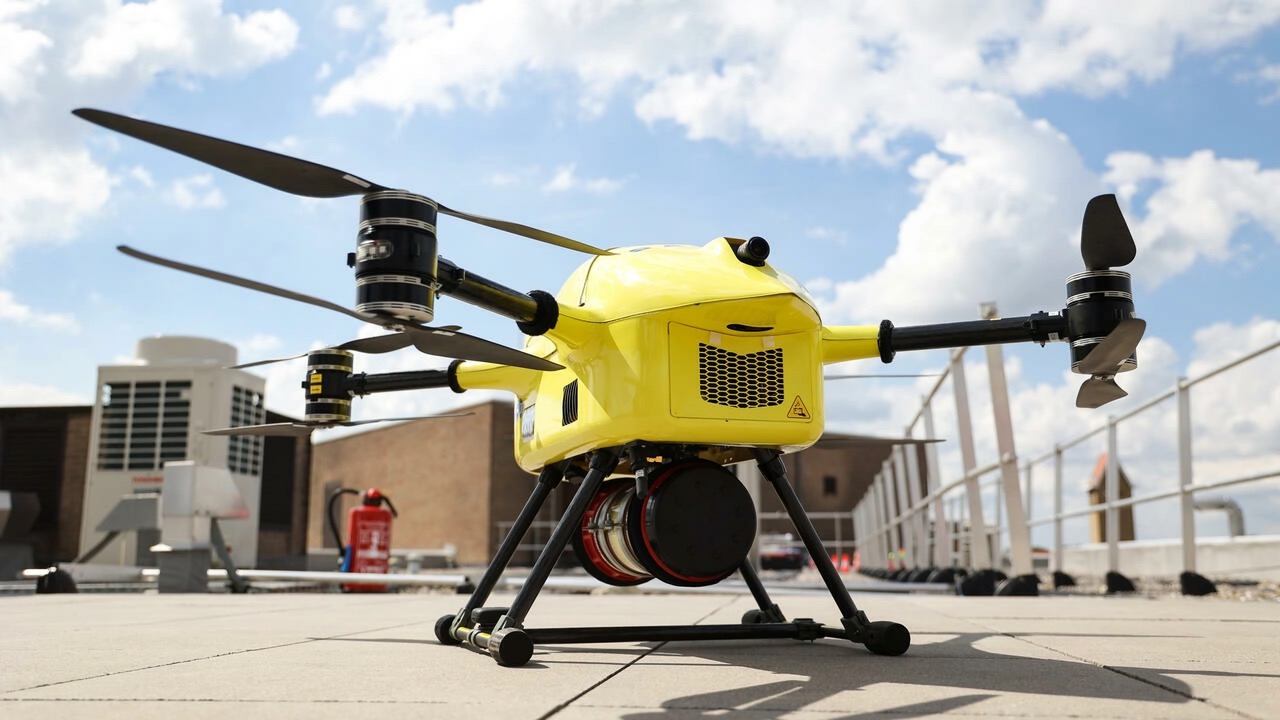
A First in Europe: Belgian hospitals trial delivery drones to speed up transportation of human tissue
Belgian hospitals have started trialing a drone delivering human tissue samples between patients on the operating table and medical laboratories, to save time. This is a first in Europe, reports france24.com.
On Tuesday (August 23rd), a drone flown by a private contractor took off from an Antwerp building in the ZNA hospital group and flew 800 metres to land on the roof of the GZA group’s Sint-Augustus site.
Underneath the quadcopter was a sterile flask containing human tissue samples to be tested for cancer cells. This first trial flight was quickly followed by four more. Behind this project is private company Helicus, who is the only firm in Europe to have been granted a license to use unmanned aircraft for medical purposes, over cities and to be operated Beyond Visual Line of Sight (BVLOS).
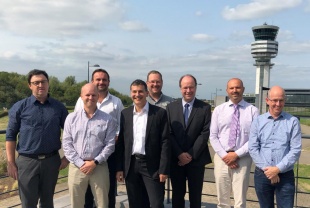
The SABCA Team
The drone is manufactured by the Belgian firm SABCA who is funded by ‘Smart Mobility Belgium’. Helicus hopes to develop a commercial operation with regular flights by 2024. Testing is ongoing, but the European Union is expected to adopt new rules next year that may see medical flights permitted across the 27-member bloc.
Michael Shamim, CEO of Helicus, told the Agence France-Presse (AFP) that hospitals are saving money by centralising testing labs, but then finding themselves more distant from patients. He explained, ”You need a fast logistics system. And that’s where the drones come in.”
The direct routes drones can fly between hospital facilities are quicker and more reliable than other means of transport. Antwerp’s two big hospital groups, ZNA and GZA, handle 1,200 tissue samples extracted during surgery per year, and these must be analysed rapidly in order to decide the course of an operation. Presently, samples are taken to the city’s four labs by road, often by taxi.

Sabine Declercq
Sabine Declercq, an Antwerp-based pathologist, said, ”When removing a tumour, the surgeon tries to spare surrounding tissue as much as possible. But to ensure the tumour has been completely removed, samples are sent to the lab during the procedure and the returned results must fall within thirty minutes.”
For the moment, only samples intended for analysis such as human tissue and urine are to be delivered by drones, but Helicus hopes soon to carry blood transfusions and donor organs direct to patients.
(News Source: https://www.france24.com/en/)
(Top pic: Helicus)

