REGENT, Schneider Electric, and World4Solar Demonstrate Remote Seaglider Charging Capabilities
REGENT Craft has announced a successful demonstration of remote charging capabilities in partnership with Schneider Electric and World4Solar.
The milestone, which was announced on Monday, marks a significant step in enabling Seaglider operations in locations with limited or no traditional grid infrastructure, expanding the potential range and flexibility of commercial and defense missions.
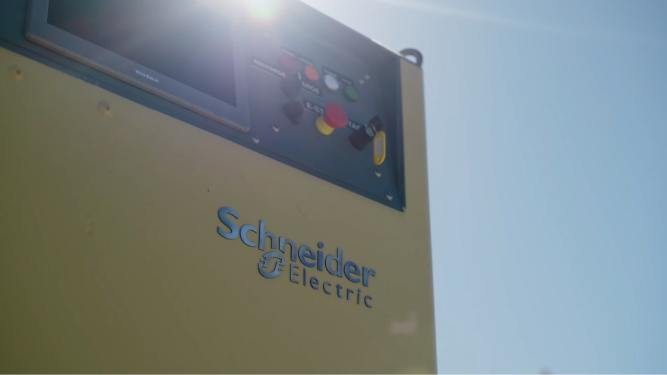
Through this collaboration, Schneider Electric adapted its high-power charging technology to integrate with World4Solar’s modular battery energy storage.
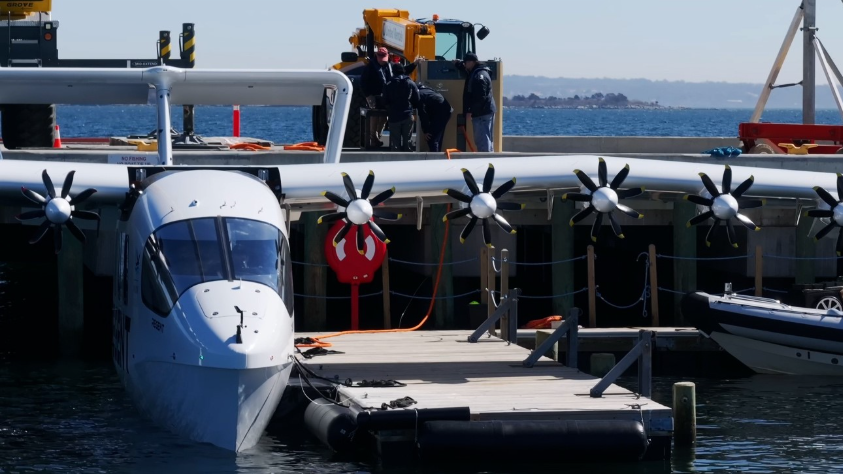
The resulting solution allows REGENT’s Seagliders — high-speed, novel vehicles that operate within a wingspan of the water’s surface in ground effect on an aerodynamically efficient cushion of air – top operate independently of established port infrastructure.
Billy Thalheimer, co-founder and CEO of REGENT, said: “Seagliders are designed to unlock fast, efficient maritime mobility across the world’s coastal regions, and charging flexibility is a critical part of making that vision a reality.
“Working with Schneider Electric, we’re showing how Seagliders can operate beyond traditional infrastructure, supporting both commercial operators and defense missions in the places they’re needed most.”
The demonstration showed how the vessels could be charged away from established ports and high-density infrastructure, enabling operations across a broader set of coastal, island, and austere environments.
For commercial operators, remote charging can help extend Seaglider service to more routes and destinations, supporting passenger travel, cargo movement, and offshore logistics in areas where charging infrastructure may be limited.
For defense customers, the capability is especially relevant to distributed maritime operations, where the ability to distribute power generation and storage in austere conditions can increase mission endurance, flexibility, and resilience.
The remote charging concept utilizes a three-pillar approach:
- Modular Energy Storage: Delivering energy storage units to remote or temporary sites.
- Hardened Hardware: Adapting high-power charging components for off-grid maritime environments.
- DC-Coupled Architecture: Using a direct-current (DC) architecture to bypass the multiple conversion stages of traditional AC charging, significantly increasing efficiency and reliability.
Chris Evanich, Commercial Leader, Schneider Electric, said: “Schneider Electric is focused on enabling the future of resilient, sustainable electrification. Our work with REGENT demonstrates how adaptable charging solutions can support new forms of electric mobility, including operations in remote and infrastructure-constrained environments.”