
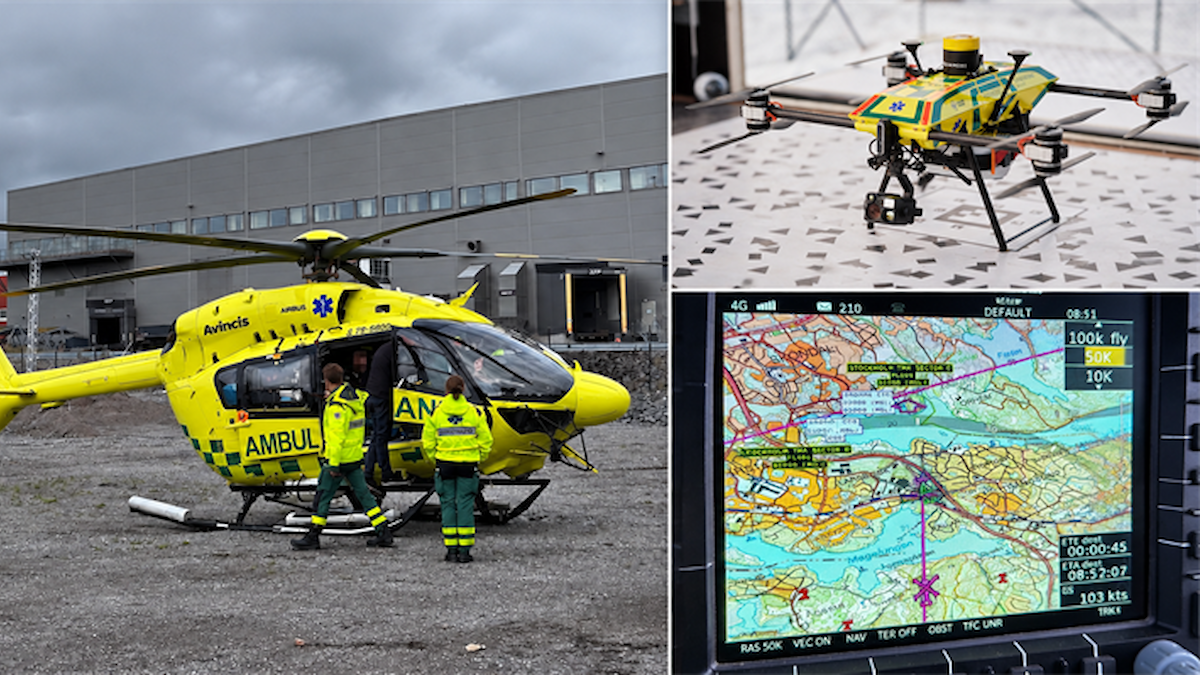
Everdrone and Avincis Test Drone Detection System for Air Ambulance Helicopters
Everdrone and emergency aviation operator Avincis have tested an electronic conspicuity system designed to improve the visibility of drones to air ambulance helicopters operating in shared airspace.
The trial took place in Stockholm on the 11th of September and involved Everdrone’s E3 drone and an Avincis-operated air ambulance helicopter. The system uses FLARM technology to broadcast the drone’s position, allowing it to be received and displayed on the helicopter’s navigation system.
The development is intended to integrate drone traffic information into equipment already used by helicopter pilots during routine operations. Previously, information about Everdrone’s drones could be shared with manned aircraft through separate digital systems. The latest test demonstrated how that information could be incorporated into a primary onboard system.
FLARM is an electronic conspicuity technology that enables aircraft to broadcast information, including their position, to other aircraft fitted with compatible equipment. Everdrone’s E3 uses the technology to make its location visible to suitably equipped aircraft.
Avincis operates air ambulance services on behalf of regional health authorities and hospitals. The company said maintaining flight safety is essential to its emergency missions, making the ability to identify nearby drone traffic an important consideration as unmanned aircraft become more common.
Everdrone has been developing systems and operating procedures intended to support drone operations alongside other air traffic. The company sees electronic conspicuity as one element of integrating unmanned aircraft into existing airspace management arrangements.
The latest trial is relevant to the potential use of drones in emergency medical services, where unmanned aircraft could deliver medical equipment or provide information to emergency responders. However, the ability to detect a drone does not in itself establish separation or collision-avoidance capability. Effective integration also depends on compatible equipment, reliable position information, agreed operating procedures and coordination between operators.