
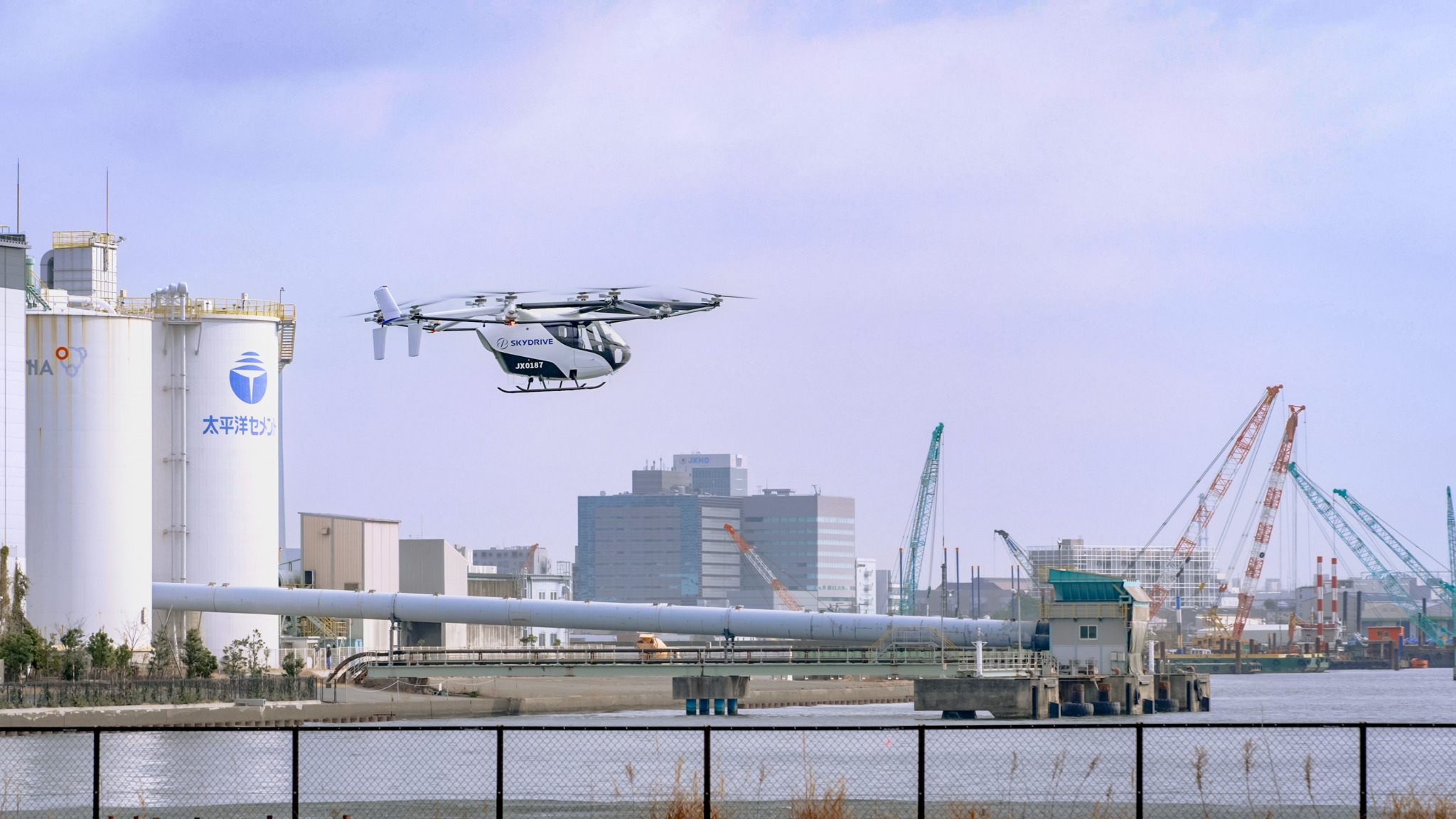
GALLERY: SkyDrive Completes First Public Demo Flights of its SD-05 eVTOL Aircraft in Tokyo
SkyDrive has successfully completed a series of demo flights of its SD-05 eVTOL aircraft in Tokyo, which were conducted over four days from February 24th to 28th and represent the first public flights the company has organised in the city.
The flights, which were organized in collaboration with Mitsubishi Estate Co., Ltd., and Kanematsu Corporation, took place at Tokyo Big Sight. They were conducted as part of the ‘Project for Developing Business Models for eVTOL (Flying Car) Services in Tokyo’, a project of the Tokyo Metropolitan Government.
The goal of this flight program was to evaluate the integrated ground and flight operations needed to support the future commercialization of urban eVTOL transport. With this in mind, SkyDrive and its supporting partners assessed the full operational sequence from pre-flight preparation through to departure, cruising, landing and returning the aircraft to the hangar.
With a combined focus on the aircraft and the terminal facilities that future passengers will require, the project broke new ground as the first such comprehensive feasibility study of future eVTOL operations to take place in Japan.
Terminal infrastructure was built to allow members of the public to test and provide feedback on the various pre-boarding procedures including facial recognition-enabled passenger check-in and passenger security screening.
Tomohiro Fukuzawa, SkyDrive Founder and CEO, said: “Following our successful demonstration flights at the 2025 Osaka Expo and the Osakako Vertiport, I am delighted to see our aircraft reaching the skies of Tokyo for the first time. We are truly grateful for the support we have received from the Tokyo Metropolitan Government and our various business partners in staging this series of flights.
“Multicopters are agile aircraft, ideal for operations in major urban areas with limited space to maneuver. With a continued emphasis on safety, we look forward to providing further demonstrations of our aircraft’s capabilities.
“As we work towards the introduction of commercial services, I hope that Tokyo residents will share our enthusiasm and excitement for the future of this new form of transport. With the government’s plans for regional development now categorizing eVTOL as essential social infrastructure, we are proud, as Japan’s leading eVTOL manufacturer, to lead the eVTOL revolution both in Japan and overseas.”
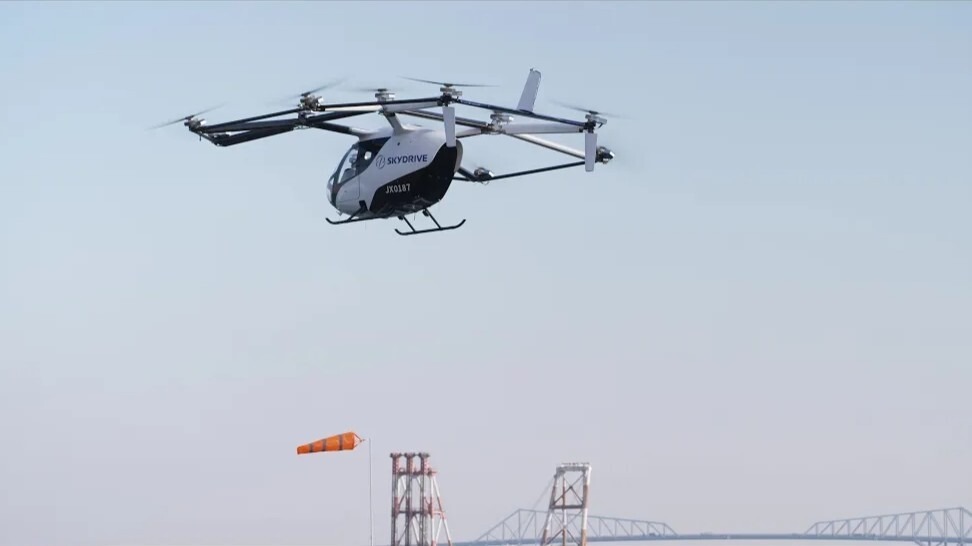
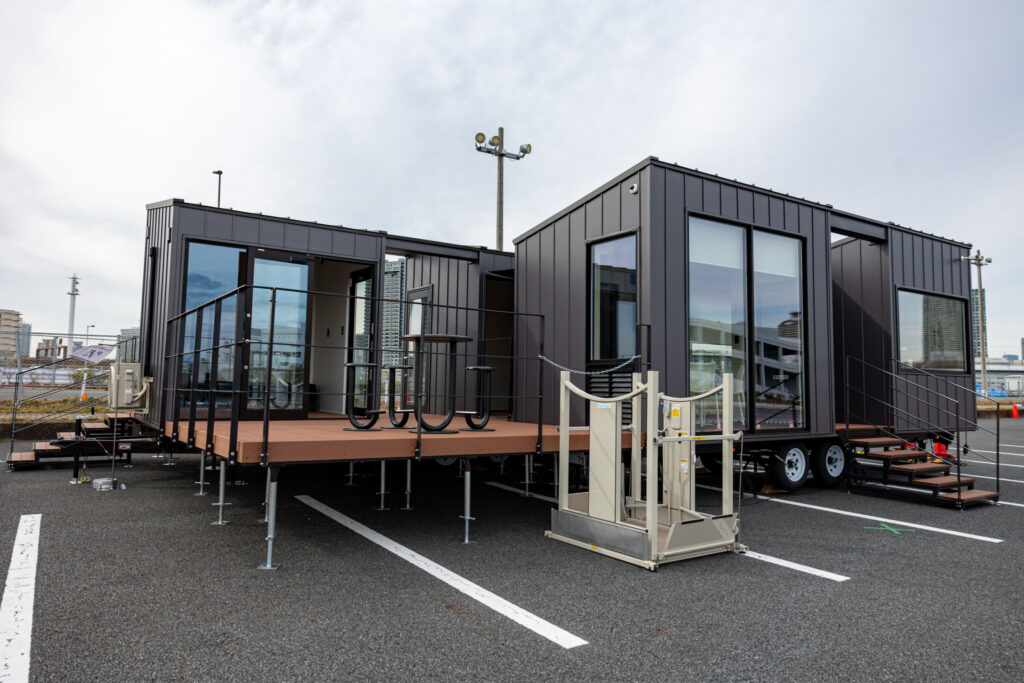
Demo Flight Details
The demo flight series operated from a dedicated take-off and landing site in the outdoor temporary parking lot by the East Wing of Tokyo Big Sight, an iconic Tokyo landmark. The demo flight featured the same model flown by SkyDrive at the World Expo 2025 event in Osaka and at the nearby OsakaKo Vertiport. As the flight route is situated close to the busy flight paths approaching Tokyo’s Haneda Airport, the demo flights also served as a further opportunity to confirm the low acoustic footprint of the SKYDRIVE.
The aircraft’s flight path started from within the limited space available inside the Tokyo Big Sight grounds before extending out over the sea. The SKYDRIVE’s ability to take off and land in relatively confined spaces is a huge advantage in ensuring safe operations from rooftops and other compact vertiports.
Safe operation from small vertiports increases the number of potentially usable vertiport sites, allowing future services to approach door-to-door connectivity even in city neighbourhoods where local characteristics make the construction of large vertiports difficult or impossible.
Making the Case for Urban eVTOL
The Tokyo Metropolitan Government has developed a roadmap for the introduction of eVTOL infrastructure and services and is actively supporting the development of the industry, recognizing the potential for eVTOL aircraft to improve resident quality of life by combatting traffic congestion and radically transforming the movement of people and goods.
Since 2022, Mitsubishi Estate Co., Ltd. and Kanematsu Corporation have been validating various business models and conducting technical verifications to assess the feasibility of various passenger eVTOL services.
These studies, which are designed to pave the way for the use of air taxis in and around Tokyo, include potential routes between the rooftop of the Shin-Marunouchi Building in central Tokyo and destinations along Tokyo Bay.
Flying these routes with a conventional helicopter reveals the potential for a significant reduction in travel time to below one-third that of road travel, while also revealing the importance of ensuring time savings in the pre- and post-travel procedures, including the passenger boarding process and access to and from vertiports.
Additionally, these preliminary studies confirmed the unique appeal of the scenery on these routes, the strong likely demand for scenic flights, and the core importance of central business districts and train stations as candidate vertiport locations.
Following these investigations and feasibility studies, SkyDrive joined the project in 2025, its fourth year. As described above, SkyDrive, together with the project partners, was able to use this series of demo flights to assess both aircraft and terminal operations.
In collaboration with UK-based Skyports, a global leader in vertiport infrastructure, we sought out volunteer members of the public who could experience part of the eVTOL passenger journey, including facial recognition-enabled check-in and security screening, as part of our efforts to confirm the effectiveness of passenger terminal operations.
This feedback from this activity allowed SkyDrive to gain a deeper understanding of the operational and convenience requirements that will be necessary to ensure successful commercialization.

