
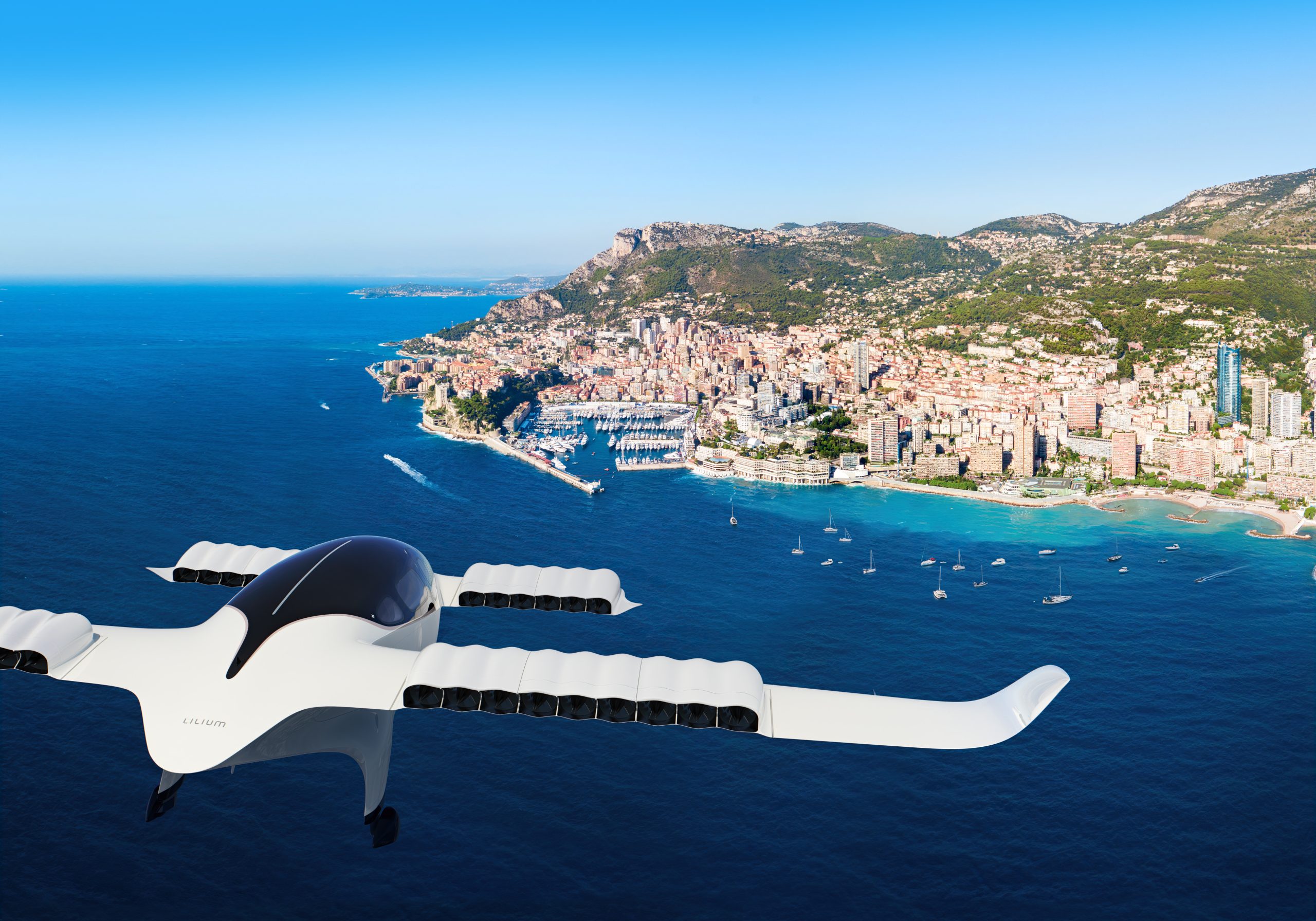
Lilium confirms it is in discussions to create high-volume production facilities in France, creating up to 850 new jobs
Lilium is in advanced discussions with the French government to expand its high-volume production capacity with an industrial footprint in the country, the company has confirmed.
This follows a French government announcement of the talks at the Choose France Summit, which took place in Versailles today (Monday).
In a press release, Lilium has said it was attracted to France due to the country’s well-established aerospace industry, expertise in electric mobility, highly skilled workforce and supportive government environment.
The company is currently working with multiple Tier 1 suppliers, including established French players such as Saint-Gobain, Michelin, Expliseat and Ratier-Figeac.
While an exact location hasn’t been confirmed, Lilium is currently evaluating several possible sites in France. They include in the aerospace and battery production hotbeds of Nouvelle Aquitaine.
Discussions, which include potential government subsidies and loan guarantees, is expected to reach a conclusion in the coming weeks.
If Lilium does set up in France, these planned new high-volume production facilities will serve the global market. By expanding its manufacturing operations in France, Lilium expects to further leverage France’s unique heritage and vast supplier base in aerospace and electrification.
With an estimated total future investment of up to €400 million over several years, Lilium would have the potential to create up to 850 new direct jobs with this expansion of its industrial footprint.
Founded in 2015, Lilium is currently the only manufacturer worldwide with a certification basis for eVTOL aircraft in both Europe and the United States.
Initial production of its Lilium Jet began in 2023 at the company’s headquarter site close to Munich, Germany. With entry into service planned for 2026, Lilium is preparing for larger scale production to meet expected global market demand.
As well as Europe, Lilium has an order pipeline consisting of more than 780 aircraft. This includes binding orders and MoU agreements from operators in the United States, South America, Asia, and the Middle East.

