
Limosa teams up with BAC Aerospace to begin its type certification with Transport Canada Civil Aviation
Limosa has become the latest Canadian eVTOL aircraft developer to start the type certification process with Transport Canada Civil Aviation (TCCA).
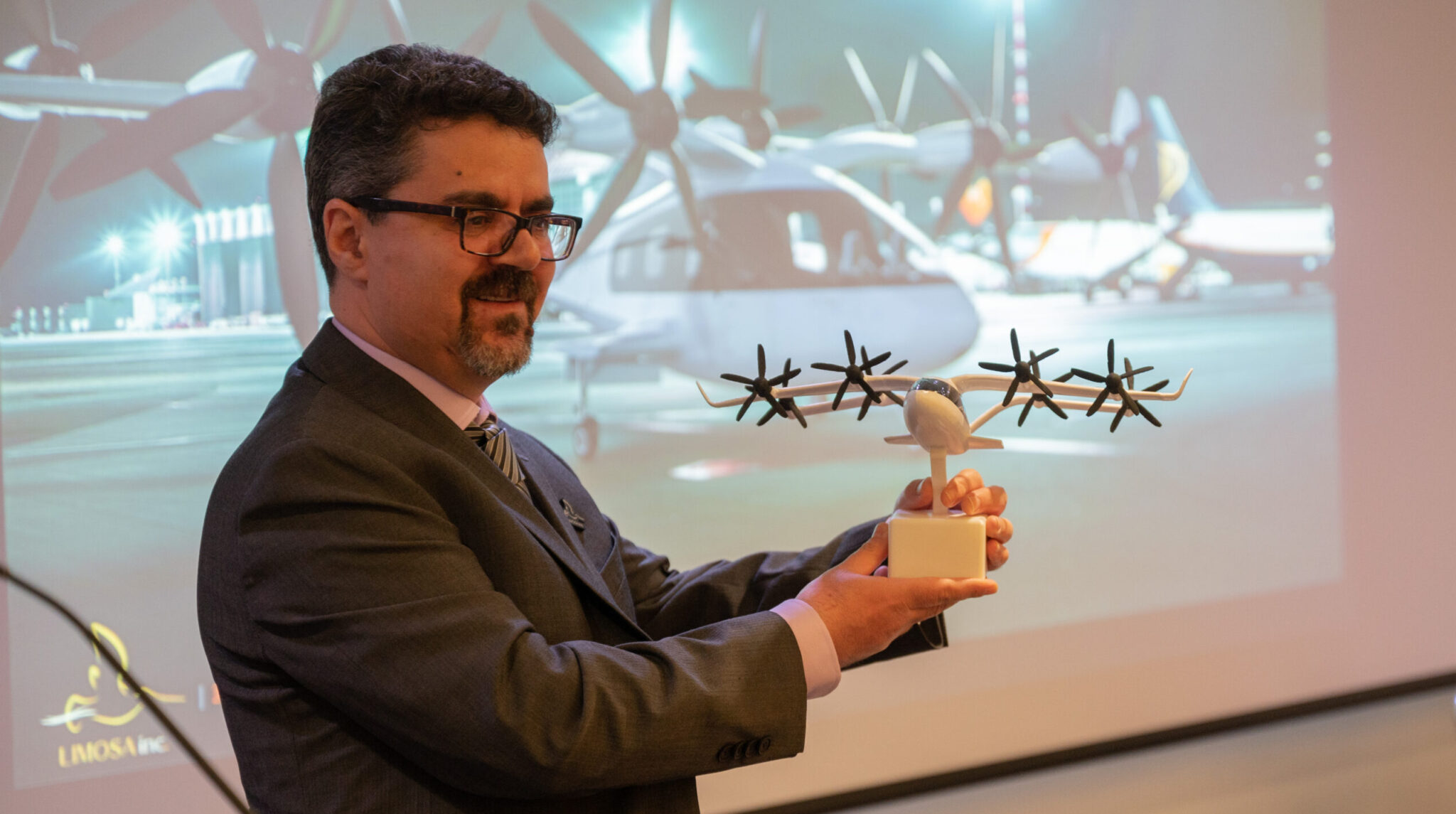
Led by Dr Hamid Hamidi, the Montreal-based startup is building the LimoConnect, an eight-seater eVTOL + eCTOL aircraft, and will be supported on its journey by aircraft certification consulting partner BAC Aerospace.
An initial aircraft program briefing to Transport Canada on the LimoConnect was recently held, with the near-term goal to agree on the G‑1 certification basis for its specific aircraft design. Limosa plans to certify and enter its aircraft into the market in 2028.
Hamidi said: “eVTOL aircraft are brand new type aerospace vehicles and being developed to open up a new mode of green transportation for civilians.
“When developing a new type design, developers must work closely with the regulators since the very beginning in order to setup the certification basis and means of compliance. This is to clear the strategies required as early as possible, as no certification code is available at this time, and other regulators such as FAA and EASA are working in different certification processes.”
“We are very excited by this partnership as BAC Aerospace brings decades of experience in certification of aircrafts as a Canadian design approval firm and can connect us with the network of representatives and delegates from Transport Canada Civil Aviation.
BAC Aerospace is led Chris Baczynski, who is CEO and a principal consultant. He is a former TCCA National Aircraft Certification expert, Transport Canada Design Approval Representative and an elected Fellow of the Royal Aeronautical Society. BAC Aerospace is already engaged in the development and certification of electric aircraft propulsion, both in Canada and the USA.
With more than two decades of experience in general aviation, large transport aircraft, and rotorcraft Type Certification, Baczynski is also a member of several international technical committees developing eVTOL technologies alongside representatives from Joby Aviation, Archer, and Wisk.
He added: “By completing the prototype design with certification requirements in mind, Limosa will avoid the risk of expensive major redesign later on. Being a Canadian company, Limosa is well poised to take advantage of considerable resources of our domestic aerospace sector and the professionalism and experience of our regulator, Transport Canada Civil Aviation.”
In addition to contributing to the electrification of the aviation industry, Limosa aims to adopt its aircraft for different mission capabilities and use existing airport facilities, prior to the future emergence and certification of dedicated vertiport infrastructure for eVTOL aircraft.
Earlier this month, Limosa announced key partnerships for its LimoConnect aircraft. German seat developer AUTOFLUG will supply crash-safety seating systems, while Airborne have agreed to produce the LimoConnect aircraft prototype airframe, in parallel to designing automated manufacturing lines and supporting Limosa’s industrialisation from prototype through to serial production.


