
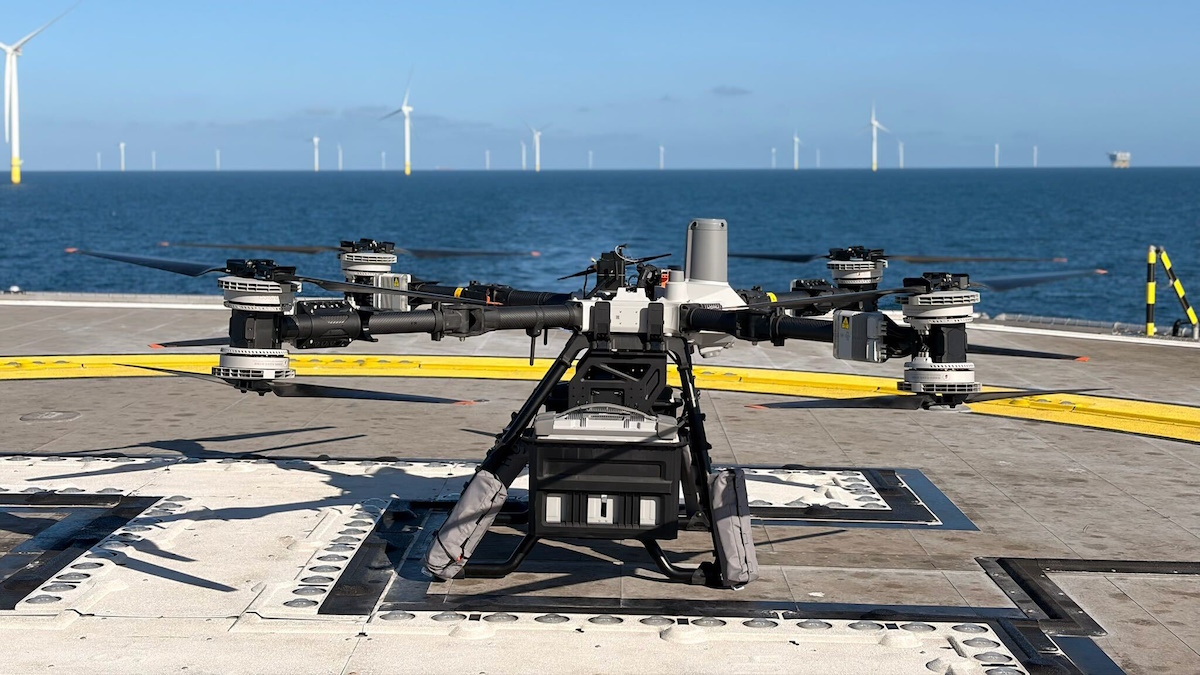
Ørsted and Skyports Trial Cargo Drone Deliveries to Offshore Wind Turbines
Ørsted and Skyports Drone Services have completed a four-week trial using large cargo drones to transport maintenance equipment to turbines at the Hornsea 2 offshore wind farm in the North Sea.
The project evaluated whether drones could support routine maintenance operations by delivering tools, spare parts and materials directly from a service operations vessel (SOV) to individual turbines. The companies said the approach could reduce vessel movements, lower operational risks and improve turbine availability.
Each maintenance kit weighed between 55kg and 65kg and contained equipment prepared for specific tasks. The kits were packed into cargo bags and flown to turbines before technicians arrived. Once work was completed, the drone returned the bags and equipment to the SOV.
A key element of the trial was the introduction of an automated cargo handling system. Skyports developed a load-collection method using an automatic hook attached to the drone, removing the need for personnel to manually connect cargo before flight. The companies said this reduced handling requirements and increased the level of automation in the delivery process.
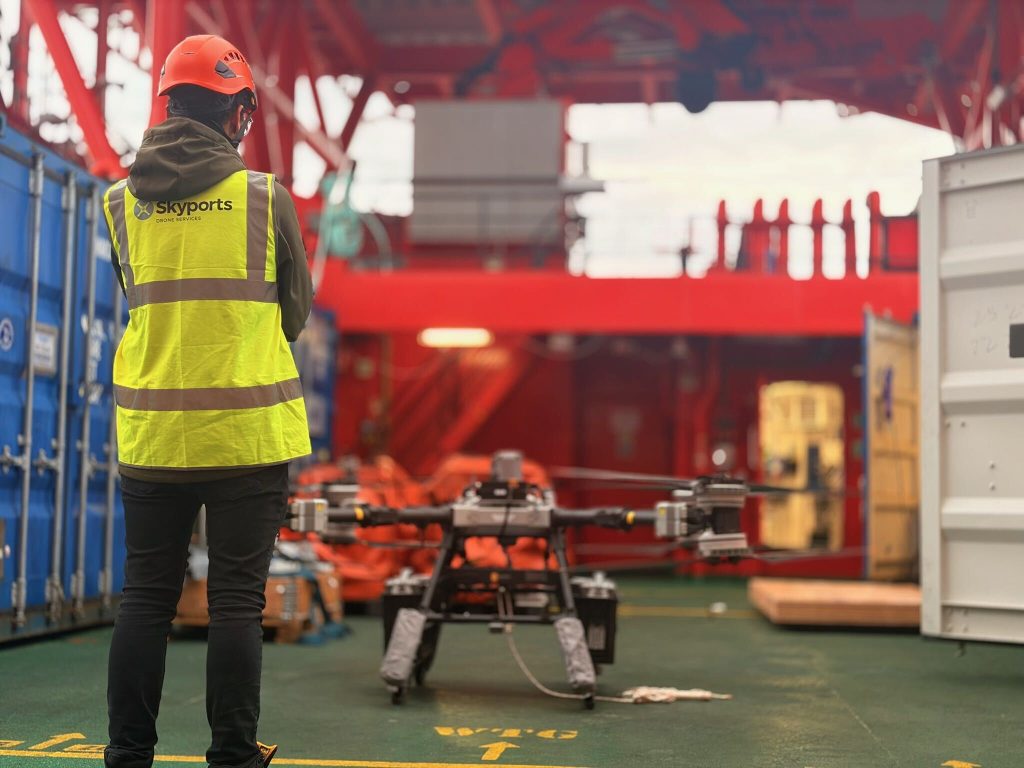
The trial involved teams from aviation, safety, warehousing and offshore operations, working within the UK Civil Aviation Authority’s regulatory framework. Flights were planned and monitored to account for weather, airspace and offshore operating conditions.
The programme also included a milestone beyond-visual-line-of-sight (BVLOS) flight within the wind farm. During this operation, the drone travelled approximately 4km while being coordinated and monitored from a specialist vessel.
Ørsted said the system was used to support both planned maintenance and reactive tasks, enabling equipment to be delivered quickly when required. Because turbines could continue generating electricity during deliveries, the process also reduced the need for maintenance-related downtime. Drone deliveries may also help reduce manual lifting by technicians working offshore and decrease some vessel trips, potentially lowering fuel consumption and operating costs.

