
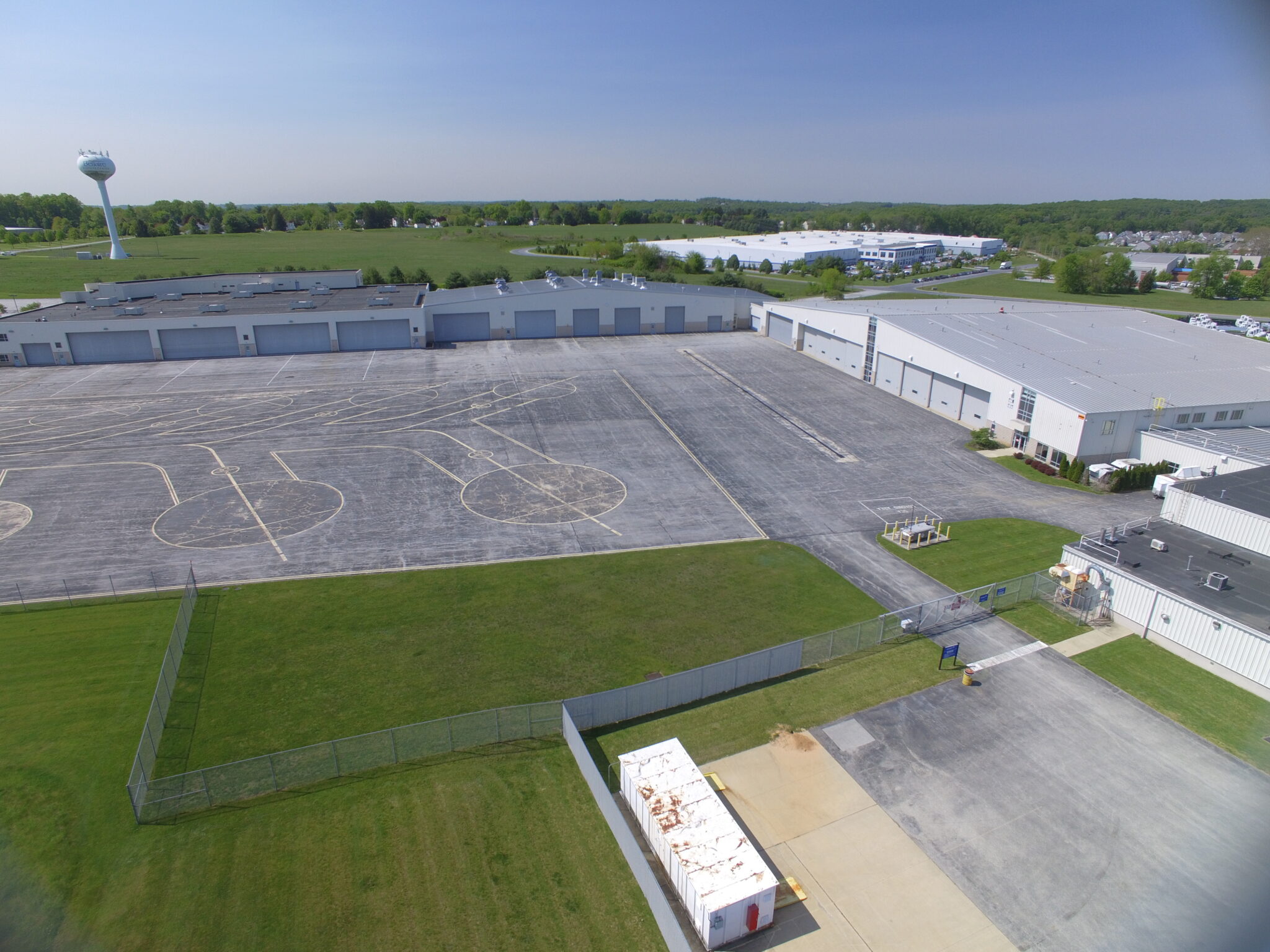
Piasecki Aircraft acquires Lockheed Martin Sikorsky Heliplex in Coatesville, Pennsylvania
Piasecki Aircraft Corporation (PiAC), a pioneer in advanced rotorcraft technology, announced today that it has acquired the former Lockheed Martin Sikorsky Heliplex facility in Coatesville, Pennsylvania, which previously served as a production and delivery centre for Sikorsky’s S‑76 and S‑92 helicopters.
The company will transform the 219,000 square foot state-of-the-art facility into an advanced R&D centre for next-generation VTOL aircraft, unmanned aerial systems (UAS), and related enabling technologies.
Notably, the company’s forthcoming PA-890 helicopter, the world’s first zero-emission hydrogen fuel cell rotorcraft, will be built and tested there. The facility — which includes engineering development, aircraft assembly, paint and finishing facilities, and a well-equipped production flight test and delivery centre — will open its doors to employees in the fall and is expected to attract about 400 workers by 2028.
John Piasecki, CEO of PiAC, said: “We chose to expand our development capabilities in the Delaware Valley because of its deep roots within the helicopter industry, its highly-talented workforce, and its robust supplier network.
“PiAC is committed to creating local jobs by fostering cutting-edge innovation and we’re excited to support a community that has long prided itself on delivering aviation excellence.”
US Representative Chrissy Houlahan from Pennsylvania’s 6th congressional district, added: “It’s exciting to see a company like Piasecki developing new technologies like the PA-890 hydrogen fuel cell-powered helicopter right here in PA’s sixth district.
“Piasecki’s Coatesville expansion will revitalise the manufacturing facilities which were formerly home to Lockheed Martin/Sikorsky Heliplex. I am proud to support their vision and will continue to support innovations such as hydrogen fuel cell development through my work in Congress.”
Piasecki’s acquisition and expansion into the Heliplex facility was enabled by the strong support from Pennsylvania Governors Tom Wolf and Josh Shapiro; the Chester County Commissioners; the Chester County Economic Development Council; Senator Robert Casey; and Congresswoman Chrissy Houlahan.
2023 marks 80 years of PiAC innovation in vertical flight, a legacy that began in 1943 with the PV‑2, the second successful helicopter to fly in America, now on display at the Smithsonian Air & Space Museum.
Shortly after, PiAC developed the world’s first tandem rotor helicopter — a revolutionary design that has been instrumental in countless life-saving missions around the globe since WWII — and which lives on in Boeing’s CH-47 Chinook helicopters.
PiAC is building on this legacy with advanced digital flight control and flight automation technology, hydrogen fuel cell and hybrid propulsion systems, morphing aerostructures, and more.
The PA-890 is the first zero-emission hydrogen-powered slowed-rotor winged helicopter for use in emergency medical services, high-value on-demand logistics, and on-demand mobility personnel air transport.
In addition to zero carbon emissions, the PA-890 eVTOL enables up to a 50% reduction in direct operating cost and reduced noise compared with today’s fossil fuel turbine helicopters.
PiAC is collaborating with ZeroAvia, a leader in hydrogen-powered fixed wing aviation, to develop and implement its revolutionary High Temperature Proton Exchange Membrane (HTPEM) hydrogen fuel cell technology for PA-890 and other VTOL applications.
Investment from the U.S. Air Force in the ground testing of a 660kW HTPEM hydrogen fuel cell propulsion system is accelerating the development, certification, and production fielding of the PA-890 to address the needs of the military as well as the $40 billion commercial light helicopter market.

