
REGENT Expands U.S. Marine Corps Seaglider Contract to $19.25 Million
REGENT Craft has extended its collaboration with the U.S. Marine Corps Warfighting Lab adding $5 million in mission funding and bringing the total value of the agreement to $19.25 million.
The new Phase IV agreement follows completion of Phase III, which included multiple demonstrations of REGENT’s full-scale Viceroy Seaglider prototype, including flight testing. The latest phase includes six deliverables focused on evaluating the Seaglider in operationally relevant environments and advancing command-and-controlintegration.
The C2 work is intended to examine how Seagliders could be tasked, tracked and coordinated within military operations. The Phase IV programme will build on earlier technical and prototype demonstrations as the Marine Corps evaluates potential applications for the technology.
REGENT’s agreement with MCWL has expanded in stages. The initial Phase I/II contract was valued at $4.75 million and focused on establishing the technical feasibility of the Seaglider concept. Phase III added $9.5 million and supported development and testing of the full-scale prototype.
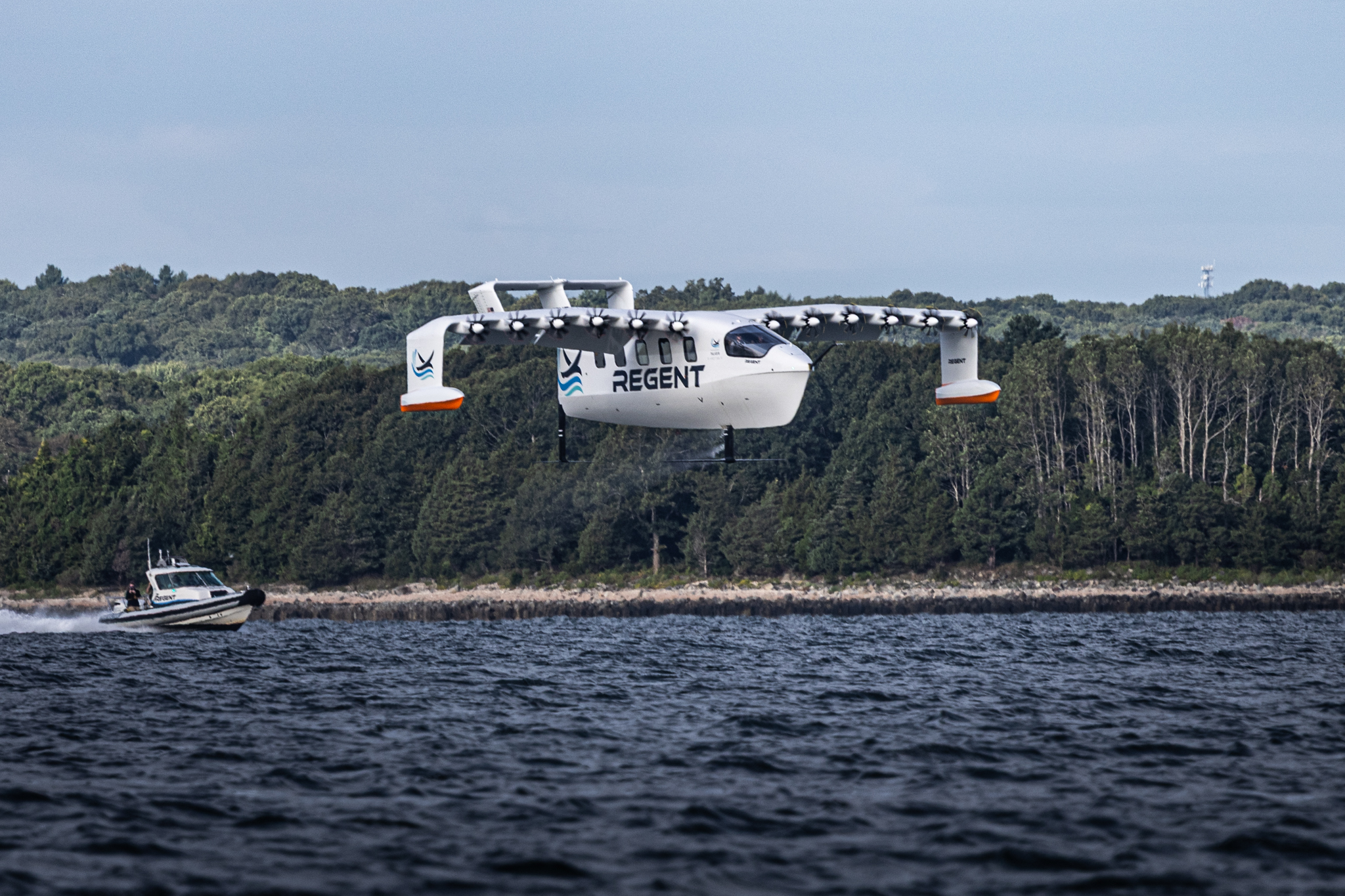
The Viceroy is a high-speed, all-electric Seaglider designed to operate over water using a combination of hydrofoils and wing-in-ground-effect flight. REGENT says the aircraft is designed to take off and land on water and operate close to the surface, with a planned range of up to 180 miles and speeds of up to 180 mph.
For defence applications, the company is positioning the Seaglider for logistics missions involving the movement of personnel and equipment without relying on conventional runways. Its electric propulsion system is designed to allow charging from shore or vessels.
REGENT conducted a flight of its full-scale Viceroy prototype in Narragansett Bay, Rhode Island, on September 2, 2026, as part of its ongoing test campaign. The company is also testing its smaller Squire platform for different mission applications.
The latest Marine Corps phase will now move the programme towards demonstrations in more operationally representative conditions. The work will also examine the integration of Seagliders with military command-and-control systems.

