
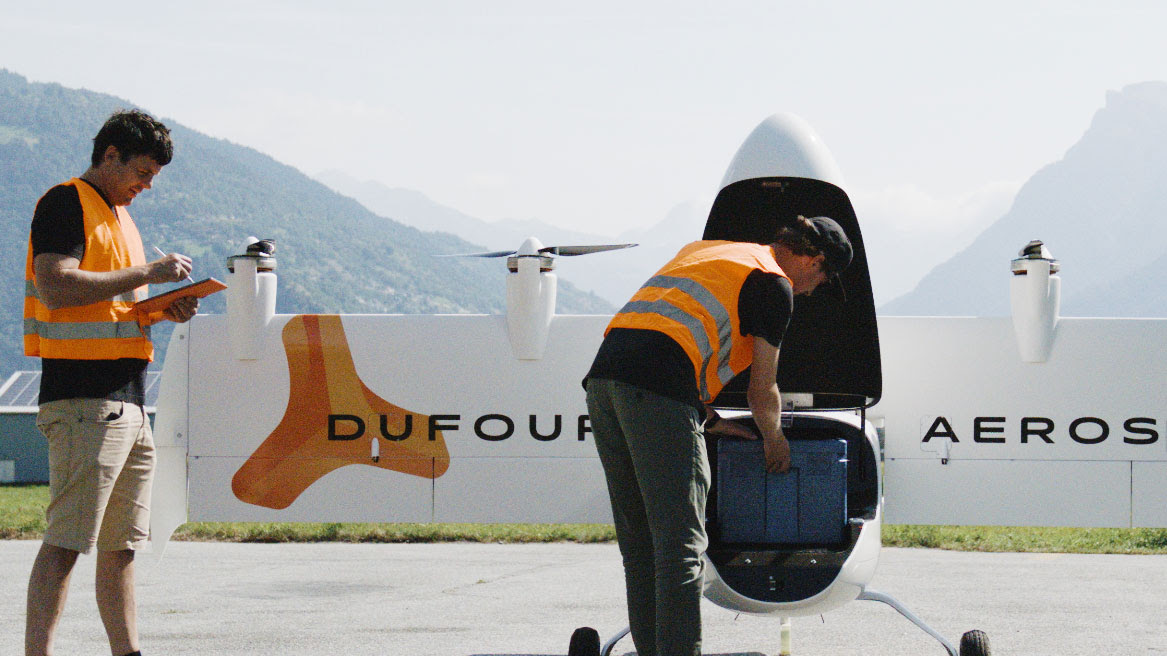
Swiss Helicopter purchases Dufour Aerospace Aero2 and Aero3 aircraft
Dufour Aerospace and Swiss Helicopter AG have signed a Letter of Intent for the purchase of two Aero2 and one Aero3 tilt-wing aircraft, marking the last of all major Swiss civil helicopter operators to have signed letters of intent with Dufour Aerospace.
Thomas Pfammatter, Co-founder and CEO of Dufour Aerospace said: “Swiss Helicopter is familiar with all aspects of commercial helicopter flying and the associated infrastructure.
“We are extremely pleased that such an experienced operator has invested in the development of Dufour Aerospace and intends to gain experience with our aircraft in the near future.”

Rolf Heuberger, CEO of Swiss Helicopter added: “In view of the global climate challenges, the aviation industry in particular has a duty to reduce its emissions, and Swiss Helicopter AG accepts this responsibility.
“We are pleased to have found an opportunity to operate highly efficient aircraft using existing and proven technology. We are looking forward to replacing a certain part of our operation with this modern means of flying and air transportation.”
In early March, Dufour Aerospace put the hybrid unit into operation on its test bench for the first time, consisting of a two-cylinder engine from Suter Industries, a generator from Plettenberg and its own digital control hardware. Further optimisation and testing still remains before the drive can be installed on the Aero2 X2.3 prototype, built to transport a payload of up to 40 kg over a distance of 400 km.

From the start, the company decided against a battery-only powered drive for the Aero2, due to the high mass and the low specific energy of batteries, until lighter batteries or fuel cells are available.
Dufour Aerospace’s hybrid propulsion system recharges its batteries within a few minutes during flight to increase operational safety, which also means that the batteries do not have to be recharged after landing and before taking off again. No complex and expensive charging or battery swapping infrastructure is required at the landing site, which is particularly important for remote or improvised landing sites.
Batteries are used more sparingly as only around 20% of the battery capacity is used, and last longer than if they are more deeply discharged, resulting in a reduced total environmental footprint.
In January, Dufour Aerospace successfully completed a Series B investment from Vista Global Holding, a leading global private aviation group. Apart from Vista, two new investors participated in this funding round.

