
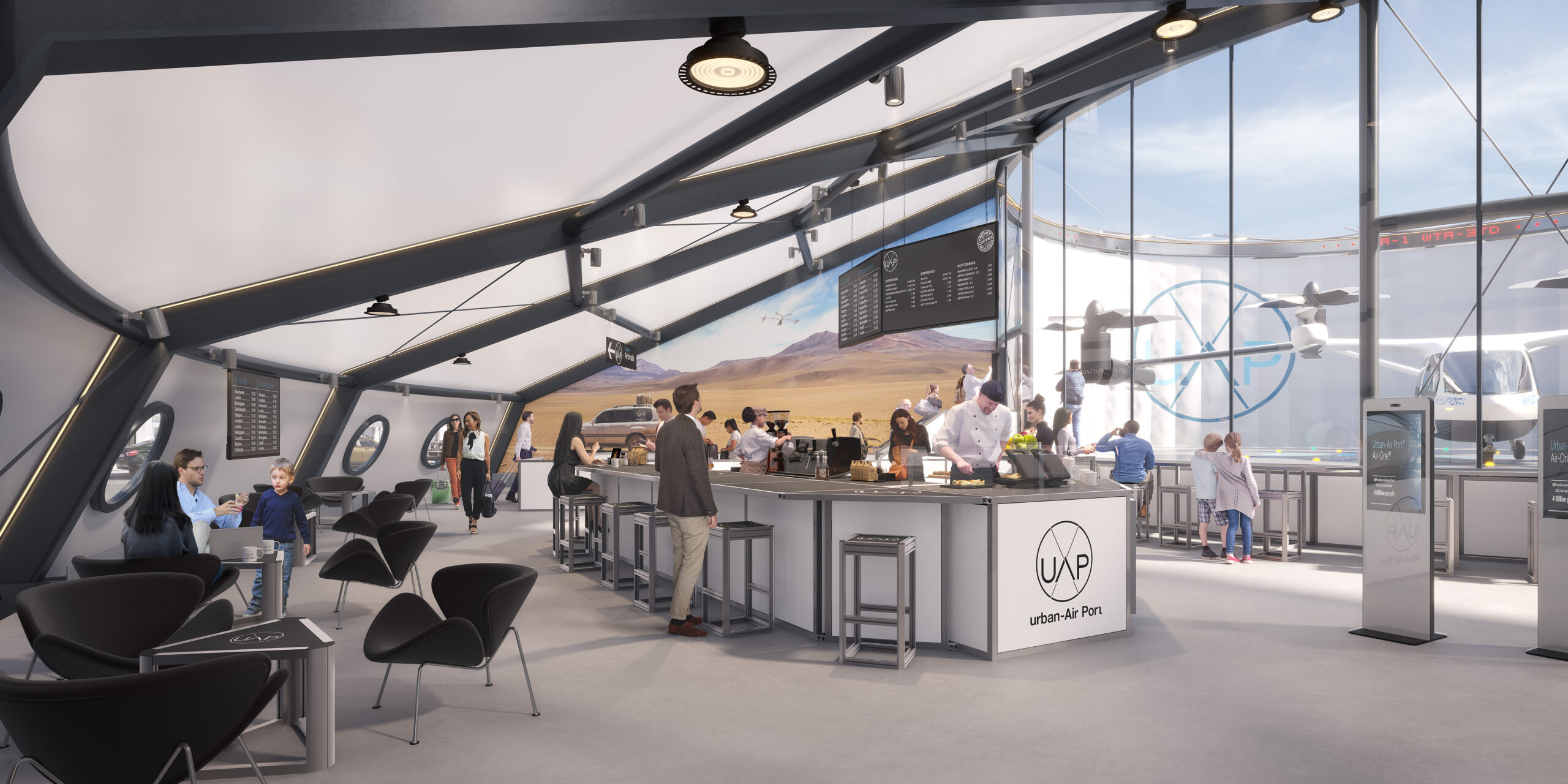
Urban-Air Port and Hyundai’s UAM Division to develop 65 infrastructure hubs for drones and eVTOL aircraft
Urban-Air Port has announced plans with the Urban Air Mobility Division of Hyundai Motor Group to develop 65 electric urban-air ports worldwide to meet the growing demand for autonomous airborne drones and eVTOL aircraft.
The partnership aims to establish a global network of urban-air ports and provide the essential infrastructure to unlock clean urban air mobility worldwide. The 65 sites will be built in key locations across the USA, the UK and Europe and Asia Pacific and form a key part of Urban-Air Port’s plan to build 200 sites globally in the next five years.
They are also an integral part of Hyundai Motor Group’s vision, which is to provide smart mobility solutions for the changing world. The Group is developing its own eVTOL aircraft and plans to enter service in 2028.
Ricky Sandhu, Founder and Executive Chairman of Urban-Air Port®, said: “The sector is soaring and we know that a future with electric flying vehicles and drones in cities is going to be a reality soon. But it can’t happen if we don’t have the infrastructure on the ground and in the air to make it happen.
“Urban-Air Port will change the way we travel forever – unlocking clean urban air transport for everyone, improving connectivity in congested cities, cutting pollution and boosting productivity. The deal with the Urban Air Mobility Division of Hyundai Motor Group is a massive step towards our vision of installing hundreds of urban-air ports worldwide to maintain our position at the forefront of this sector and support the rapid expansion of urban air mobility in this decade.”
Investment in the urban air mobility industry has exploded this year, with $4.7 billion USD announced for the development of eVTOL aircraft. However, the lack of infrastructure to support these vehicles is a major block on market growth, with experts at NASA saying infrastructure constraints will create a significant barrier to urban air mobility in the near term. Despite this, only three per cent of the investment so far this year ($150m USD) is in the physical infrastructure.
Urban-Air Port is solely focused on deploying the infrastructure-technology essential for eVTOLs and delivery drones to operate. The world’s first fully operational urban-air port – named Air-One – will be unveiled early next year in Coventry, UK.
Urban-Air Port’s modular hubs are specifically designed for compact environments, supporting any eVTOL or drone vehicle, and with maintenance and charging able to take place on-site. The ultra-compact off-grid design enables urban-air ports to be located in dense urban areas and remote locations and can be easily moved to alternative sites, as the air-mobility sector develops.
This design also means the sites are ideal for disaster emergency management, such as natural disasters. Urban-air ports can rapidly deploy drones and other eVTOL vehicles to collect and transport emergency supplies, equipment and people where needed. Urban-Air Port is designed as an integrated hub for all sustainable transport, including drones, eVTOLs, electric vehicles buses or scooters.
Commenting on the new agreement, Pamela Cohn, Chief Operating Officer and U.S. General Manager for the Urban Air Mobility Division of Hyundai Motor Group, said: “Urban Air Mobility will be integral to how we get from A to B this century. Hyundai Motor Group has a bold vision for future mobility and is committed to making the human and technological investments needed to usher in a new era of transport.
“Urban-Air Port is key to opening up safe, affordable, zero-emission mobility, which will take urban air mobility from science fiction to tangible reality.”
To support this future, Urban-Air Port today also announces a partnership with world leading Hydrogen Fuel Cell pioneer, AFC Energy PLC, to provide zero emission off-grid power for future sites. The system will be deployed at Urban-Air Port’s Air One site in Coventry.
Urban-Air Port is also supported by the UK government via the Future Flight Challenge to develop aviation infrastructure and systems that enable the next generation of electric and autonomous air vehicles. It is also in discussions with multiple potential partners and investors, as part of its Series A funding round which closes in Q4 2021.
Minister for Aerospace, Paul Scully, said: “The government-backed Urban-Air Port heralds a new, convenient and sustainable way to travel within the UK, improving connectivity between cities, whilst helping us to build back greener.
“The UK is at the cutting-edge of new technologies in the pursuit of a net zero economy by 2050. Making sure that the infrastructure exists for these new modes of transport is key to making zero emission urban flight an everyday reality.”
Gary Cutts, Future Flight Challenge Director at UKRI, added: “Urban-Air Port will revolutionise cities across the world, making them more connected, cleaner and accelerating our green economic recovery. This deal, with one of the world’s largest mobility companies, is a testament to what the Future Flight Challenge fund is all about – supporting world-leading innovation to grow globally and position the UK at the forefront of the green air mobility revolution.”


