
Zuri Selects EdgePerformance for TD 2.0 Hybrid-Electric Engine
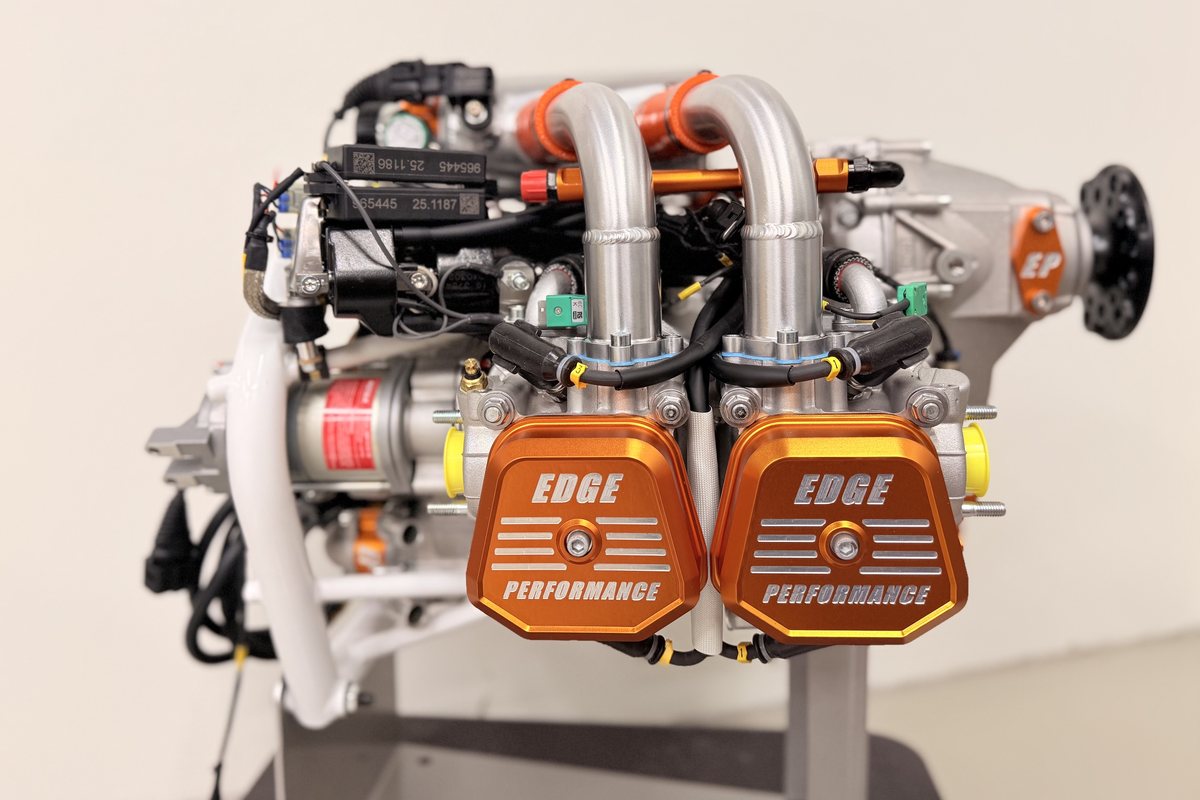
Czech aircraft developer Zuri has selected Norwegian engine builder EdgePerformance AS to supply the modified piston engine for its Technology Demonstrator 2.0 (TD 2.0), a hybrid-electric tiltrotor designed to support development of the company’s planned uncrewed cargo aircraft.
The engine is based on the Rotax 912 ULS and has been modified to drive a generator rather than a propeller. Rated at 93 kW (125 hp), it supplies electrical power to the aircraft’s motors, while a battery provides additional power during demanding flight phases, including take-off, transition and landing.
EdgePerformance, based in Notodden, Norway, has rebuilt the factory-new Rotax engine with a revised camshaft, pistons and cylinders, alongside electronic fuel injection and ECU-controlled ignition. The standard gearbox has been replaced with a direct-drive power take-off (PTO) to operate the generator at the required speed.
The engine can run on premium automotive petrol and ethanol blends ranging from 1% to 100% ethanol. It is also compatible with AVGAS 100LL for occasional use, although prolonged operation on leaded fuel would shorten maintenance intervals.
A key engineering challenge is cooling. Without a propeller to generate airflow across the engine, the hybrid powertrain requires a separate cooling arrangement. Zuri has designed its own oil and water cooling system, but further testing is needed to establish the airflow required under full-power conditions.
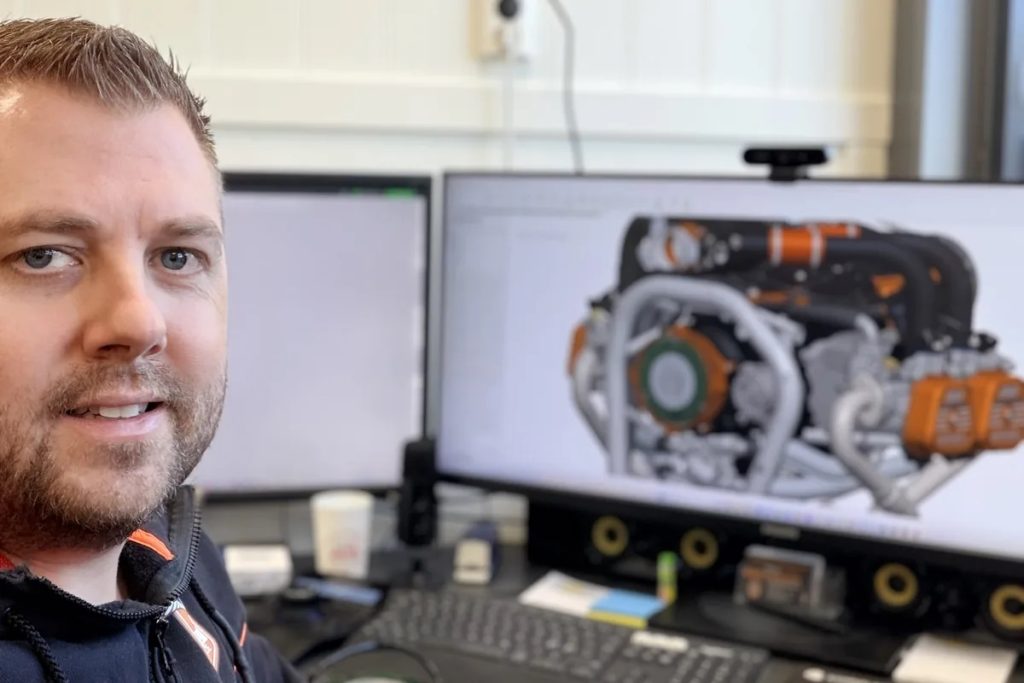
The engine has run at idle on a test rig in Prague, where Zuri checked its basic operation, cooling system and sensor readings. Following its planned appearance at the Future Forces Exhibition and Forum in Prague on 21–23 October, it is due to undergo power and thermal testing under load at a dedicated facility.
Those tests will use E85 fuel, comprising 85% ethanol and 15% petrol. Zuri expects the fuel to reduce heat generation by 20–30% compared with standard petrol, although the results remain to be confirmed. The findings will inform further changes to the cooling system and fuselage before integration work is completed.
EdgePerformance is responsible for the engine and fuel system up to the PTO shaft. Zuri is developing the downstream electrical architecture, including the generator controls, motor controller and battery integration. The engine is started by the generator itself, eliminating the need for a separate starter motor.
The TD 2.0 is intended to validate the architecture for Zuri’s planned uncrewed cargo VTOL, which has a design payload of 115 kg and a stated range of 679 km, reducing to 569 km with a 30-minute reserve. Zuri is targeting the demonstrator’s first flight for the second quarter of 2027, subject to the outcome of ground testing.

