

FAA and DOT Break Ground on V‑PAR Facility for Advanced Air Mobility Research
The U.S. Department of Transportation (DOT) and Federal Aviation Administration (FAA) held a groundbreaking ceremony on June 25 for the Vertical Take-Off and Landing Procedures and Analysis Range (V‑PAR) at the Mike Monroney Aeronautical Center in Oklahoma City. The new facility is designed to support testing, training, and operational analysis for advanced air mobility (AAM) aircraft, including electric vertical takeoff and landing (eVTOL) vehicles.
The approximately $8.3 million project will create a dedicated environment for the FAA and industry partners to study vertical takeoff and landing operations. Officials emphasized its role in ensuring safe integration of these aircraft into the National Airspace System.
“The V‑PAR is a critical step in helping the FAA better understand how to integrate advanced air mobility aircraft safely into the National Airspace System,” said DOT Deputy Secretary Steven Bradbury. “This facility will strengthen our ability to conduct research, train people, and support the future of aviation.”
FAA Deputy Administrator Chris Rocheleau added: “As advanced air mobility technologies continue to evolve, the FAA must ensure they meet the same high safety standards expected throughout the National Airspace System. The V‑PAR will help us gather the data and operational insights needed to support their safe integration into the nation’s airspace.”
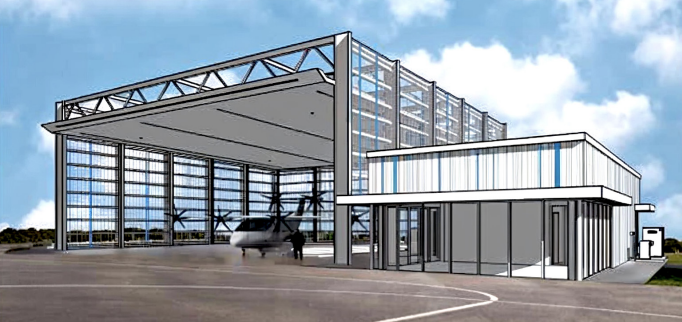
The initial buildout of the design includes a touchdown and liftoff area, taxiway, verticraft apron with two parking spaces, a covered verticraft shelter, an observation and operations facility, electric aircraft charging capability, and supporting infrastructure such as lighting and utilities. Research activities will focus on wake turbulence and separation, downwash and outwash effects, radiofrequency interference, vertiport operations, arrival and departure routes, airspace procedures, human factors, emergency planning, and flow simulations.
Project planning dates back to fall 2021 with initial concept studies. Congress appropriated $6 million in spring 2024, design work by C.H. Guernsey (with vertiport expertise from Heliplanners) was completed in October 2025, and the construction contract was awarded to Maguire O’Hara Construction in March 2026. Completion is scheduled for summer 2027.
Future expansions could add more landing sites, expanded charging infrastructure, a secondary vertipad, and a short takeoff and landing runway. The V‑PAR is positioned to provide essential data for developing standards, procedures, and workforce training as the eVTOL sector advances toward commercial operations.

