
RAeS FEATURE: How much does it really cost to run an air taxi?
Do the numbers quoted by air taxi companies for mass urban transport really stack up? Michael Halaby FRAeS breaks down some of the hidden costs and where eVTOLs may find their first roles.
This article was first published in the May 2023 edition of Royal Aeronautical Society’s AEROSPACE magazine.
_________________________________________________________________________________________
Much ink has been spilt about eVTOL aircraft and how they will George Jetson-ise travel in the coming decade and beyond.
It is suggested that so-called ‘air taxis’, generally four-seat craft, will deftly, quickly and safely fly passengers over gridlocked cities at prices – claimed by some eVTOL firms – not much more and sometimes less than a ride-hailing app. eVTOLs will not succeed this way – at least not for decades to come – for some of the reasons outlined below. They will, however, succeed in ways that have not been broadly publicised.
For this article, we must take as given eVTOLs will achieve the necessary certifications needed to transport passengers. We also take as given that technology, which in the case of eVTOLs really is two critical areas: batteries and ATM (air traffic management), will come in time. Lastly, for sake of space, we do not cover all barriers to low-cost operations of eVTOLs.
Economies of scale
First, what ‘will’ an eVTOL do? In short, they will be some helicopter, light fixed-wing and ground/below ground transport replacements. Many eVTOL OEMs say these air taxis will reduce greenhouse gases (GHGs) by transporting passengers via electric, rather than internal combustion engine (ICE)-powered vehicles. However, cars, buses and trains (and even e‑scooters and e‑bikes) are already decarbonising the sector via their use of electric motors.
To justify valuations and seek new capital, embryonic eVTOL firms present – and require – relatively large production volumes in order to maximise the economies of scale critical in manufacturing. For example, one eVTOL firm expects to produce up to 2,300 units a year.
To put this into perspective, Robinson Helicopters has produced around 13,000 two, four and six-seater helicopters since 1979; that is an average of, give or take, 300 per year. Meanwhile, Airbus Helicopters (the largest producer of helicopters) ships out around 330 six-seater and larger helicopters per year and Boeing and Airbus combined deliver around 1,100 aircraft each year.
In October 2022, I organised, and was moderator of a forum event on behalf of The Aviation Club UK called ‘Net Zero Pioneers in Aviation’, in which we discussed, among other topics, air taxis. I asked the aviation-passionate crowd of more than 60 people if they ever expected to see air taxis land anywhere near their home in their lifetimes. Only two raised their hands. There are several barriers, after certification is achieved, that will impede the rollout of widespread usage as air taxis including: costs, infrastructure, batteries and financing. In this article we will focus on some of the costs.
Taking these in turn, some – but not all – costs that have been likely under-represented include: landing fees, pilots and equipment.
Landing fees
Several eVTOL firms claim between 11 and 40 cents per passenger mile in landing fees alone. This would imply that a 14-mile distance from, say, west London to Heathrow would be, on average, $3.50 per passenger (assuming four passengers).
Let us start by comparing those landing fees with actual street parking fees for an automobile in a city centre. In central London – admittedly an expensive city – an electric car costs £4.80 ($5.60) per hour to park whereas the average for New York City is $3.13.
Assuming there are four passengers, that equated to $1.20 per passenger. Over the 14 miles to LHR, that landing fee equates to 9 cents per passenger mile assuming one hour parking. It is quite something to think that landing fees for an eVTOL are being marketed at 2 cents more even at the low end of the estimate.
Recently Skyportz, an Australian-based vertiport hopeful, made its Offering Memorandum public. It expects landing fees per passenger to be anywhere from AU$498.60 ($339.00) to AU$69.43 ($47.00).
According to New York City-based helicopter operator Manhattan Helicopter, landing fees per helicopter are $40.00 per person. Lastly, London’s Battersea heliport, the only one in central London, charges £320 ($390) for two- and four-seater helicopters (equating to an average of $130 per person if there are three passengers) – this helpfully includes 15 minutes of free parking.
It is worth noting that eVTOLs, being heavier than helicopters due to battery weight (and will also be landing at the same weight at which they took off), will likely incur higher landing costs.
Pilots
It is expected that eVTOLs will be flown by one pilot, given their small size and certification. While some eVTOL firms are focused on autonomous flights, it is fair to assume that this would come far after autonomous cars and trucks – both presently stuck to only two dimensions – have been implemented. Obtaining a pilot’s licence to carry passengers in the UK currently costs around £90,000 ($108,000).
The US equivalent costs around $92,000 whereas studying for a licence in Singapore would be S$115,000 (£86,000). This, of course, assumes the person is capable of passing all the required classes and exams.
Conversely, driving lessons in the UK cost an average of £1,500 – just 2% of a pilot’s licence. In the US, lessons cost less than $500. These pilots, once they attain their licences, could be in demand from private and commercial aircraft firms and will also need to be paid sufficiently to reimburse any loans taken to achieve and maintain their certification.
One eVTOL OEM claims a pilot cost of 22 cents per passenger mile. Using the same 14 mile and four passengers example above, the pilot would earn around $12.32 (£9.36) for a 15 minute ride. Assuming two full flights each hour and 1,000 flying hours per year, the pilot would earn around $24,640 (£19,950) per year. Even if the pilot could somehow fly double, his/her pay would be substantially less than that of a low-end helicopter pilot wage today.
In the US, pilots of small helicopters can earn between $65,000–115,000 (£52,500–93,000) per year while Uber drivers in the US are paid an average of $36,000 (£30,000) per annum (excluding their car depreciation).
Equipment
The production costs of eVTOLs, which are highly driven by economies of scale, will need to be much closer to ground transport equipment in order to amortise cost and compete with ground transport.
However, the expected costs of units are anywhere from $1.2m (£970,000) to in excess of $4 million (£3.2m). Compare that to an Uber Black car costing around $90,000 (£73,000). Indeed, one could buy an electric Rolls-Royce Spectre for $363,000 (£300,000) — roughly one quarter of the cost of an eVTOL.
Furthermore, it is anticipated that eVTOLs, given they are new technology, will be replaced in cycles far shorter than Uber cars (up to 15 years) or commercial aircraft (20–30 years or more). Helicopters, admittedly with frequent and extensive maintenance, can last up to 20 years or more. These faster replacement cycles on eVTOLs will require yet higher amortisation on equipment.
Summary of costs
Therefore, the idea that total trip costs will be slightly more than an Uber (Black/X) seem highly improbable based on provided numbers. Once realistic expenses are considered, the total cost of operations will turn air ‘taxis’ into air ‘limos’ and, thus, by very definition, out of the realm of mass transport.
Critically, it also puts them beyond those required economies of scale needed to build eVTOLs at cost-effective levels.
So, where to?
So if flying taxis will not exist in the near future, where will eVTOLs succeed? As mentioned earlier, eVTOLs are potentially viable helicopter and light fixed-wing aircraft replacements, as well as alternatives for ground and underground transportation. These will not be inexpensive to run and they will need citizen acceptance in many dense urban areas in order to eventually grow where most demand is.
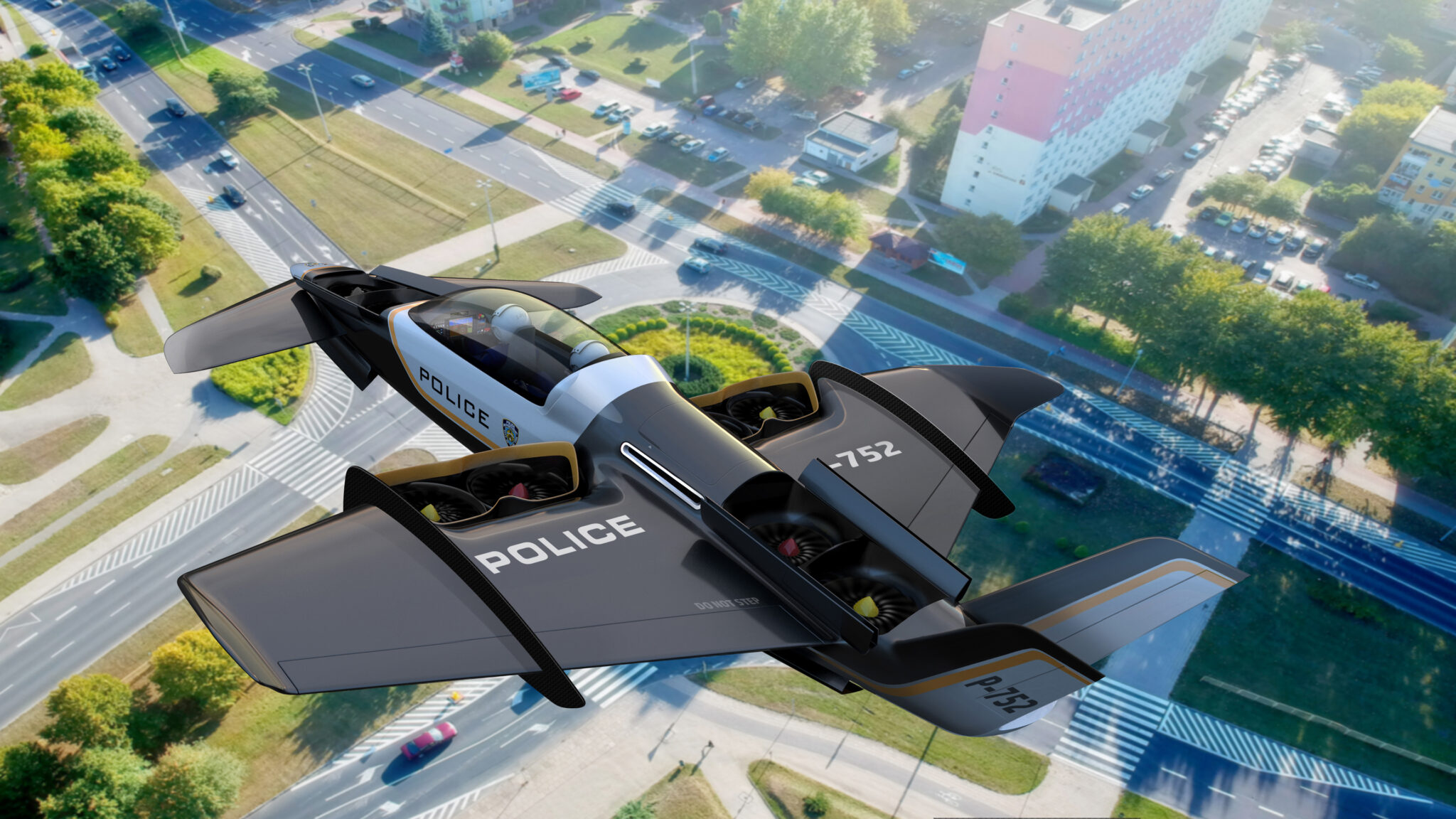
I would expect to see initial demand in sectors in which cost and public acceptance is either not required or will be viewed as useful and constructive. Such sectors would include emergency medical services and organ transport, VIP air-limo services (ultimately replacing helicopters), search-and-rescue, police/fire, last-mile cargo delivery, surveillance and agriculture usage.
I recently spoke to the CEO of an air ambulance company located in one of the West’s largest cities. He felt that once his helicopters reach ‘part-out’ age in the mid-2030s, they expect to only buy eVTOLs going forward. This is the future of eVTOLs.
Ideally, these eVTOL OEMs would in fact initially donate vehicles to emergency medical services, search-and-rescue and other not-for-profit entities, which would be mutually beneficial: the services would receive free equipment while the OEM gains citizen acceptance over time.

