
FAA releases updated ConOps 2.0 document on blueprint for air taxis
The Federal Aviation Administration (FAA) last week released an updated blueprint for airspace and procedure changes to accommodate future air taxis and other Advanced Air Mobility (AAM) operations.
Under the blueprint, AAM operations will begin at a low rate with air taxis flying much as helicopters do today. They’ll use existing routes and infrastructure such as helipads and early vertiports. Pilots will communicate with air traffic controllers where required.
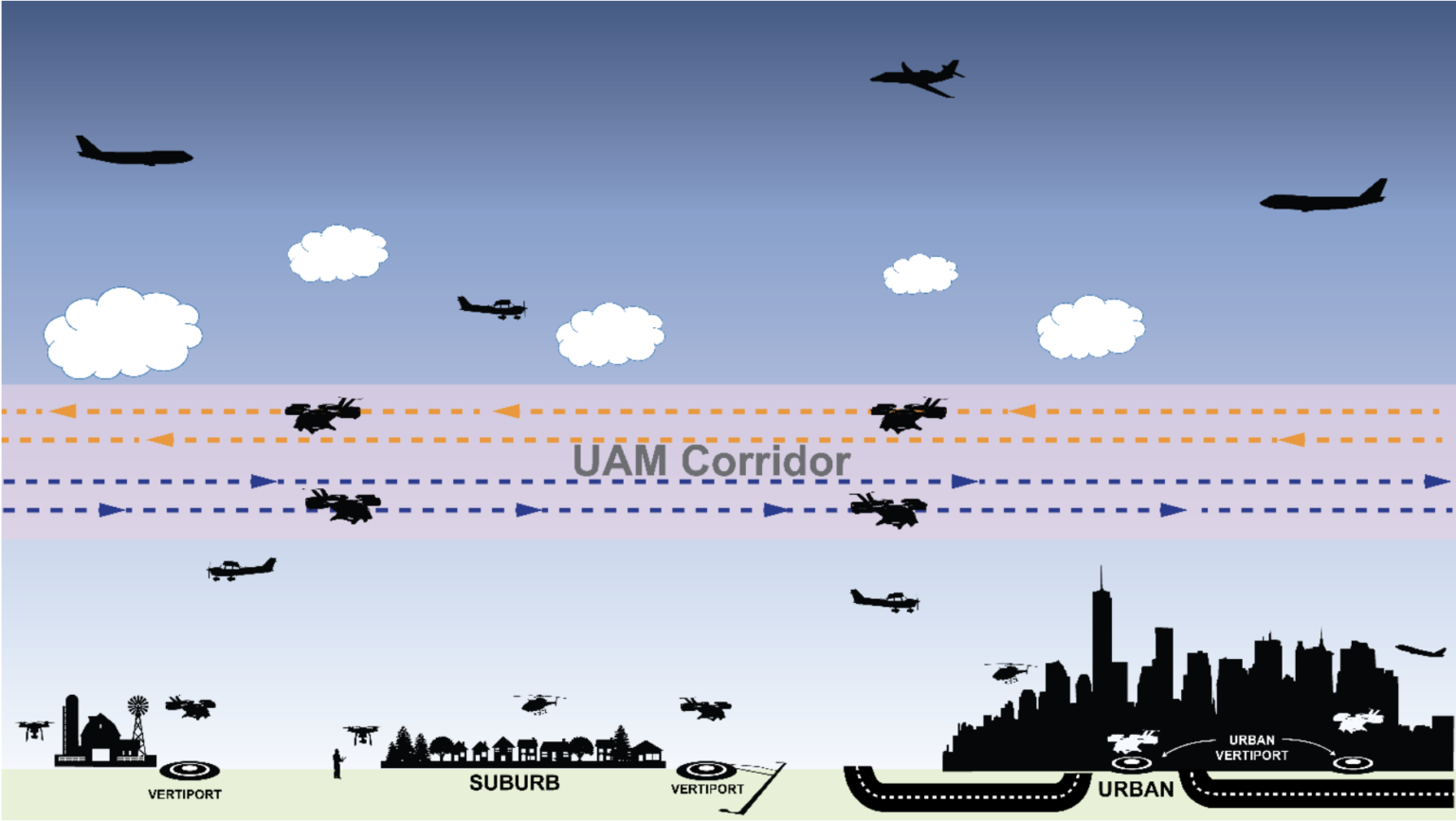
As the number of operations increases, air taxis are expected to fly in corridors between major airports and vertiports in city centers. The complexity of the corridors could increase over time from single one-way paths to routes serving multiple flows of aircraft flying in both directions. Over time, these corridors could link an increasing number of routes between vertiports.
The FAA expects aircraft technology to evolve as well. Aircraft automation and real-time data sharing between aircraft will likely play increasing roles in these corridors.
The operational blueprint is a key step, along with certifying the aircraft and pilots in the FAA’s effort to safely usher in and support this next era of aviation. It aims to provide a common frame of reference to the FAA, NASA and industry to help guide their research and decision-making.
The FAA developed the blueprint with NASA and industry stakeholders. The envisioned evolution for UAM operations includes an initial, low-tempo set of operations that leverage the current regulatory framework and rules like Visual Flight Rules and Instrument Flight Rules as a platform for increasing operational tempo, greater aircraft performance, and higher autonomy.
These are made possible by increased information sharing with operations across a range of environments, including major metropolitan areas and the surrounding suburbs.
This updated UAM ConOps v2.0 reflects the continued maturation of UAM and incorporates feedback received on v1.0, as well as research outcomes and additional input from government and industry stakeholders. Its focus is on clarifying elements from the initial version and providing additional detail in response to the feedback and input.
The FAA blueprint is available by clicking here.

