
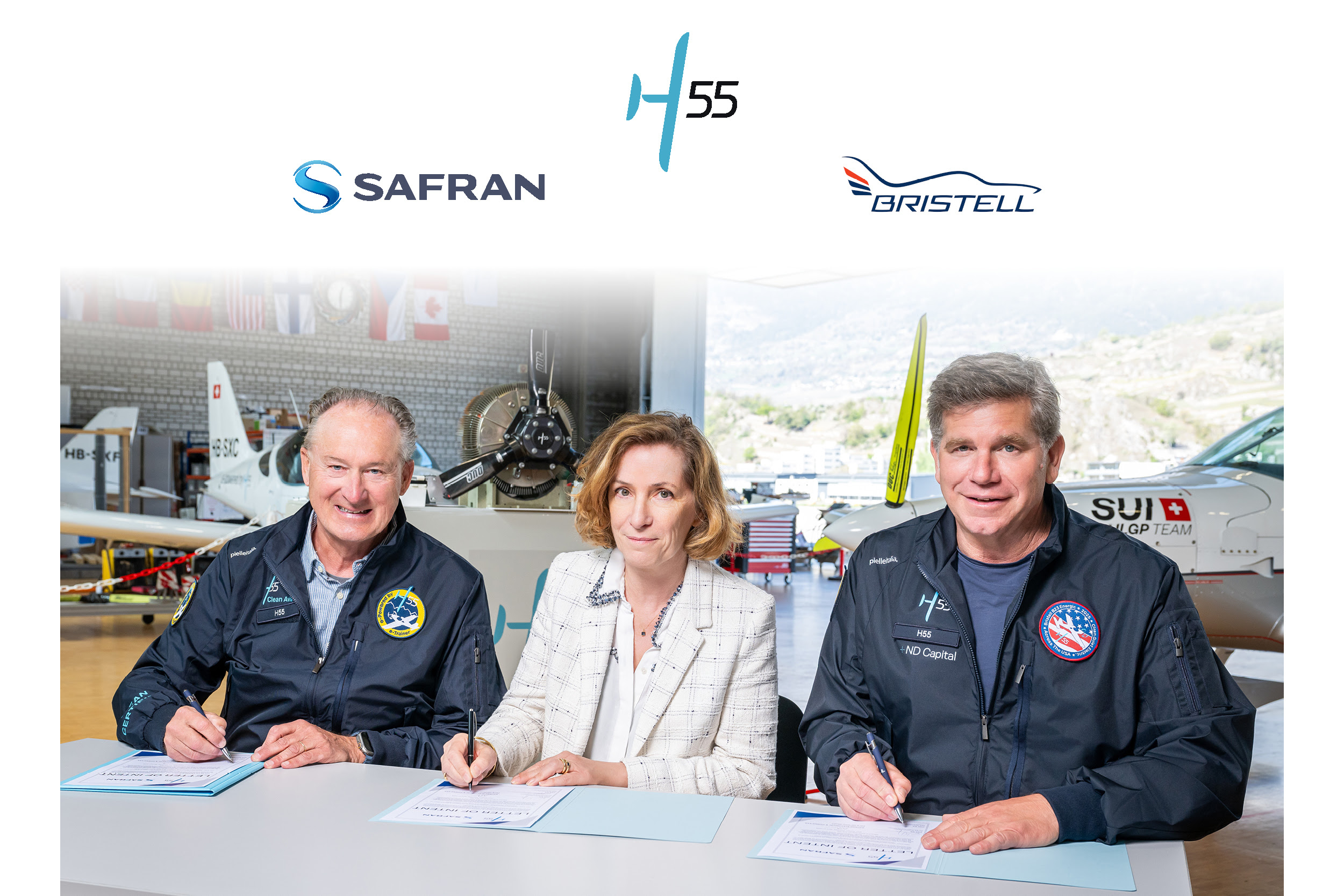
H55 selects Safran to supply the electric propulsion unit for the Bristell B23 Energic Aircraft
Safran Electrical & Power and H55 have signed an agreement to integrate the Safran ENGINeUS electric motor into the H55 electric propulsion system, powering the fully electric Bristell B23 Energic aircraft.
This collaboration aims to deliver certified electric propulsion solutions for general aviation, targeting CS-23 / Part 23 Level 1 and 2 aircraft. It combines Safran’s EASA certified ENGINeUS electric motor technology with H55’s energy storage and propulsion integration capabilities.
Agnès Pronost-Gilles, Executive Vice President & General Manager, Power Division, Safran Electrical & Power, said: “We are pleased that H55 has selected ENGINeUS for its propulsion system on the Bristell B23 Energic. As the only certified electric motor in the aviation market, ENGINeUS continues to set the industry standard, offering an outstanding power-to-weight ratio and proven, reliable performance while fully addressing market requirements.
“ENGINeUS enables the development of both all-electric and hybrid aircraft, making it a key asset for introducing fully certified and integrated solutions to the market.”
With certification remaining the main barrier to entry in electric aviation, both companies have recently achieved key EASA certification milestones. Building on this combined expertise, the partnership will accelerate the availability of certified electric propulsion solutions for next-generation 2–6 seat aircraft.
The Bristell B23 Energic program serves as the initial certification platform for general aviation, targeting the rapidly expanding electric pilot training market. This market is driven by increasing demand for lower operating costs and zero-emission operations.
Safran Electrical & Power will support both the prototype and serial production phases, beginning in 2027, and will also deliver dedicated in-service support.
Martin Bristela, CEO and Co-Founder, Bristell — BRM AERO, added: “Flight schools from Europe to North America already build their fleets around the Bristell B23, a platform certified under both EASA and FAA and available across several engine configurations.
“Adding certified electric propulsion from H55 and Safran to this foundation means operators can transition to zero-emission training with minimal disruption. Same cockpit, same support network, new powertrain. That is a practical path to electric flight.”
H55 is a Swiss-based company specializing in certified electric propulsion and certification-grade energy storage systems for aviation. The company enables electric aviation to scale by transforming commercial lithium cells into aviation-safe Energy Storage Systems that regulators approve, insurers underwrite, and OEMs can deploy repeatedly as a certified propulsion platform across aircraft programs.
This is achieved through independent cell characterization, rigorous incoming screening, redundant safety architectures, and regulator-aligned testing designed around worst-case failure scenarios.
Founded as the technological legacy of the Solar Impulse program, H55 builds on more than two decades of hands-on electric aviation experience. The company has designed, built, and flown multiple electric aircraft and has accumulated more than 2,000 hours of fully electric flight with zero battery-related incidents—providing the operational depth required to execute certification-grade programs, not merely comply with them.
Rob Solomon, CEO for H55, said: “This partnership brings together the two companies that have done the hardest work in certified electric aviation for light aircraft — eight years of H55 building the only battery architecture to complete an EASA-witnessed module test campaign, and Safran delivering the ENGINeUS motor family as the benchmark for certified electric propulsion in the light general aviation market.
“When you combine the standard-bearer for certified energy storage with the standard-bearer for certified electric motors, you give OEMs something they haven’t had: a complete, certifiable electric propulsion system they can build an aircraft around — and that compresses the path to certified aircraft by years, not months.”

