
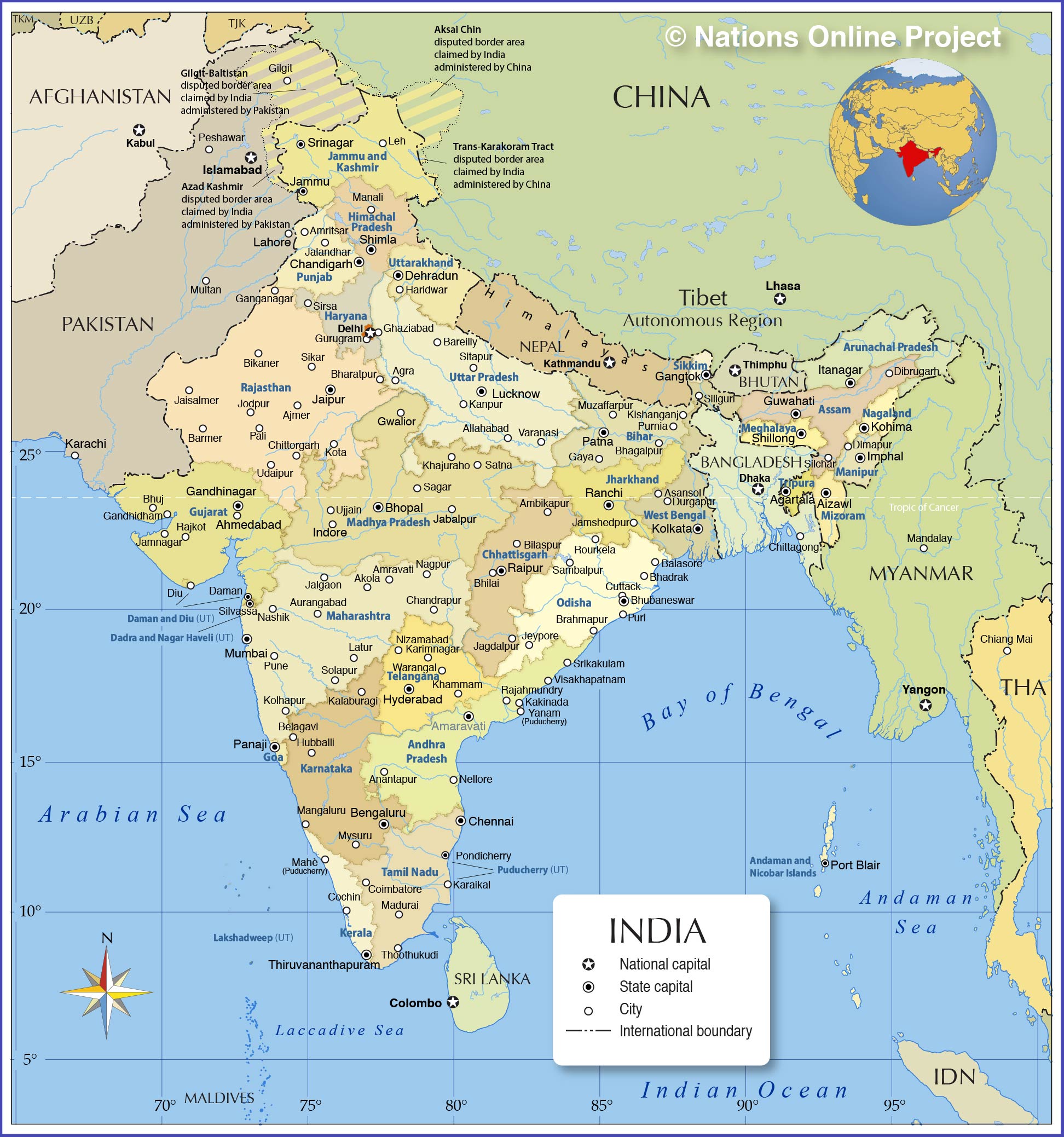
India Spearheading Global Green Aviation Revolution
India is ranked third in the world behind China and the U.S for CO2 emissions (2,411.73 million tons in 2020)*, so it is encouraging the country shows determination to be a leader in the carbon-free aviation industry of the future.
Emerging Indian startups cover all bases from eVTOLs and actual flying cars to delivery drones and this feature offers a brief snapshot of the country’s latest developments.
To begin with the quirky, India has its own flying car company called Vinata Aeromobility. Based at Chennai in Tamilnadu, it was founded by Yogesh Ramanathan last year. The company is developing a fully autonomous hybrid vehicle (biofuel/electric) that can travel both on roads and fly in the sky.
The company website states, “The design combines vertical take off and landing (VTOL), electric and low/no emission fuel hybrid power technologies with cutting edge automotive engineering to create a one-of-a-kind vehicle that will revolutionise the third dimension of transportation, urban air mobility.”
Watch Video:
Alongside the ethos, ‘Know your passion. Follow it. Dream it. Love it’, Ramanathan set-up Vinata to make commuting, “More safe, fast and sustainable, thus reducing travelling hours in to minutes.”
Called the Vinata Aeromobile, initial designs look a little like the 1960s Jetsons cartoon craft. Product specifications include: Co-axial quad-rotor; seats 2 people; 18 ft long; 8 fixed pitch propellers; max take-off weight 2,866 lbs; flight time on one charge 60 minutes; flight length 62 miles; max speed 75 mph; and height ceiling 3,000 ft.
A model concept was first unveiled at the Excel Helitech Expo Exhibition, London in October 2021. So, given the company is barely a year old, how it will fair is uncertain. Presently, Vinata is seeking the all-important investment.
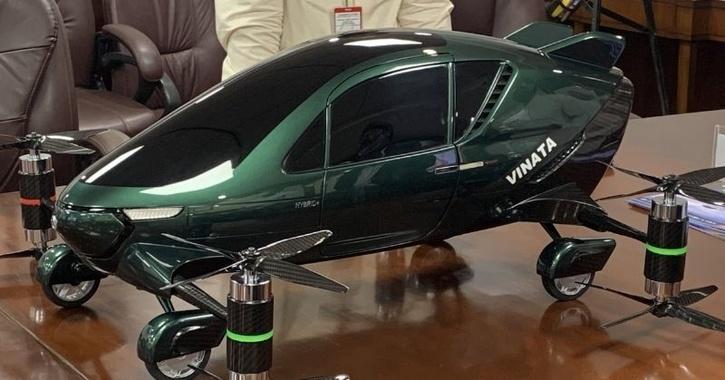
Model of the Vinata Aeromobile (credit: Vinata)
On to the flying car’s bigger brother, the eVTOL air taxi and in September, Eve Air Mobility and Blade India (helicopter transport company now expanding to eVTOLs) announced a major partnership to improve the future of air mobility across the Indian subcontinent over the next five years.
The collaboration includes Gurugram-based Blade placing an order for 200 of Eve’s aircraft (each costing USD 3 million) and a commitment to flying 1,000 hours each year. The plan is to begin operations in 2026, soon after the aircraft are delivered. Data suggests the city of Bengaluru alone, has the potential to absorb 300 eVTOLs for commuting between the city centre, the airport and nearby locations. Eve intends to introduce six-seater air taxis that will fly autonomously later on.
Amit Dutta, MD of Blade India, stated the next three years will be spent developing the ecosystem for the launch of air taxis by building the necessary vertiports and air navigation systems for safe flying. He commented, “India’s traffic congestion difficulties are only expected to get worse. This collaboration allows benefiting from Eve’s extensive knowledge of not only EVA design but also the infrastructure required to support Urban Air Mobility (UAM).”
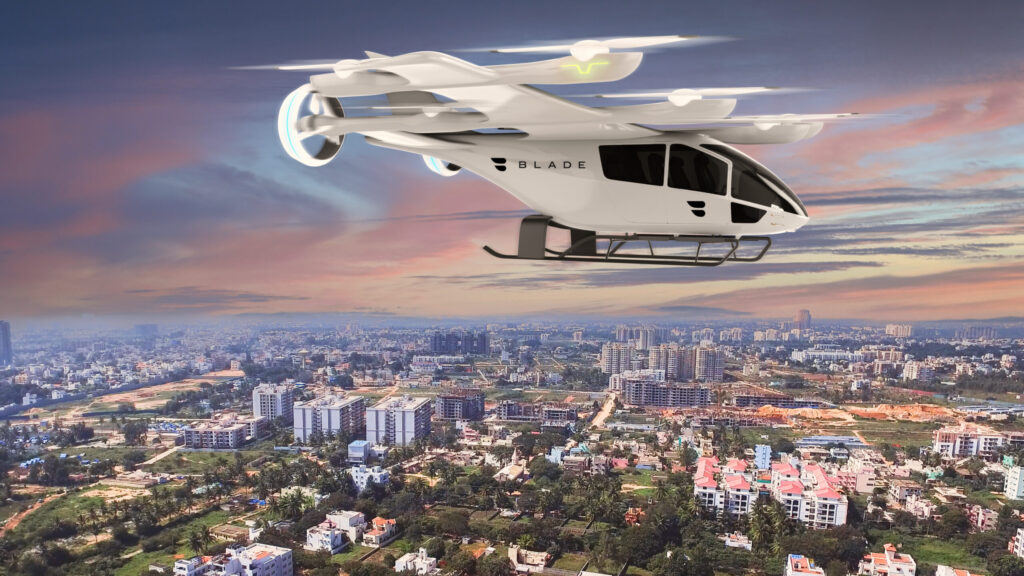
Graphic Image: Blade Flying an Eve eVTOL (credit: Eve Air Mobility)
The partners are presently engaged in a three-month pilot project where intra-city helicopters, representing eVTOLs, are being flown across an undisclosed major Indian city, to understand the challenges flying taxis may face.
During this project, Blade is collecting valuable data on operations and customer experiences. This information is being used to further enhance Eve’s eVTOL aircraft, air traffic management (ATM) system, service and support solutions. The Embraer off-shoot previously announced a collaboration with Skyway Technologies to incorporate their ATM software solution for UAM.
Yet, it is the drone delivery industry where India is most advanced.
Last month a major and significant announcement was announced concerning a partnership between Garuda Aerospace, Jedsy drone delivery and KL Tech City. The signed Memorandum of Understanding (MOU) calls for “cooperation in knowledge and technology as well as market expansion and joint ventures.”
Garuda is a leader in the industry having designed drones for 38 diverse applications that include sanitisation, agriculture spraying, mapping, surveillance and delivery. The company has 400 Government clients and 100 major clients all around India, while Garuda boasts over 200 employees alongside a group of advisory board members and top drone operators. The company has a presence in close to 30 cities and plays a significant role in the Indian government’s national technology development.
After successful drone trials delivering medicines, mail, packages and general products including to remote and isolated areas, a green-light has been given by the Government to create a network of delivery routes around India.
And this is where Jedsy comes in. A Swiss start-up that manufactures and operates delivery drones, the company also incorporates a unique docking feature that enables the craft to deliver to balconies and even windows. This docking station also automatically charges the Jedsy Glider, which enables it to fly all-day, everyday, without the need to return to a major charging hub. (watch video)
The initial aim is to begin with 100 long-range Jedsy drones to be in service by the end of 2023, “as the demand is enormous”, says Agnishwar Jayaprakash, CEO of Garuda Aerospace.
Herbert Weirather, CEO of Jedsy, commented, “Logistics is the backbone of every economy, and we can make a significant impact on India which, according to the IMF, has one of the slowest roads in the world.”
He continued, “The fixed-wing Jedsy craft can travel fifty times more efficiently than any automobile, in a straight line, without traffic, and at a cruising speed of 100 km/h, while remaining silent.” Adding, “It is only a matter of time before lightweight deliveries are made on a large scale, as this is the logical progression of rapid logistics.”
The third partner, Malaysia-based KL Tech City, is an investment and business services company specialising in new technologies. It focuses on artificial intelligence, blockchain, clean tech, fintech and “big technology trends of the present and future.”
“Drones for good” is now a common phrase. It highlights the humanitarian nature of delivery drones and two weeks ago, an initiative under the title ‘Medicines From The Sky’, led by the Indian government and World Economic Forum (WEF), took place.
Redwing Aerospace, a Bengaluru-based company that flies and manufactures drones, first conducted a trial in August to deliver life-saving drugs to Seppa, a small town in the East Kameng district of Arunachal Pradesh State.
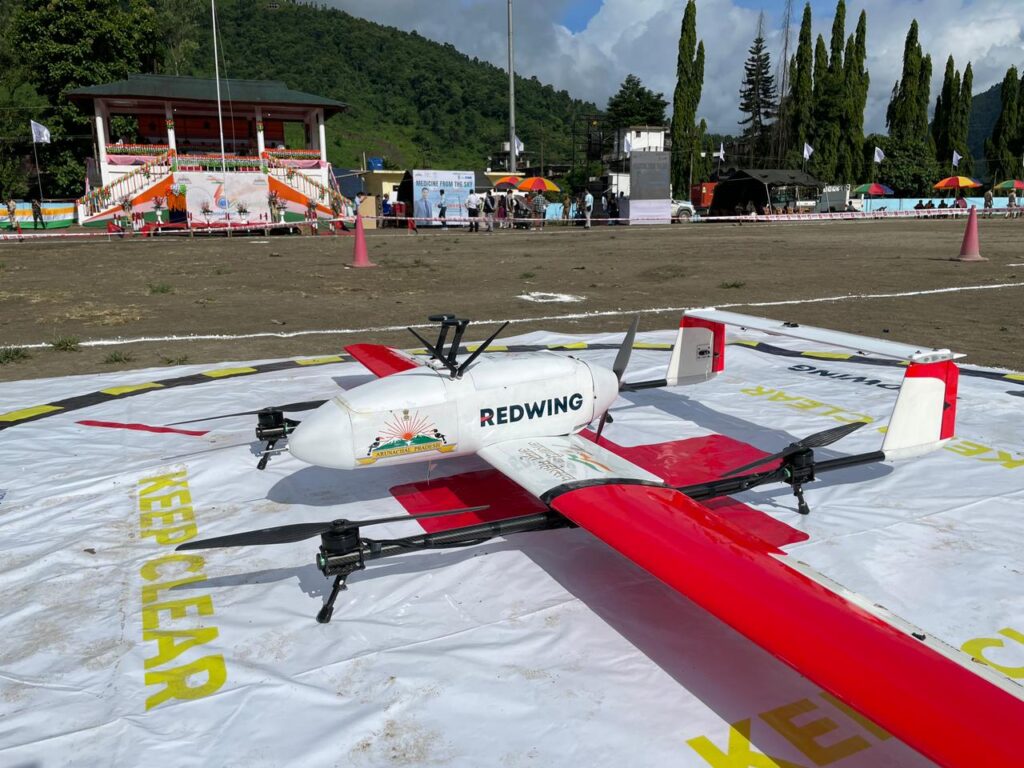
Redwing Drone (credit: Redwing)
Funded by the U.S Agency for International Development (USAID), it was a continuation of drone delivery tests that commenced in Telangana last year. Chief Minister Pema Khandu had signed a Memorandum of Understanding (MOU) with WEF to explore and assess the possibility of using drones to deliver healthcare in the remote regions and inaccessible terrain of the northeastern state.
The delivery a fortnight ago was the first successful attempt at delivering medicines in the East Kameng region from Seppa to a remote area of Bana located in the Richukrong circle. Advocates say this service “will drastically reduce the time and turmoil in moments of medical necessity in the remote regions of the state.”
This area is inaccessible by road due to hilly terrain and difficult to reach even by foot. Residents of the region often have to struggle to get primary healthcare and medical assistance. The situation worsens during the monsoon season.
Drone delivery is a life-saver for some as the craft can navigate the inhospitable areas aerially while guaranteeing non-contamination and safety of the pharmaceuticals carried. The craft can also connect healthcare centres to these districts, ensuring timely assistance is provided to those in need.
And while such drones can save people’s lives let us not forget animal welfare too.
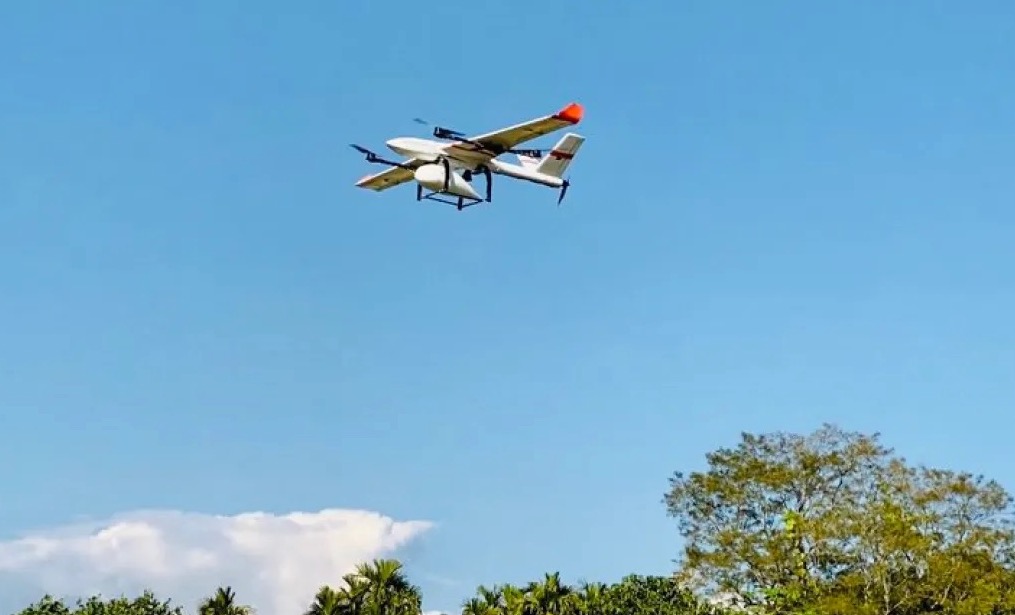
TechEagle Vertiplane x3 Hybrid eVTOL (credit: TechEagle)
TechEagle Drone Delivery based in Lucknow, Uttar Pradesh has found a niche in the market, transporting animal vaccines to remote areas. Ten days ago, the company announced “The world’s first vaccine delivery for animal livestock using drones.”
TechEagle has collaborated with the Department of Animal Husbandry and the Government of Arunachal Pradesh to improve healthcare for animals by providing rapid and safe delivery of vaccines in the state.
The drone company deployed its Vertiplane x3 Hybrid eVTOL. It is India’s fastest and longest-range craft, capable of flying at a top speed of 120 kph for 100 kilometres on a single charge. It takes off vertically like a helicopter and then converts to fixed-wing mode. Once the drone arrives at the designated location, it converts back to helicopter mode to land often in a small area of no-more than 3 x 3 metres. The craft can transport items weighing up to 3 kg.
The drone flew from Kangkong and delivered vaccines to Paglam, flying a distance of 29 km. This took less than 20 minutes. The road distance from Kangkong to Paglam is around 120 km which can take up to 4 hours to drive. Therefore, TechEagle’s craft delivered these vaccines 12 times faster than existing ground transportation.
Shri Tage Taki, Minister of Agriculture and Animal Husbandry of Arunachal Pradesh, commented, “This is an historic event that has paved the way for improving animal welfare.”

Anshu Abhishek (credit: TechEagle)
Anshu Abhishek, COO and co-Founder of TechEagle, remarked, “Animal husbandry is an important economic sector and rearing of livestock directly influences the socio-economic condition of Arunachal Pradesh.”
He added, “Therefore, it becomes necessary to ensure the good health of the animals even in far-to-reach areas and to empower the farmers by creating a robust infrastructure via drone delivery systems.” TechEagle is to assist the Animal Husbandry department in establishing drone hubs across Indian states.
The company was founded in 2018 and trialled the world’s first tea drone delivery in Lucknow, Uttar Pradesh. It also completed Asia’s first cold chain vaccine transportation in the state of Telangana in collaboration with the WEF.
Furthermore, it carried out drone deliveries of Covid-19 vaccines and medicines in remote areas of Himachal Pradesh and Meghalaya, during June 2021, as well as India Post’s longest parcel drone delivery of 46 km, taking less than 30 minutes in the Kutch region of Gujarat, one year later.
For more information
https://www.garudaaerospace.com/
(* Did you know China annually pumps out 11,680.42 million tons of CO2, over 7 million more than America. The UK is ranked 18th behind Vietnam, Australia, and Turkey)

