
Munich Aeroacoustics Finds That Fractal Vertipad Surfaces Could Reduce eVTOL Noise
Acoustic modelling by German consultancy Munich Aeroacoustics (MUAA) suggests that a specially designed fractal surface could help reduce noise from electric air taxi operations at vertiports, with the greatest potential benefits identified at elevated sites such as rooftop facilities.
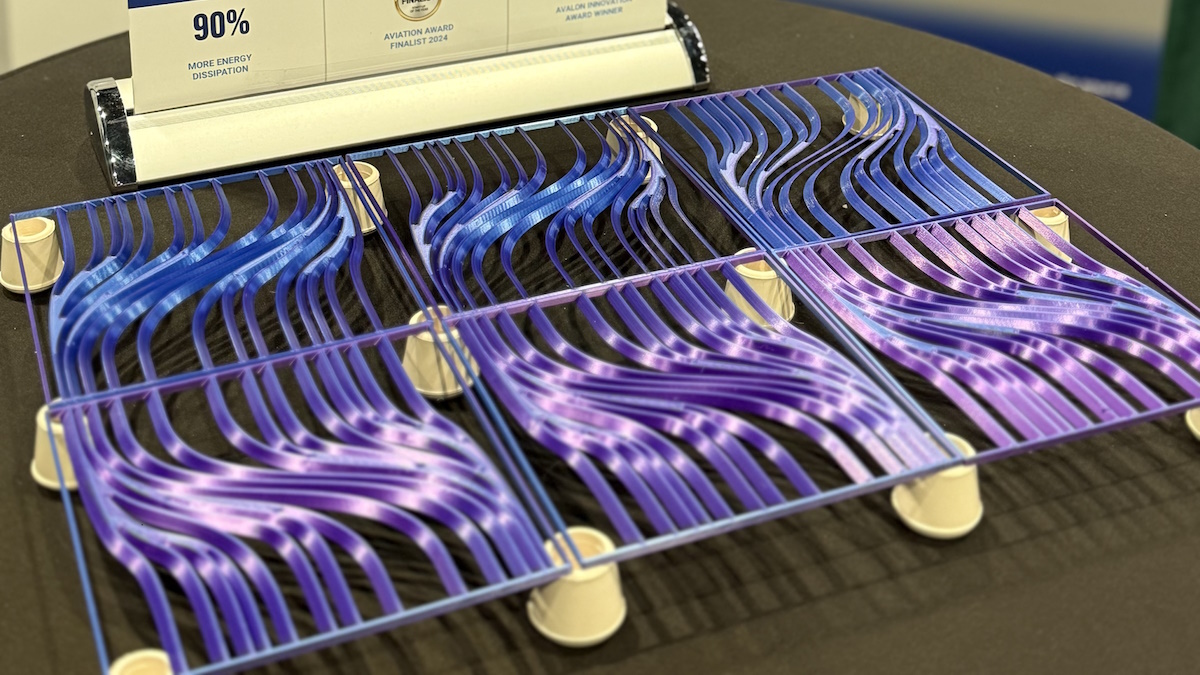
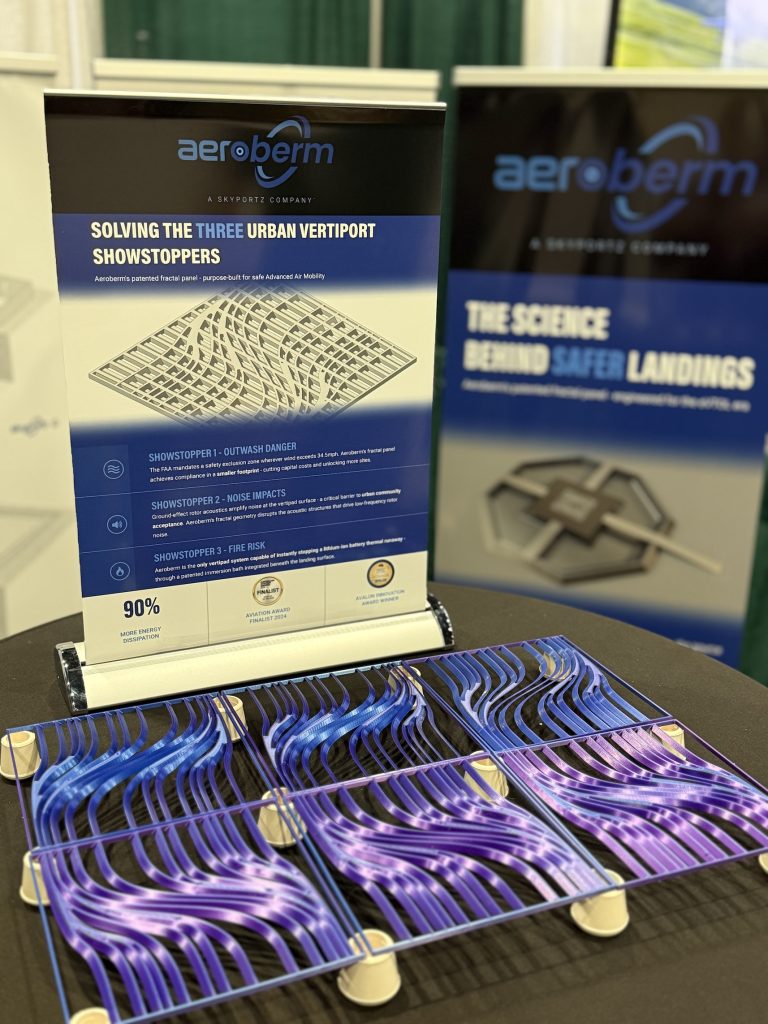
The study examined Skyportz’s Aeroberm panel, a modular vertipad surface developed to manage the downwash and outwash generated by aircraft rotors. It builds on computational fluid dynamics research by Swinburne University of Technology, which indicated that the panel dissipates airflow energy more quickly than conventional flat or grated surfaces.
MUAA investigated whether changes to airflow around the landing pad could also influence the noise reaching nearby communities. Using its FLYO simulation software, the consultancy modelled eight hypothetical pad configurations with different levels of noise reduction, comparing them with an untreated surface. Both ground-level and elevated vertiports, the latter positioned 30 metres above ground, were included in the analysis.
The 18 simulations used a model of a propeller-driven air taxi. Sound Exposure Level (SEL) was calculated at virtual microphone positions along the centreline of the flight path, extending from 100 metres behind the pad to 700 metres along the departure route.
The results indicated that pad treatment could reduce modelled noise exposure beyond the immediate vertiport area. The largest reductions, of approximately 5 dB in the most effective hypothetical configuration, occurred behind the pad, where the aircraft would not normally fly overhead.
At the elevated site, the model showed reductions of around 1 dB still present at a distance of 300 metres. At ground level, no comparable benefit was identified at that distance. Beyond 300 metres, the modelled effect largely disappeared.
The findings are potentially relevant to rooftop vertiports, where conventional noise-mitigation measures such as earth berms and acoustic barriers can be difficult to install. Noise generated while an aircraft is stationary on the pad, including during rotor start-up and shutdown, is also an important consideration for nearby residents and building occupants.
However, the results are based on computer simulations rather than physical testing. MUAA and Skyportz said further laboratory and test-site work would be needed to establish the panel’s actual acoustic performance.