
New cross-sector working group set up to help inform policy for uncrewed aircraft systems, drones and eVTOL aircraft in UK airspace
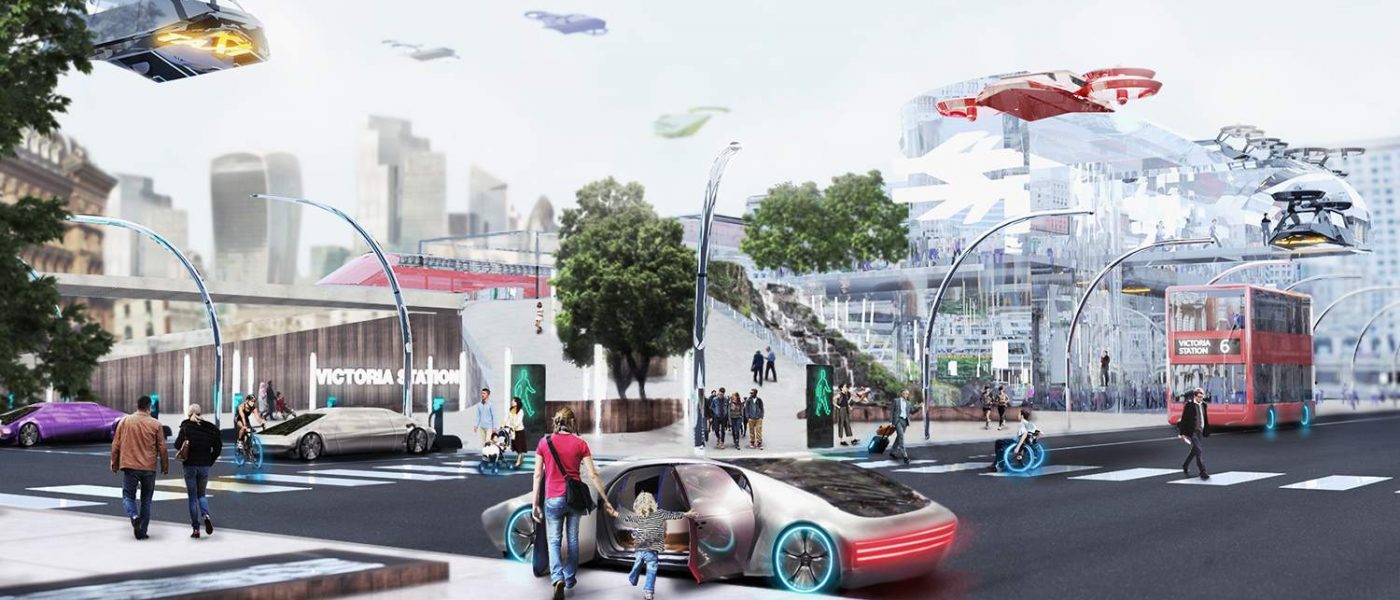
The UK’s Future Flight Challenge has launched a new industry working group focused on the emerging generation of vehicle types — including eVTOL aircraft — and the challenges of integrating these vehicles into the country’s airspace.
Known as The Future Aviation Industry Working Group on Airspace Integration (FAIWG:AI), it has been developed by UK Research and Innovation (UKR&I), working alongside the Department for Transport (DfT), Civil Aviation Authority (CAA) and Connected Places Catapult (CPC). It will be co-chaired by Vicki Murdie, Innovation Lead at the Future Flight Challenge and Andrew Macmillan, Director of Infrastructure at Vertical Aerospace.
It brings together stakeholders from the industry to help provide input and insight to government strategy and regulatory policy for the emerging vehicle types. They include uncrewed aircraft systems and drones, those in the advanced air mobility sector and hybrid and electric regional aircraft.
Vicki Murdie, Innovation Lead for UKRI’s Future Flight challenge and Co-Chair of the FAIWG:AI, said: “Working together with the DfT, CAA and CPC on the launch of the FAIWG:AI represents a landmark moment for enabling the future flight strategy in the UK. It is a vital collaboration between leading industry voices from diverse backgrounds across this sector.
“It will help develop the collaborative thinking required to set new airspace integration plans on the right footing. I’m looking forward to tackling the key objectives we’ve set, as well as understanding the ideas and opportunities from across the new FAIWG:AI members.”
The FAIWG:AI aims to be the prime voice for airspace integration requirements across the future flight sector and play a role in the future development of solutions and standards to assist airspace integration.
It will foster collaboration within the sector as the airspace strategy continues to develop, inform and respond to government and regulatory strategies, including the UK airspace modernisation strategy collaborate with these policy makers on solutions, standards and specifications to support this integration across the sector provide a clear, consensus-based plan to government by the end of 2022 for the safe integration of these new vehicle types into UK airspace.
This will allow commercial services to begin no later than 2025, with a clearly defined path to sustainable growth to 2030 and beyond. Commercial services mean that the benefits of these new vehicles can start to be realised in practice for everyone in the UK.
Murdie added: “The emerging technologies for new forms of aircraft offer exciting developments for the future of travel and logistics, providing an opportunity to address essential needs.
“Successfully integrating an innovative and fully functioning system of remotely piloted aircraft, advanced air mobility and hybrid regional vehicles into UK airspace has huge potential benefits. This new eco-system can solve some of the most challenging issues for remote communities, emergency services, transport and travel.”
In terms of outputs, the FAIWG:AI will create outputs such as plans, roadmaps, value propositions and recommendations for common standards to inform development and scaling. The group will also develop tactical and commercialisation opportunities for the sector linked to a more integrated airspace strategy.
An expression of interest process was run by the founding entities to establish broad representation across industry associations, technology companies and a range of other relevant areas.
These include academia, software and systems, trade bodies, operators, communication technology companies and end users. Following a decision-making process, the appointments are:
- Secretariat: David Pounder, Connected Places Catapult
- Ajay Modha, Anra
- Andy Sage, National Air Traffic Service (NATS)
- Andy Smith, Loganair
- Chris Gee, Connected Places Catapult
- Craig King, CAA (Airspace Modernisation Strategy Team)
- Craig Lippett, Animal Dynamics
- Dan D’Silva, Department for Transport
- Dave Pankhurst, BT
- Graham Brown, Association of Remotely Piloted Aircraft Systems (ARPAS)
- Hannah Tew, Connected Places Catapult
- James Bell, CAA (Innovation Hub Team)
- Jim Scanlan, Shared Airspace Council and University of Southampton
- Luke Bonnett, Aerospace, Defence, Security and Space group (ADS)
- Mark Westwood, Cranfield University and the Drone Industry Action Group (DIAG)
- Nicola Ridd, Department for Transport
- Phillip Binks, Altitude Angel
- Ronald Liebsch, Volocopter
- Simon Brown, TekTowr and the Institute of Engineering and Technology
- Simon Whalley, Skyports
- Tania Roca, Airport Operators Association (AOA) and Industry Coordination for the Airspace Modernisation Strategy (ICAMS)
To find out more about the UKRI’s Future Flight Challenge, click here.

