

US Transportation Secretary Sean P. Duffy and FAA Unveil Companies Selected for Country’s eVTOL Integrated Pilot Program (eIPP)
Archer, BETA Technologies, Electra, Joby Aviation and Wisk are among those selected by US Transportation Secretary Sean Duffy and the Federal Aviation Administration (FAA) to be part of the country’s eVTOL Integration Pilot Program (eIPP).
The OEMs have been included in eight proposals, which form the first-of-its-kind initiative outlined in President Trump’s ‘Unleashing Drone Dominance’ Executive Order. It aims to accelerate the safe integration of Advanced Air Mobility aircraft into the US National Airspace, ensuring the country leads the way in aviation innovation. Other companies named include Ampaire, Elroy Air and Reliable Robotics.
These pilot projects will create one of the largest real-world testing environments for next-generation aircraft in the world. In addition, data from the pilot projects will be used by the FAA to develop new regulations that safely enable this futuristic technology at scale. The American public will start to see operations begin under this program by summer 2026.
The eight selected projects span 26 states and involve leading aircraft manufacturers, operators and state partners. They include a range of operational concepts, including:
- Urban air taxi services
- Regional passenger transportation (including short Takeoff and Landing aircraft)
- Cargo and logistics networks
- Emergency medical response operations
- Autonomous flight technologies
- Offshore and energy-sector transportation
Duffy said: “Thanks to President Trump, the future of aviation is here — and it’s going to dramatically improve how people and products move. Congratulations to the great American innovators behind each of these exciting pilot programs.
“Working together, we will ensure America leads the way in safely leveraging next-gen aircraft to radically redefine personal travel, regional transportation, cargo logistics, emergency medicine, and so much more.”
FAA Deputy Administrator Chris Rocheleau, added: “These partnerships will help us better understand how to safely and efficiently integrate these aircraft into the National Airspace System.
“The program will provide valuable operational experience that will inform the standards needed to enable safe Advanced Air Mobility operations. We appreciate the strong interest reflected in the many proposals we received.”
Specifics on Selected Projects
The following projects were selected to participate in the eVTOL Integration Pilot Program:
New York and New Jersey (Partners: Archer, BETA, Electra, Joby)
Multiple industry partners will collaborate on 12 different operational concepts across New England, including eVTOL passenger operations at the Manhattan heliport.
Texas (Partners: Archer, BETA, Joby, Wisk)
Industry partners will support regional flights connecting Dallas, Austin, San Antonio, and eventually Houston, with air taxi networks expanding from each city to extend regional reach.
Utah (Partners: Ampaire, BETA, Joby, Other)
Four states spanning the Pacific Northwest, the Rocky Mountains, and the Plains of Oklahoma will test a wide range of next-generation aircraft and operational concepts.
Pennsylvania (Partners: BETA, Electra, Other)
The NASAO AAM Multistate Collaborative will work across 13 states to revitalize regional flights across the country, including routes similar to those supported through the Essential Air Service program.
Louisiana (Partners: BETA, Elroy Air, Other)
Operations will test cargo and personnel transportation capabilities to enable flights over the high seas into the Gulf of America and to energy industry locations in Louisiana, Texas, and Mississippi.
Florida (Partners: Archer, BETA, Electra, Joby, Other)
A statewide effort featuring multiple industry partners will include three phases of operations focused on cargo delivery, passenger transportation, automation, and medical response, supported by significant public and private investment.
North Carolina (Partners: BETA, Joby, Other)
Working with industry partners to establish piloted medical and regional operations across the state while also developing an autonomous flight operation extending into Virginia.
City of Albuquerque, New Mexico (Partner: Reliable Robotics)
A focused project designed to achieve early advances in autonomous operations through an existing partnership with an advanced autonomy developer already operating in the region and coordinating with the FAA.
OEM reaction
Archer
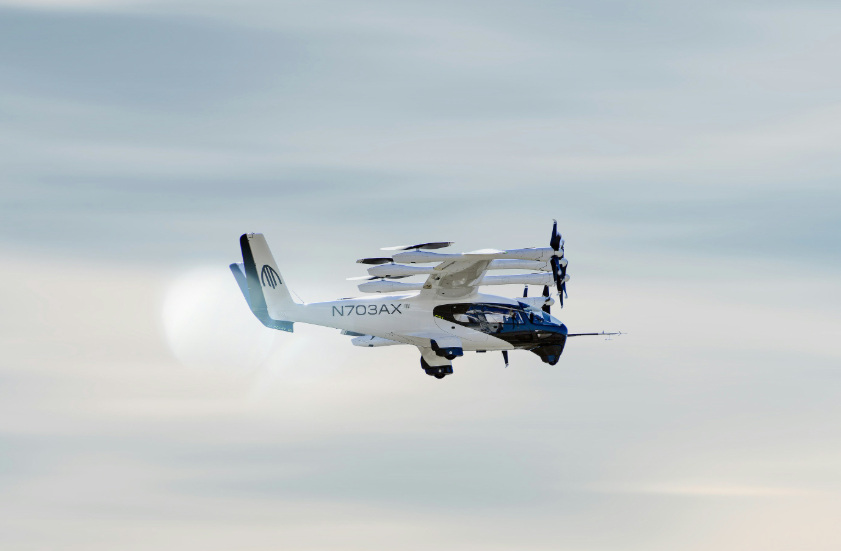
Archer has been selected for programs in Texas, Florida and New York as part of White House’s eIPP, which it says marks a major step toward bringing electric air taxis to market in the United States.
The company will now work across these locations, with its partners including the Texas Department of Transportation, the Florida Department of Transportation and the Port Authority of New York and New Jersey, to prepare for flights of its Midnight aircraft under the eIPP, including standing up local operating teams, infrastructure and procedures to ensure safe, measured deployment.
Adam Goldstein, founder and CEO of Archer, said: “This is the clearest sign yet from the White House, the FAA and the DOT that bringing air taxis to market in the United States is a real priority. We appreciate Secretary Duffy and Administrator Bedford’s leadership and are excited to bring Midnight to the skies of some of America’s largest cities.”
Archer expects this effort to generate valuable operational experience that will help inform future deployments in the US and drive public acceptance, including as it continues to prepare for air taxi operations in Los Angeles for the 2028 Olympic Games.
Much like robotaxi pilot programs across the US, this program allows Archer to work with federal regulators, states, and communities to both build trust and establish the playbook for safely scaling electric air taxis across the country.
BETA Technologies
BETA was selected to participate in seven of eight eIPP launch programs – the most of any electric aircraft developer. These seven programs would see BETA operate in at least 10 states across the U.S.
This includes flight operations with BETA’s ALIA CTOL and VTOL aircraft, as well as ground support operations with the company’s Chargers and Ground Support Equipment (GSE). The stepwise approach, with CTOL operations first and VTOL to follow, reflects BETA’s broader entry-into-service and eIPP deployment strategies.
Through the eIPP, BETA will begin operations with our partners in:
- New York, conducting cargo and medical logistics in upstate New York and Vermont in partnership with Metro Aviation and the Port Authority of New York and New Jersey
- Texas, carrying out medical supply distribution and cargo logistics missions across the state with Metro Aviation, Bristow Group, and Future Flight Global
- Utah, carrying out cargo and medical logistics to rural communities across the state with UPS, Alpine Air Express, and Bristow Group
- Maryland and Virginia, carrying out organ delivery logistics with United Therapeutics as part of the Multistate Collaborative partnership
- Louisiana, partnering with Bristow Group and Metro Aviation to carry out onshore logistics support for offshore energy production in the Gulf of America and improving medical access in rural communities
- Florida, carrying out cargo and medical logistics with Republic Airways and Metro Aviation to increase connectivity for urban and rural communities
- North Carolina, conducting missions to improve access to healthcare and disaster response logistics with UPS and Metro Aviation
Kyle Clark, BETA’s Founder and CEO, said: “This program is a bold signal of America’s commitment to maintaining our leadership position in aerospace. Being selected for more applications than any other OEM is a testament to our safe and reliable operations and this team’s ability to deliver.
“Our aircraft will carry out a range of missions, from critical cargo and medical to passenger. With our production facility already online, we’re positioned to manufacture and deploy aircraft now. This program will allow us to begin those missions, bringing connectivity and access to communities across the U.S.”
BETA’s selection, and the impending operations under eIPP, follows the company’s long history of real-world flying – including, most recently, crossing a milestone 125,000 nautical flight miles in ALIA aircraft in late 2025. In addition to a series of flight demonstrations across the U.S. last year, BETA has also been flying its aircraft throughout Europe, as well as in Norway and New Zealand with customer partners.
The company is also building networks of multimodal, interoperable charging infrastructure across the globe.
Kristen Costello, Head of Government and Regulatory Affairs at BETA, added: “For years, we’ve been building out our charge network, forging relationships with state DOTs, and partnering with leading operators with this vision of AAM in mind. We look forward to bringing that vision to reality and applaud the FAA and U.S. Department of Transportation on this forward-leaning initiative.”

Electra
Electra will work with public and private partners on groundbreaking demonstrations including connecting urban and regional destinations in Florida and linking metropolitan centers in New York, New Jersey, and Pennsylvania. The company also supported the submission from the State of Louisiana.
Marc Allen, CEO of Electra, said: “This is an historic moment in Advanced Air Mobility, as Electra stands shoulder to shoulder with others in the space to chart a course that will transform the way we travel. Our entire team thanks President Trump, Secretary Duffy, and Administrator Bedford for their visionary leadership to accelerate the adoption of AAM.
“This Administration is opening the door for an American company to demonstrate how hybrid-electric propulsion works at scale, to reimagine how we use the skies, and to change the way that people get to where they want to go. It’s American innovation at its best, and it showcases how Electra’s Ultra Short has become an essential part of the AAM landscape.”
Electra was selected to participate in the following demonstrations:
- FL: In Florida, Electra is collaborating on an Ultra Short Access Point demonstration that highlights how AAM aircraft can connect dense urban cores with regional destinations. The proposal evaluates candidate AAM routes across the state and leverages partnerships with Vertiports by Atlantic and regional airline operators to demonstrate practical, scalable operations. The initiative is being led by the Florida Department of Transportation (FDOT)
- NY/NJ: Electra is also supporting a proposed New Jersey to New York City route in partnership with infrastructure providers including Signature Aviation and Vertiports by Atlantic. This use case demonstrates how Ultra Short aircraft can connect major metropolitan centers using existing heliport infrastructure, offering a faster, lower-noise alternative to both ground congestion and conventional aviation options. The initiative is being led by the Port Authority of New York and New Jersey (PANYNJ)
- PA: In coordination with a Pennsylvania-led coalition, Electra is advancing a proposed Ultra Short Access Point demonstration linking Atlantic City to regional destinations, including feeder service into Philadelphia (KPHL). This effort focuses on using existing aviation assets—such as state test sites and medical centers—to prove how regional airline partners and Ultra Short aircraft can unlock underserved 50 to 500 mile trips. The initiative is being led by the Pennsylvania Department of Transportation (PennDOT
Electra is also a supportive partner of the initiative led by the State of Louisiana through the company’s partnership with Bristow Group Inc., the global leader in innovative and sustainable vertical flight solutions.
Electra is harnessing hybrid-electric propulsion and breakthrough design to develop an airplane with unmatched performance, including the ability to safely take off and land in just 150 feet.

Elroy Air
Commenting on the news via LinkedIn, a post from Elroy Air said: “We’re excited to share that Elroy Air and our partners in Louisiana were selected by the U.S. Department of Transportation and Federal Aviation Administration for the Advanced Air Mobility and Electric Vertical Takeoff and Landing (eVTOL) Integration Pilot Program (eIPP).
“We’ll work alongside our commercial partner Bristow Group and the Houma-Terrebonne Airport (HUM) to put Chaparral to work delivering cargo in and around the Gulf area and to energy industry locations in Louisiana, Texas, and Mississippi.
“This is a major moment for advanced air mobility, and we look forward to working with the FAA to accelerate the safe integration of next-generation autonomous cargo drones into the national airspace and ensure the United States leads the way in aviation innovation.”
Joby Aviation
Through the eiPP Joby has the opportunity to begin early operations this year in Arizona, Florida, Idaho, New Jersey, New York, North Carolina, Oklahoma, Oregon, Texas and Utah, marking a major milestone for the U.S. air taxi industry with the potential to significantly accelerate Joby’s path to commercial service.
JoeBen Bevirt, Founder and CEO of Joby Aviation, said: “This is a defining moment for American innovation. Instead of just reading about the future of flight, communities across America are going to be able to see it in the skies above their own cities this year.”
“Quiet, electric air taxis flying real routes are a powerful demonstration of American leadership in action, and proof that we’re building the next golden age of aviation right here in the U.S.”
In addition to its air taxi aircraft, Joby was also selected for applications that include Joby’s Superpilot™ autonomous flight technology platform. Designed to enable highly automated operations over time, Superpilot™ has the potential to further expand the range of use cases partner states can explore under the program.
Joby is participating in the following programs that have been selected as part of the eIPP:
- Florida: A statewide effort that will include three phases of operations focused on cargo delivery, passenger transportation, automation, and medical response, supported by significant public and private investment
- Port Authority of New York and New Jersey: Joby will collaborate on multiple operational concepts across New England, including air taxi passenger operations at the Manhattan heliport
- Texas Department of Transportation: This application will support operations connecting Dallas, Austin, San Antonio, and eventually Houston, with air taxi networks expanding from each city to extend regional reach
- North Carolina Department of Transportation: This application will work with industry partners to establish piloted medical and regional operations across the state while also developing an autonomous flight operation extending into Virginia
- Utah Department of Transportation: This application covers four states spanning the Pacific Northwest, the Rocky Mountains, and the Plains of Oklahoma and will test a wide range of next-generation aircraft and operational concepts
Joby’s first FAA-conforming aircraft for Type Inspection Authorization (TIA) is set to fly shortly, marking a major step on the path toward Type Certification.
The company regularly flies piloted, full-transition flights — taking off vertically, transitioning to wingborne cruise, and returning to vertical landing — as part of a comprehensive real-world flight test program, demonstrating the operational maturity required to participate in the eIPP program.
Joby recently announced plans to scale production to four aircraft per month in 2027, supported by expanded facilities in Marina, California and Dayton, Ohio, in order to meet unprecedented global demand for its technology.

Reliable Robotics
Under the eIPP, Reliable’s wholly-owned subsidiary, Albuquerque-based commercial air cargo operator Reliable Airlines, will conduct autonomous air cargo operations from Albuquerque International Sunport (ABQ), New Mexico’s largest commercial airport, to Durango-La Plata County Airport, CO (DRO) and Santa Fe Regional Airport (SAF).
The Reliable Autonomy System will enhance safety and save lives by directly addressing the most common causes of aviation accidents. Its always-on autopilot – enabled for taxi, takeoff, en route and landing – will substantially reduce the risk of loss of control (LOC) and controlled flight into terrain (CFIT), two of the most common causes of fatal accidents in aviation.
Reliable’s Detect and Avoid system, which includes its state-of-the-art radar and the FAA’s Advanced Collision Avoidance System X (ACAS X), autonomously mitigates traffic conflicts. The FAA has accepted Reliable’s certification plans and the company’s technologies integrate with existing infrastructure and aircraft, requiring no modifications to existing airports.
Robert Rose, CEO and co-founder, Reliable Robotics, said: “Selection for the highly-competitive eIPP demonstrates the focus of President Donald J. Trump’s administration on leveraging aircraft autonomy to enhance aviation safety and United States competitiveness.
“The technology we’re certifying with the FAA will substantially enhance the safety of regional air cargo operations and demonstrate that large UAS can be integrated into controlled airspace. Our work under the eIPP will connect more communities with air service while accelerating Reliable’s mission to make aviation safer and more accessible.”
Wisk
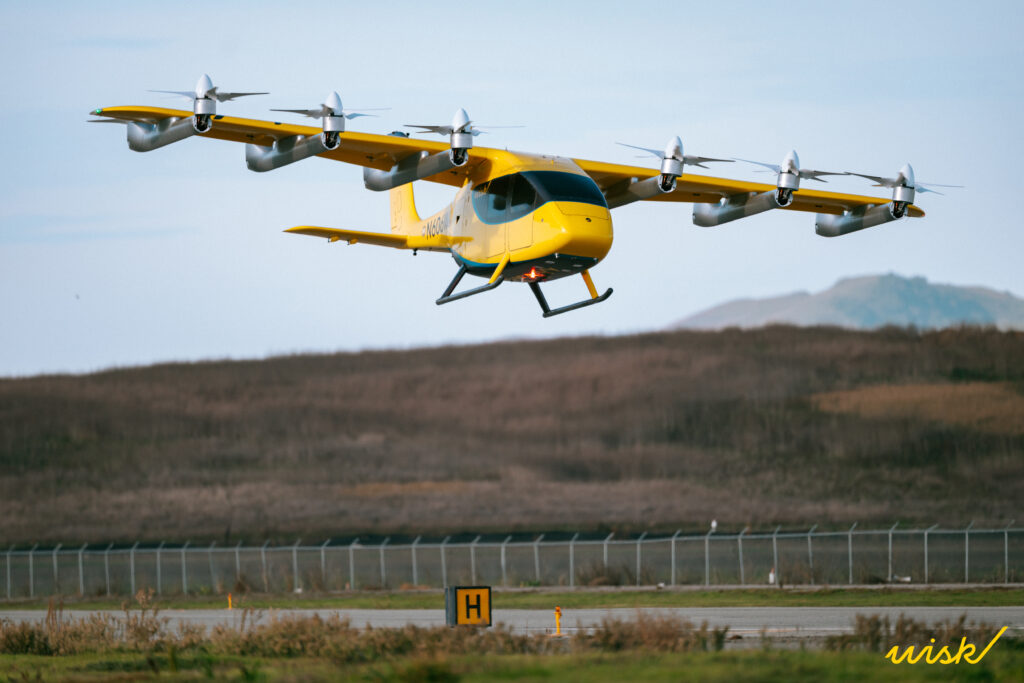
As one of the primary private-sector eVTOL partners for the Texas-led proposal, Wisk will help drive the program’s operational execution, leveraging its autonomous systems and Gen 6 aircraft, as well as its subsidiary SkyGrid’s Strata system.
The eIPP selection is a landmark milestone that allows Wisk to gain invaluable data from flight experience in the U.S. National Airspace, effectively and safely introducing the future of autonomous air travel in Wisk’s primary U.S. launch market.
Wisk’s participation in the eIPP will follow a rigorous, three-phase “crawl-walk-run” approach as part of a multi-year phased flight program:
- Initial Phase: Establish the foundation through focused flight operations in dedicated areas to refine autonomous systems, flight procedures, and precision ground-based coordination
- Integration Phase: Transition into dedicated routes to validate the operational safety case and demonstrate the safe and seamless integration of autonomous aircraft with existing air traffic
- Advanced Operations Phase: Scale to Wisk’s Gen 6 aircraft, conducting high-frequency operations that provide the FAA with the data needed to accelerate final certification and inform future policies and rules
Sebastien Vigneron, CEO of Wisk, said: “Having our partners at TxDOT selected under the eIPP program is the green light we’ve been working toward. The insights we gather in Texas are not just limited to our aircraft or the state; we are validating the entire digital and physical ecosystem.
“This program allows us to perform real-world operations that can be translated into FAA policy and regulations, ensuring that when Wisk launches our full commercial service, the regulatory environment is as ready as our aircraft.”
Data collected from Wisk’s Texas operations will provide the FAA with essential answers to critical regulatory gaps, including Airworthiness, Ground Risk, and Pilot Certification.
Participation in the program, along with our ongoing work at the Texas Center for Advanced Aviation Technologies (CAAT), will specifically inform the development of Automated Flight Rules (AFR) and help define the roles of remote supervisors in a scalable airspace model.
This collaborative effort directly supports the modernization of air traffic management, creating the digital and operational blueprint required to define the future of aviation and ensure the safe integration of autonomous flight into our skies.
Wisk’s Gen 6 aircraft — the design that’s going through FAA certification — took its first flight in December 2026 and is currently in an active flight test program.
eiPP Background
More than 30 proposals were submitted for the eIPP program from across the country. Submissions were evaluated by a technical review team from DOT and FAA.
Proposals were assessed based on their ability to accelerate the integration of Advanced Air Mobility aircraft, the breadth of operational concepts proposed, potential regulatory and policy insights, experience in aircraft development or manufacturing, and the strength of industry, academic, and government partnerships.
Following this review process, the eight projects listed above were selected to advance the next phase of the program.

