
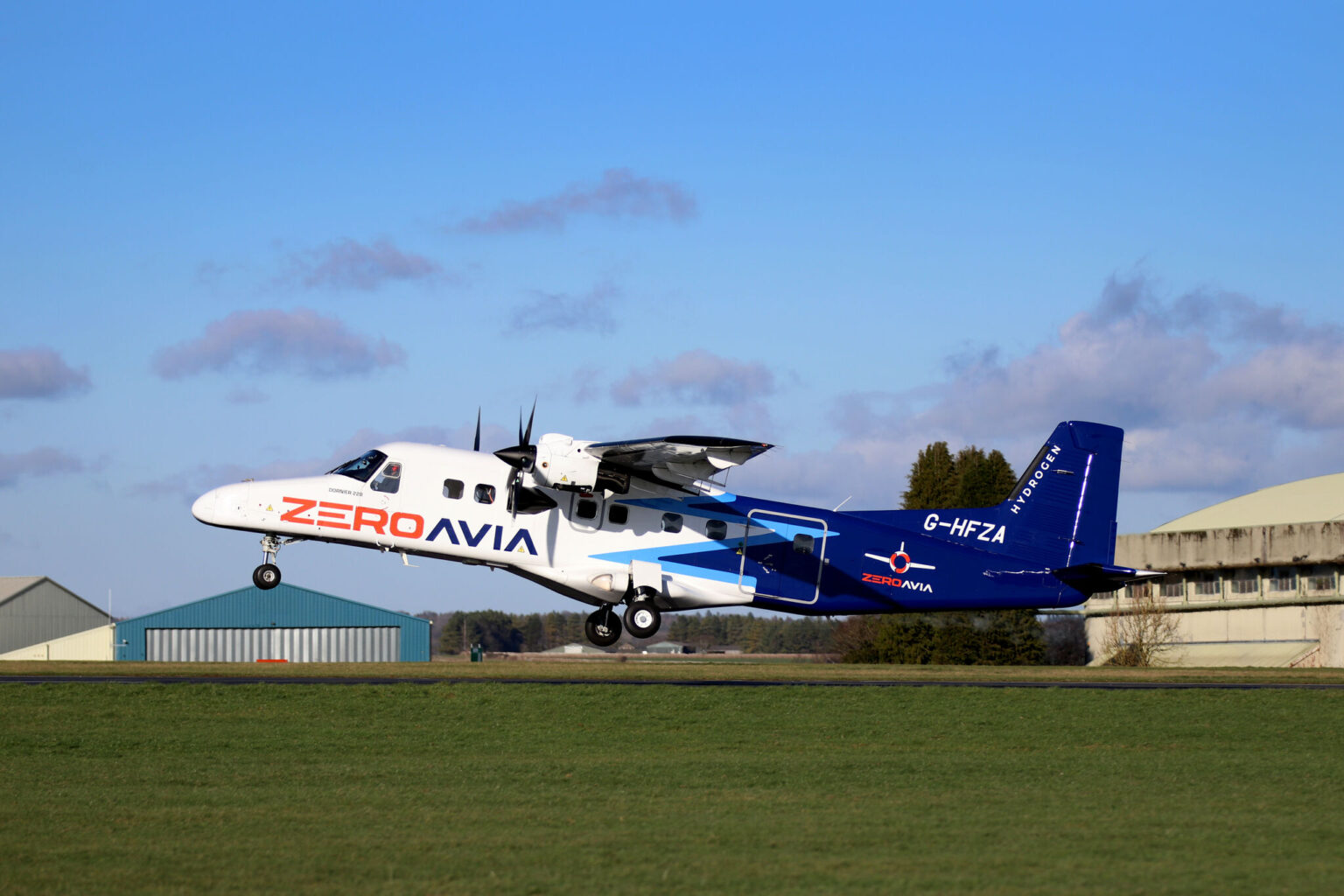
ZeroAvia and Fortum Explore Hydrogen Airport Refueling Infrastructure Across the Nordics
ZeroAvia has signed a Memorandum of Understanding with the Nordic energy company Fortum to explore developing hydrogen production and refuelling infrastructure at airports in the region with a view to building a network of zero-emission flight routes.
On-airport hydrogen infrastructure can also support complementary traffic from heavy-duty transportation, materials handling equipment and other energy consuming systems.
Fortum produces clean energy, working together with industries on decarbonisation with core operations comprising efficient, CO2-free power generation, as well as a reliable supply of energy to private and business customers.
ZeroAvia aims to deliver zero-emission engine technology for passenger and cargo-carrying commercial aircraft, with a target of certifying its engines first for 9–19 seat aircraft by 2025, followed by 40–80 seat aircraft by 2027. Nordic countries will be among early adopters of zero-emission flights.
ZeroAvia VP of Infrastructure Arnab Chatterjee said: “As hydrogen hubs, airports can help reduce climate and air quality impacts of flight and a raft of other operations.
“Scaling the renewable energy capacity and reducing costs pose clear but surmountable challenges to hydrogen as the fuel to power truly clean flights. Fortum is well positioned as a partner in this space, given the company’s clean energy focus and its emerging hydrogen leadership.”
Fortum Hydrogen Business Development senior manager Torbjörn Wilén said: “ZeroAvia is a leader both in demonstrating clean flight, and in building the model for how hydrogen refueling will work in aviation. We believe that ZeroAvia and Fortum together can explore excellent options for clean aviation, both on the ground and in the air.”
ZeroAvia has already demonstrated its world-first Hydrogen Airport Refueling Ecosystem (HARE) at its R&D hub in Kemble in the UK, and is working with a range of airports on projects to establish the infrastructure and operations to operate zero-emission routes as early as 2025.
Earlier this month, ZeroAvia claimed it achieved record-breaking performance in testing its 20kW high temperature proton exchange membrane (HTPEM) stack power module, early testing of which demonstrated a record 2.5 kW/kg specific power at the cell level at the company’s UK R&D location, paving the way for more than 3 kW/kg system level densities in the next 24 months.

