
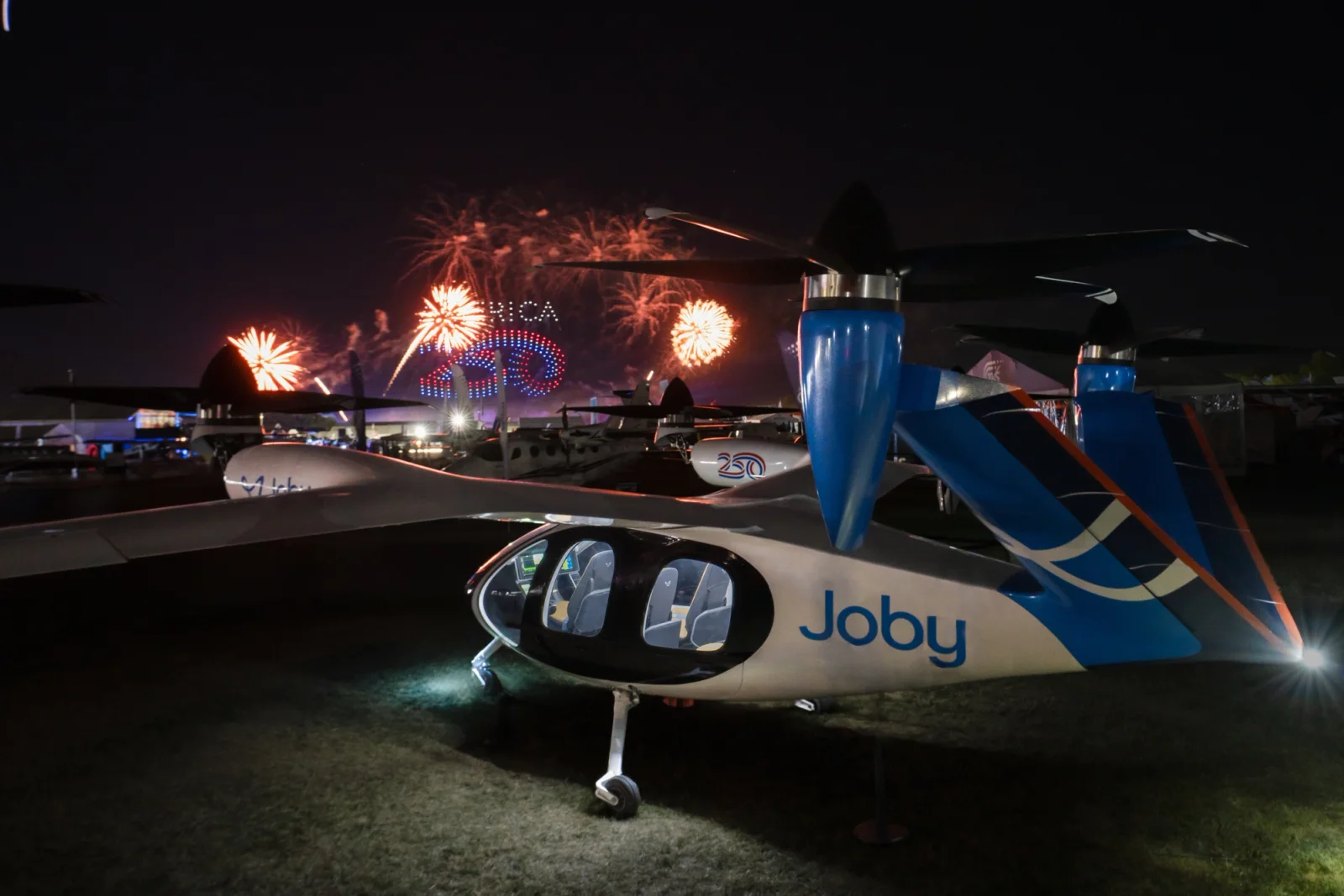
Joby Aviation Raises Revenue Outlook as Certification and Manufacturing Momentum Build
Joby Aviation has raised its full-year 2026 revenue guidance, citing robust growth at its Blade operations and steady advances toward commercial electric air taxi service.
In its second-quarter 2026 shareholder letter released August 5, the company projected total 2026 revenue of $115 million to $125 million. Blade generated $36.2 million in the quarter ended June 30, helping drive company-wide revenue to $38.6 million. Seats sold rose more than 50% year-over-year, marking Blade’s strongest second quarter on record. First-half 2026 Blade revenue was up 32% year-over-year.
On many routes, aircraft availability rather than passenger demand has become the primary constraint on further growth.JoeBen Bevirt, founder and CEO, framed the quarter as a pivotal step: “With meaningful progress on certification, partnerships, infrastructure and commercial readiness, we are unlocking the third dimension of mobility and turning electric vertical flight from an extraordinary technology into an everyday reality, giving people their time back and fundamentally changing the way we move.”
Joby reported its strongest quarterly progress yet in the fifth and final stage of FAA Type Certification. Five electric air taxis are now flying, including the first FAA-conforming aircraft. Twelve additional aircraft are in various stages of production, with two planned for delivery this year.During the quarter the company formed a joint venture with Toyota that builds on more than seven years of collaboration.
Toyota teams have worked with Joby on aviation-level quality, factory planning and design for manufacturability. The joint venture is designed to support high-volume commercial production, create a more capital-efficient path to scale, and reduce risk around one of the industry’s largest remaining challenges
eIPP Flights Set for September in Texas
Joby expects to begin its first flights under the White House-backed Electric Vertical Takeoff and Landing Integration Pilot Program (eIPP) next month. As part of the Texas eIPP project, the company plans a week-long campaign of piloted vertical takeoff and landing flights across the Dallas-Fort Worth area. These operations are intended to establish routes and procedures for future commercial service.
The company was selected earlier this year as a partner in multiple successful eIPP applications, opening the door to early operations across 11 states. Demonstration flights in New York and the San Francisco Bay Area earlier in 2026 helped showcase the required operational maturity.
Over time, and under extensive FAA oversight, eIPP flights are expected to progress from pilot-only operations to those carrying non-paying passengers and eventually paying passengers. Joby continues to target carrying its first passengers in 2026. The company also plans to demonstrate its Superpilot autonomous flight technology, originally developed for defense applications, in several states as part of the program.
Blade Growth and Customer Channel Expansion
Nearly a year after the acquisition, Blade continues to gain momentum. The New York airport services recorded the highest number of new fliers in the quarter, while Hamptons revenue grew more than 40% year-over-year. Joby is leveraging its relationship with Uber to drive additional demand and has partnered with Visa to offer premium benefits to Visa Infinite cardholders on Blade’s New York airport service.
In July, Joby signed a definitive multi-year agreement making Virgin Atlantic its exclusive airline partner in the United Kingdom. Virgin Atlantic will integrate Joby’s air taxi service into its app and website, enabling customers to book connections alongside long-haul flights and supporting infrastructure integration at London and Manchester hubs.
Infrastructure Partnerships Take Shape
Joby announced a strategic partnership with Atoms, the industrial AI and infrastructure company founded by Travis Kalanick, to develop and finance a network of multimodal transportation hubs. Initial focus markets include Florida, New York and Texas — the same regions where Joby is preparing early eIPP operations—as well as California.
The hubs will combine takeoff, landing and charging for electric aircraft with charging and depot services for autonomous ground vehicles, aiming to share fixed costs and improve operating economics.Atoms recently raised $1.7 billion, led by a16z.
Broader infrastructure momentum is also visible: Florida has enacted legislation allowing the state to fund certain vertiport projects at up to 100%, while Orlando is advancing a vertiport in the central terminal of one of the country’s busiest airports. In Dubai, the second of four vertiports being built by Joby’s partners is nearly complete, with additional progress reported in Japan, the wider UAE, Korea and Australia.

