
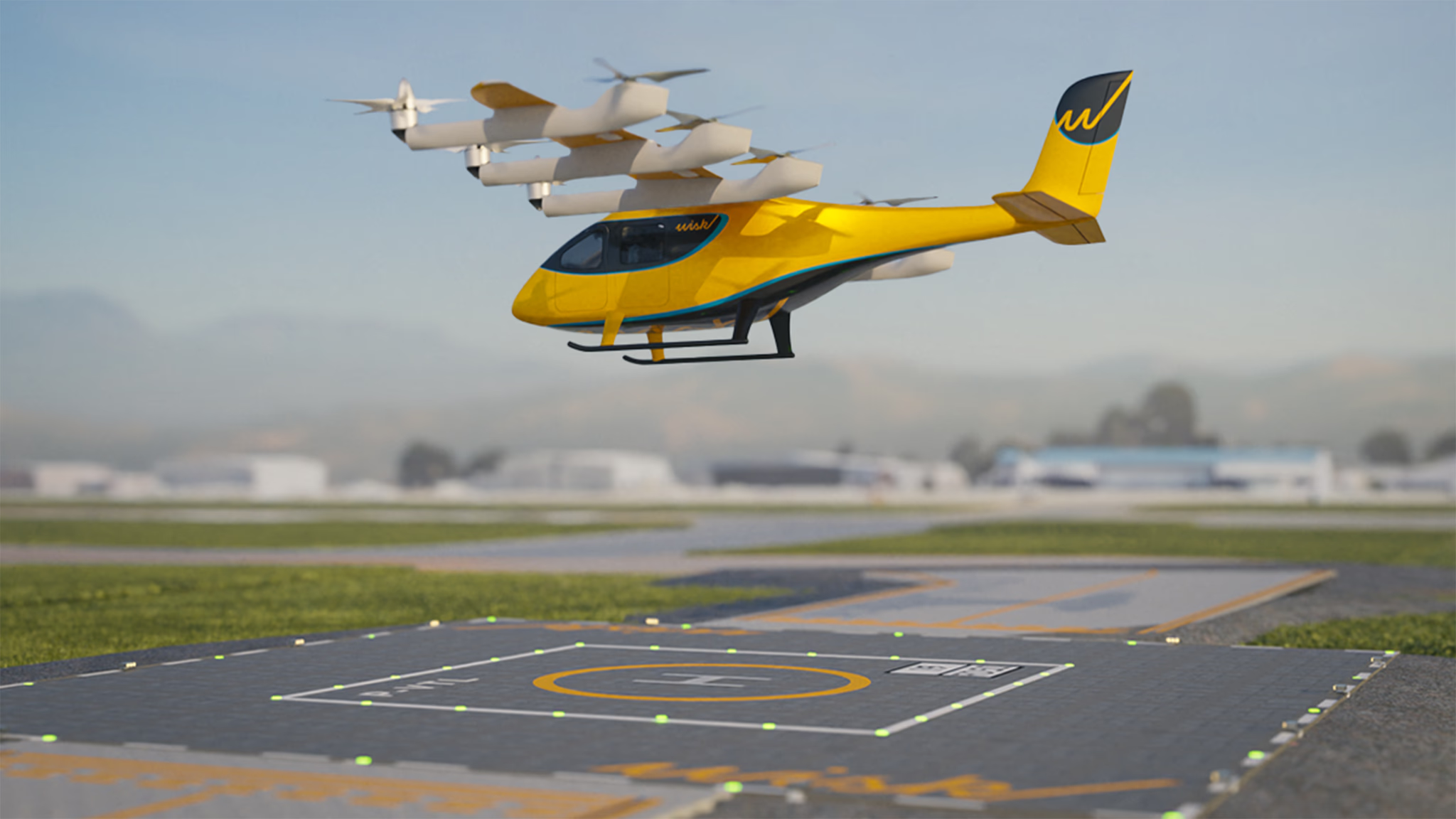
Wisk Breaks Ground on Vertiport for Autonomous and Piloted Aircraft in California
Wisk Aero has begun construction of a new vertiport at Hollister Municipal Airport in California, creating a dedicated test site for autonomous and piloted vertical take-off and landing (VTOL) aircraft.
The 100-by-100-foot facility will be located alongside Wisk’s existing flight-testing operations at the airport. The company plans to use the site to evaluate terminal-area flight procedures, precision landing technologies and autonomous operations under a range of conditions.
The vertiport is being built to existing Federal Aviation Administration (FAA) standards and is designed as a modular, relocatable platform. Its infrastructure includes elevated steel structures, integrated solar panels, power storage and taxiway connections. Wisk said the design could also be deployed at other locations, including potential future eVTOL testing in Texas.
Testing at Hollister will cover normal operations as well as missed approaches and GPS-denied environments. Wisk also plans to use company-developed transceivers installed on the landing pad to support reduced- and zero-visibility operations. The technology is intended to be applicable across different VTOL aircraft, including helicopters and other eVTOL designs.
The company said data collected at the site will contribute to regulatory and industry work, including the FAA’s eVTOL Integration Pilot Program and development of guidance for vertical-lift infrastructure.
Wisk, which is owned by Boeing, is developing an autonomous air taxi as part of its sixth-generation aircraft programme. The company expects testing at the new vertiport to provide operational data that can be used to refine its autonomous flight systems and procedures.
The project also gives Wisk an opportunity to test autonomous aircraft operations within an existing public-airport environment rather than solely at dedicated flight-test facilities. This could provide additional operational data around the interaction between advanced VTOL aircraft, airport infrastructure and established aviation procedures.
The vertiport is intended primarily as a test and data-collection facility rather than a commercial passenger operation. Its results could nevertheless contribute to the infrastructure and operational standards required if autonomous air taxis are eventually introduced into wider commercial service.

